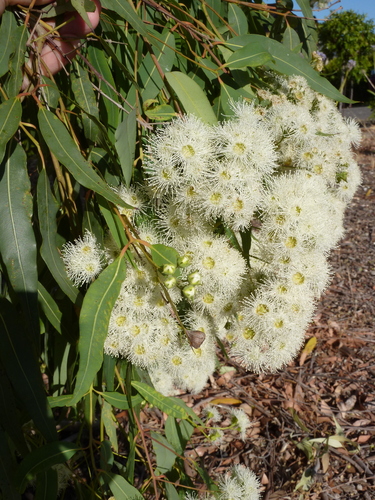
Eugenia ligustrina
(Sw.) Willd.
Birchberry, Privet stopper

(c) greensxm, some rights reserved (CC BY-NC), uploaded by greensxm

(c) Omar Monzon Carmona, some rights reserved (CC BY-NC)
What to Eat
Edible parts: Fruit
The pulp of the fruit is eaten raw and can be used to make jam.
Where to Find It
A tropical plant. In Puerto Rico it grows up to 200 m above sea level.
Bolivia, Brazil, Cuba, Dominican Republic, Guianas, Guyana, Haiti, Leeward Island, Martinique, Mexico, Puerto Rico, South America, Suriname, Venezuela, West Indies*,
How to Identify
A shrub or small tree. It grows 2.5 - 4 m tall. The leaves are narrowly oval and 3 cm long by 2 cm wide. They are shiny green above. The leaves are smaller and scale like at the base of the twigs. The flowers occur singly on slender stalks. They are 2 cm across with 4 petals. The fruit are small round berries about 6 mm across.
How to Grow
It can be used to make a hedge.
Notes
There are about 550 Eugenia species. They are mostly in tropical and subtropical South America.
Names & Synonyms
Arraijan, Arrayan, Biriji, Cerise noire, Granadillo, Guapi-nhem, Palo de muleta
References (12)
- Grandtner, M. M., 2008, World Dictionary of Trees. Wood and Forest Science Department. Laval University, Quebec, Qc Canada. (Internet database http://www.wdt.qc.ca)
- Grandtner, M. M. & Chevrette, J., 2013, Dictionary of Trees, Volume 2: South America: Nomenclature, Taxonomy and Ecology. Academic Press p 239
- Hedrick, U.P., 1919, (Ed.), Sturtevant's edible plants of the world. p 299
- Kermath, B. M., et al, 2014, Food Plants in the Americas: A survey of the domesticated, cultivated and wild plants used for Human food in North, Central and South America and the Caribbean. On line draft. p 355
- Little, E. L., et al, 1974, Trees of Puerto Rico and the Virgin Islands. USDA Handbook 449. Forestry Service. p 658
- Martin, F.W., C.W. Campbell and R.M. Ruberté, 1987, Perennial edible fruits of the tropics - An inventory. United States Department of Agriculture, Agricultural Research Service, Agriculture Handbook No. 642. Washington, D.C., USA
- Miguel, E., et al, 1989, A checklist of the cultivated plants of Cuba. Kulturpflanze 37. 1989, 211-357
- NYBG herbarium "edible"
- Plants of Haiti Smithsonian Institute http://botany.si.edu/antilles/West Indies
- Segura, S., et al, 2018, The edible fruit species in Mexico. Genet Resour Crop Evol (2018) 65:1767–1793
- Sp. pl. 2(2):962. 1799
- www.colecionandofrutas.org