Eugenia pseudopsidium
Jacq.
Christmas cherry
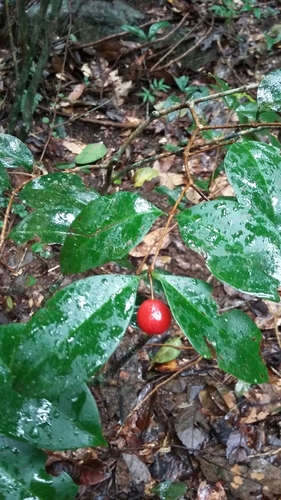
(c) Sara Bárrios, some rights reserved (CC BY-NC), uploaded by Sara Bárrios

(c) Omar Monzon Carmona, some rights reserved (CC BY-NC)

(c) Omar Monzon Carmona, some rights reserved (CC BY-NC)
What to Eat
Edible parts: Fruit
Fruit. Of considerable esteem in the Caribbean. Astringent, with little flavour. A bright red, or orange-red, globose fruit up to 20mm wide, containing a single seed.
Where to Find It
A tropical plant.
Amazon, Brazil, Central America, Dominican Republic, Guyana, Lesser Antilles, Martinique, South America, West Indies,
How to Identify
A tropical tree of the Myrtaceae family with edible fruit, belonging to a genus of approximately 550 species found mostly in tropical and subtropical South America.
How to Grow
Eugenia pseudopsidium is a plant of lowlands in the moist tropics. In Puerto Rico it is found in areas that receive around 1,400 - 2,200mm annual precipitation. A shade tolerant plant, it prefers medium to heavy-textured soils derived from sedimentary, igneous, and metamorphic (including ultramafic) rocks. It does not appear sensitive to topographic position but rarely if ever grows on excessively or very poorly drained soils. The plant can start flowering when less than 100cm tall. It flowers and produces fruit irregularly throughout the year. Understorey plants produce fruits in small numbers; plants receiving increased sunlight in gaps or thinned canopies produce several times more fruits. The plant usually resprouts well after cutting back or damage.
Propagation: Seed -. In one trial, 81% of freshly collected seeds germinated within 59 - 143 days from sowing.
Other Uses
The light to reddish brown wood is hard and very heavy. It is used to a limited extent for firewood and fence posts.
Notes
There are about 550 Eugenia species. They are mostly in tropical and subtropical South America.
Names & Synonyms
Quiebrahacha, Wild guava
References (3)
- Fouqué, A., 1972, Espèces fruitières d'Amérique tropicale. Institut français de recherches fruitierès outre-mer (As Eugenia compta)
- Hedrick, U.P., 1919, (Ed.), Sturtevant's edible plants of the world. p 300
- Kermath, B. M., et al, 2014, Food Plants in the Americas: A survey of the domesticated, cultivated and wild plants used for Human food in North, Central and South America and the Caribbean. On line draft. p 357