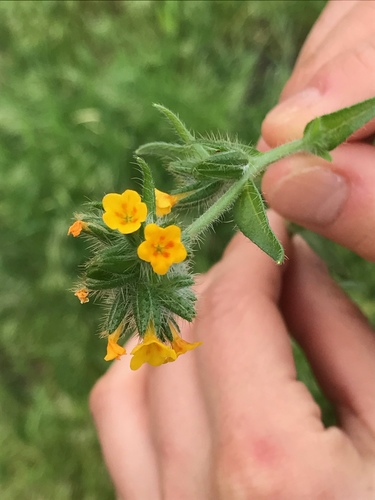
Lithospermum multiflorum
Torr.
Manyflowered Gromwell, Manyflowered stoneseed

(c) Jenny Smith, some rights reserved (CC BY-NC), uploaded by Jenny Smith

(c) Carol Jacobs-Carre, some rights reserved (CC BY-NC-ND)
What to Eat
Edible parts: Seed
The seeds have been used for food.
Where to Find It
Western N. America.
NORTHERN AMERICA: United States (New Mexico, Arizona), Mexico (Chihuahua)
How to Identify
Lithospermum multiflorum is a PERENNIAL growing to 0.5 m (1ft 8in). See above for USDA hardiness. It is hardy to UK zone 3. It is in flower from July to August. The species is hermaphrodite (has both male and female organs) and is pollinated by Insects. Suitable for: light (sandy) and medium (loamy) soils and prefers well-drained soil. Suitable pH: neutral and basic (mildly alkaline) soils and can grow in very alkaline soils. It cannot grow in the shade. It prefers dry or moist soil.
How to Grow
Requires a warm sunny position in a moderately fertile well-drained calcareous soil. Grows well in dry soils.
Propagation: Seed - sow spring in a cold frame. When they are large enough to handle, prick the seedlings out into individual pots and grow them on in the greenhouse for their first winter. Plant them out into their permanent positions in late spring or early summer, after the last expected frosts. Cuttings. Division.
Medicinal Uses
Miscellany. The root has been used as a 'life medicine' by some native North American Indian tribes.
Other Uses
Dye MiscellanyA purple dye is obtained from the root.