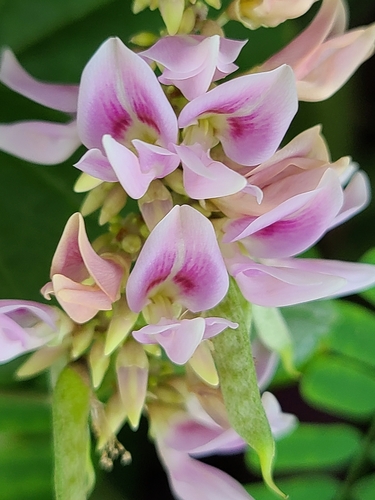
Lotus corniculatus
L.
Bird's Foot Trefoil

(c) Douglas Goldman, some rights reserved (CC BY-SA), uploaded by Douglas Goldman

(c) eeyipes, some rights reserved (CC BY)

(c) Douglas Goldman, some rights reserved (CC BY-SA), uploaded by Douglas Goldman
What to Eat
Edible parts: Seedpod
The young seedpods are 'nibbled'. Caution is advised, see notes above on toxicity.
Known Hazards
Where to Find It
Europe, including Britain, from Scandanavia south and east to N. Africa and temperate Asia.
TEMPERATE ASIA: Afghanistan, Cyprus, Iran, Iraq, Turkey, Russian Federation-Ciscaucasia (Ciscaucasia), Armenia, Azerbaijan, Georgia, Russian Federation (Dagestan), Russian Federation-Western Siberia (Western Siberia (southwest)), Kazakhstan, Tajikistan, Turkmenistan, Mongolia, Russian Federation (Primorye), China, Korea, Japan, Taiwan TROPICAL ASIA: India, Nepal, Pakistan EUROPE: Denmark, Finland, United Kingdom, Ireland, Norway, Sweden, Czechoslovakia, Austria, Belgium, Switzerland, Germany, Hungary, Netherlands, Poland, Russian Federation (European part), Belarus, Estonia, Lithuania, Latvia, Moldova, Ukraine (incl. Krym), Former Yugoslavia, Albania, Bulgaria, Greece, Romania, Spain, France AFRICA: Algeria (north), Morocco, Tunisia, Ethiopia, Sudan, Kenya, Tanzania
How to Identify
Lotus corniculatus is a PERENNIAL growing to 0.3 m (1ft) by 0.5 m (1ft 8in) at a medium rate. See above for USDA hardiness. It is hardy to UK zone 5. It is in flower from June to September, and the seeds ripen from August to October. The species is hermaphrodite (has both male and female organs) and is pollinated by Bees. The plant is self-fertile. It can fix Nitrogen. It is noted for attracting wildlife. Suitable for: light (sandy), medium (loamy) and heavy (clay) soils, prefers well-drained soil and can grow in nutritionally poor soil. Suitable pH: mildly acid, neutral and basic (mildly alkaline) soils. It cannot grow in the shade. It prefers dry or moist soil. The plant can tolerate maritime exposure.
How to Grow
Requires a well-drained soil in a sunny position. Dislikes shade. Does well on poor soils. An important food plant for many caterpillars. It is also a good bee plant, the flowers providing an important source of nectar. The flowers are powerfully scented, even though they are able to pollinate themselves. The plant spreads very freely at the roots. This species has a symbiotic relationship with certain soil bacteria, these bacteria form nodules on the roots and fix atmospheric nitrogen. Some of this nitrogen is utilized by the growing plant but some can also be used by other plants growing nearby. In garden design, as well as the above-ground architecture of a plant, root structure considerations help in choosing plants that work together for their optimal soil requirements including nutrients and water.
Propagation: Pre-soak the seed for 24 hours in warm water and then sow in the spring or autumn in situ. The seed usually germinates in 2 - 4 weeks at 15°c. If seed is in short supply, it can be sown in pots in a cold frame. When they are large enough to handle, prick the seedlings out into individual pots and plant them out in late spring or early summer.
Medicinal Uses
Antiinflammatory Antispasmodic Cardiotonic Carminative Febrifuge Hypoglycaemic Restorative Sedative Tonic Vermifuge. Carminative, febrifuge, hypoglycaemic, restorative, vermifuge. The flowers are antispasmodic, cardiotonic and sedative. The root is carminative, febrifuge, restorative and tonic. The plant is used externally as a local anti-inflammatory compress in all cases of skin inflammation.
Other Uses
Dye Green manureAn orange-yellow dye is obtained from the flowers. A useful green manure plant, fixing atmospheric nitrogen. It is difficult to see this plant as a useful green manure, it is fairly slow growing with us and does not produce much bulk.