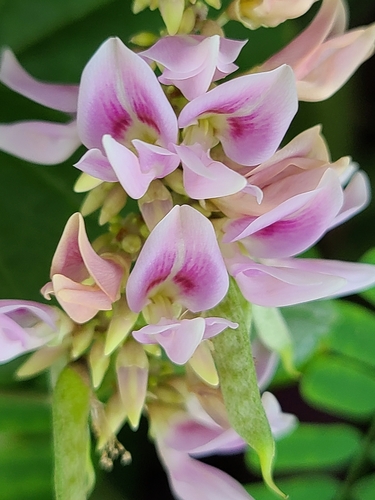
Lotus halophilus
Boiss.&Spauner
Greater Bird's Foot Trefoil

(c) Ron Frumkin, some rights reserved (CC BY-NC), uploaded by Ron Frumkin

(c) Yuval, some rights reserved (CC BY-NC), uploaded by Yuval

(c) Eleftherios Katsillis, some rights reserved (CC BY), uploaded by Eleftherios Katsillis
What to Eat
Edible parts: Seed
Seed. No more details are given, but some caution is advised. See the notes above on toxicity.
Known Hazards
Where to Find It
S.E. Europe - Mediterranean.
TEMPERATE ASIA: United Arab Emirates, Bahrain, Kuwait, Oman, Qatar, Saudi Arabia, Cyprus, Egypt (Sinai), Iran (south), Iraq, Israel, Jordan, Lebanon, Syria, Turkey EUROPE: Greece (incl. Crete), Italy (s. & Sicily) AFRICA: Algeria (north), Egypt, Libya (north), Morocco, Tunisia
How to Identify
Lotus halophilus is a PERENNIAL growing to 0.6 m (2ft). The species is hermaphrodite (has both male and female organs) and is pollinated by Bees. It can fix Nitrogen. It is noted for attracting wildlife. Suitable for: light (sandy), medium (loamy) and heavy (clay) soils, prefers well-drained soil and can grow in nutritionally poor soil. Suitable pH: mildly acid, neutral and basic (mildly alkaline) soils. It cannot grow in the shade. It prefers dry or moist soil. The plant can tolerate maritime exposure.
How to Grow
We have very little information on this species and do not know if it will be hardy in Britain, though judging by its native range it could succeed outdoors in many parts of this country. The plants use was listed for L. villosus and the report did not cite the author. We have found two authors for that name, L. villosus. Forsk. is listed as a synonym for L. halophilus (the treatment we have used here) and there is also L. villosus. Burm.f. to which this report might more properly apply. The following notes are based on the general needs of the genus. Requires a well-drained soil in a sunny position. Dislikes shade. Does well on poor soils. A good bee plant. This species has a symbiotic relationship with certain soil bacteria, these bacteria form nodules on the roots and fix atmospheric nitrogen. Some of this nitrogen is utilized by the growing plant but some can also be used by other plants growing nearby.
Propagation: Pre-soak the seed for 24 hours in warm water and then sow in situ in the spring or the autumn. The seed usually germinates in 2 - 4 weeks at 15°c. If seed is in short supply, it can be sown in pots in a cold frame. When they are large enough to handle, prick the seedlings out into individual pots and plant them out in late spring or early summer.