Euonymus sachalinensis
(F.Schmidt.) Maxim.

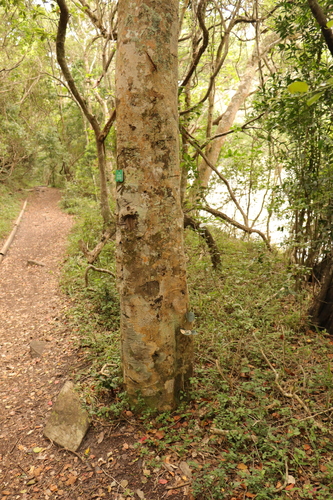
(c) Svetlana Nesterova, some rights reserved (CC BY-NC), uploaded by Svetlana Nesterova

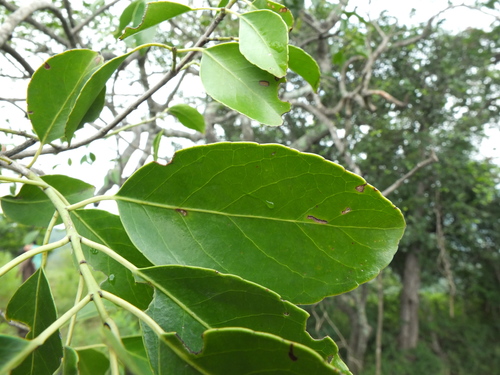
(c) igor_yatsenko, some rights reserved (CC BY-NC)
What to Eat
Edible parts: Leaves, Caution
Young leaves can be eaten after boiling. Some caution is advised given the possible toxicity associated with this genus.
Where to Find It
It is a temperate plant. In northern China it grows in mixed forests between 100-2,700 m above sea level.
Asia, China, Japan, Korea, Manchuria, Russia, Sakhalin,
How to Identify
A shrub. It grows 2-3 m tall. It loses its leaves during the year. The leaves become highly coloured in autumn. The leaves are oval and 9-15 cm long by 6-9 cm wide.
How to Grow
Propagation: Seed is best sown as soon as it is ripe in a cold frame. Stored seed requires 3 months of cold stratification and should be sown as early in the year as possible; seed can take 18 months to germinate. When seedlings are large enough to handle, prick them out into individual pots and grow on in the greenhouse for at least their first winter. Plant out into permanent positions in late spring or early summer, after the last expected frosts. Cuttings of half-ripe wood, 5–7cm long, taken at a node or with a heel, root very easily in July or August in a frame.
Medicinal Uses
None known
Other Uses
The white inner bark is used in making string shoes.
Wikipedia
Source ↗Euonymus sachalinensis (syn. Euonymus planipes), the flat-stalked spindle, is a species of flowering plant in the family Celastraceae, native to Japan, China, Korea, and the Island of Sakhalin (whence the specific epithet sachalinensis). Growing to 2.5 m (8.2 ft) tall and broad, it is a deciduous shrub notable for its leaves turning red in autumn, and its red fruit which splits open to reveal orange seeds. Exceptional specimens, such as the one in the Hørsholm Arboretum, Copenhagen University, can become trees up to 4 m (13 ft) in height. This plant is cultivated as an ornamental subject. The cultivar 'Sancho' which is more free-flowering than its parent, is a recipient of the Royal Horticultural Society's Award of Garden Merit.
Notes
There are about 175 Euonymus species.
References (3)
- Bull. Acad. Imp. Sci. Saint-Petersbourg 27:446. Melanges Biol. Bull. Phys.-Math. Acad. Imp. Sci. Saint-Petersbourg 11:185. 1882 (Diagn. pl. nov. asiat.)
- Morley, B. & Everard, B., 1970, Wild Flowers of the World. Ebury press. Plate 101
- Plants for a Future database, The Field, Penpol, Lostwithiel, Cornwall, PL22 0NG, UK. http://www.scs.leeds.ac.uk/pfaf/