Euonymus carnosus
Hemsl.
Fleshy flowered spindletree
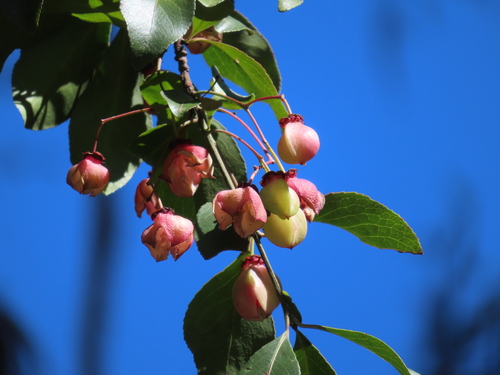
(c) 山羌, some rights reserved (CC BY-NC), uploaded by 山羌
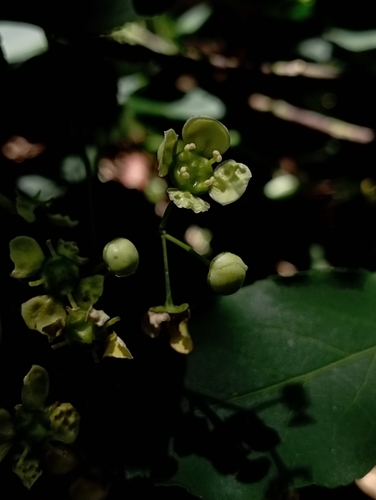
(c) jimmy, some rights reserved (CC BY)
What to Eat
Edible parts: Fruit, Caution
Caution:
Known Hazards
Where to Find It
It is a temperate plant. It can grow from sea level to 2,000 m above sea level but is more common between 200-900 m. It suits USDA hardiness zones 4-7.
Asia, China Himalayas, Japan, Taiwan,
How to Identify
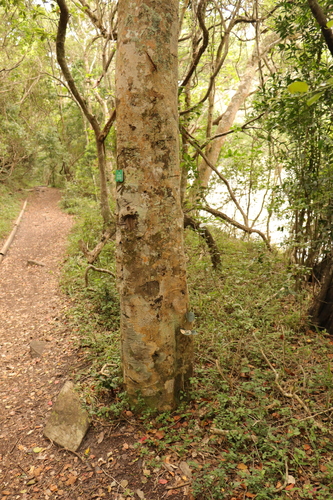
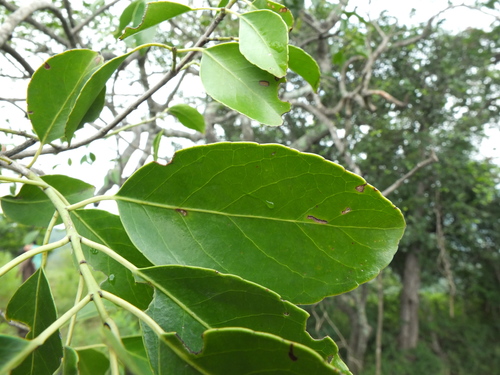
A shrub. It grows 4-5 m tall. The flowers are creamy-white. They have a scent. They hang from long stalks. The leaves are dark green and shiny with a waxy look and 8-18 cm long. The fruit are dark red to purple.
How to Grow
It can be used as a hedge.
Wikipedia
Source ↗Euonymus carnosus, called the fleshy‑flowered spindletree, is a species of flowering plant in the genus Euonymus, native to southeast and south‑central China, Taiwan, the Bonin Islands, the Ryukyu Islands, and Japan. It has gained the Royal Horticultural Society's Award of Garden Merit.
Notes
There are about 175 Euonymus species.
Names & Synonyms
References (1)
- Plants for a Future database, The Field, Penpol, Lostwithiel, Cornwall, PL22 0NG, UK. http://www.scs.leeds.ac.uk/pfaf/ (As Euonymus tanakae)