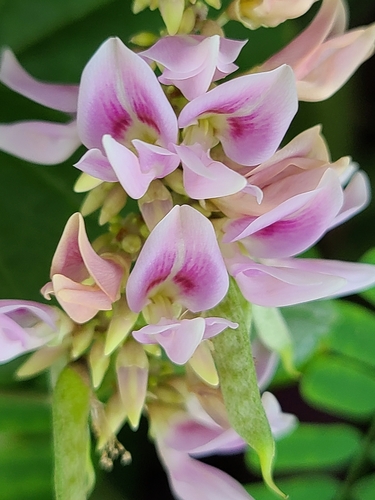
Melilotus wolgicus
Poir.
Sweetclover

(c) Denys Davydov, some rights reserved (CC BY-NC), uploaded by Denys Davydov

(c) Steve Chilton, some rights reserved (CC BY-NC-ND)

(c) richard burger, some rights reserved (CC BY-NC), uploaded by richard burger
What to Eat
Edible parts: Root
Root. No more details.
Known Hazards
Where to Find It
Europe - S. Russia.
TEMPERATE ASIA: Russian Federation (Kurganskaja oblast), Kazakhstan, Mongolia (west) EUROPE: Russian Federation (Tatarstan, Astrakhan, Belgorod, Kursk, Orenburg, Penza, Pskovskaja oblast, Saratov, Ulyanovsk, Volgogradskaja oblast, Voronezh), Ukraine (incl. Krym)
How to Identify
Melilotus wolgicus is a BIENNIAL growing to 1.2 m (4ft). The species is hermaphrodite (has both male and female organs) and is pollinated by Bees. It can fix Nitrogen. Suitable for: light (sandy), medium (loamy) and heavy (clay) soils and prefers well-drained soil. Suitable pH: neutral and basic (mildly alkaline) soils and can grow in very alkaline and saline soils. It cannot grow in the shade. It prefers dry or moist soil.
How to Grow
We have almost no information on this plant and do not know if it will be hardy in Britain, though judging by its native range it should succeed outdoors at least in the milder parts of the country. Dislikes shade. This species has a symbiotic relationship with certain soil bacteria, these bacteria form nodules on the roots and fix atmospheric nitrogen. Some of this nitrogen is utilized by the growing plant but some can also be used by other plants growing nearby.
Propagation: Seed - sow spring or autumn in situ. Pre-soaking the seed for 12 hours in warm water will speed up the germination process, particularly in dry weather. Germination will usually take place within 2 weeks.