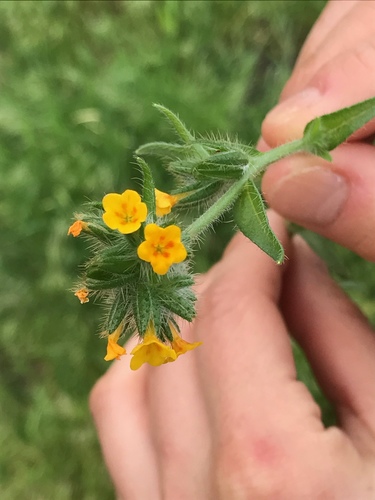
Mertensia bella
Piper.
Beautiful bluebells

(c) mhays, some rights reserved (CC BY-NC), uploaded by mhays

(c) mhays, some rights reserved (CC BY-NC), uploaded by mhays
What to Eat
Edible parts: Flowers, Leaves
Flowers - raw. Leaves - raw or cooked. The leaves are rather hairy and are not so nice when eaten raw.
Where to Find It
Western N. America - Oregon and Idaho.
Coming Soon
How to Identify
Mertensia bella is a PERENNIAL growing to 0.6 m (2ft). The species is hermaphrodite (has both male and female organs). Suitable for: light (sandy), medium (loamy) and heavy (clay) soils. Suitable pH: mildly acid, neutral and basic (mildly alkaline) soils. It can grow in semi-shade (light woodland) or no shade. It prefers moist or wet soil.
How to Grow
We have very little information on this species and do not know if it will be hardy in Britain, though judging by its native range it should succeed outdoors in at least the milder areas of the country. It is said to be a very distinct member of the genus with no close allies. The following notes are based on the general needs of the genus. Easily grown in an ordinary garden soil with some shade.
Propagation: Seed - best sown in a cold frame as soon as it is ripe. Sow stored seed as early in the year as possible. Protect from direct sunlight. When they are large enough to handle, prick the seedlings out into individual pots and grow them on in the greenhouse for at least their first winter. Plant them out into their permanent positions in late spring or early summer, after the last expected frosts. Division, with care, in early spring or autumn.