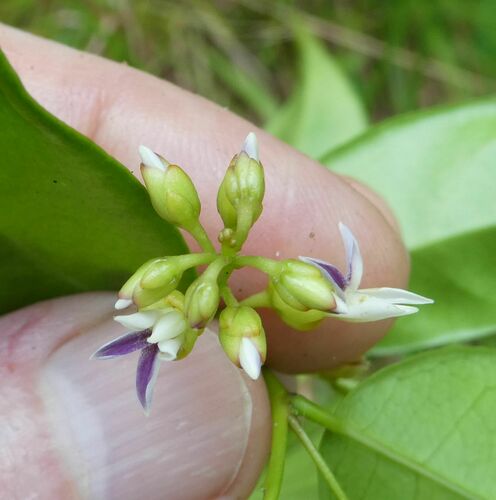
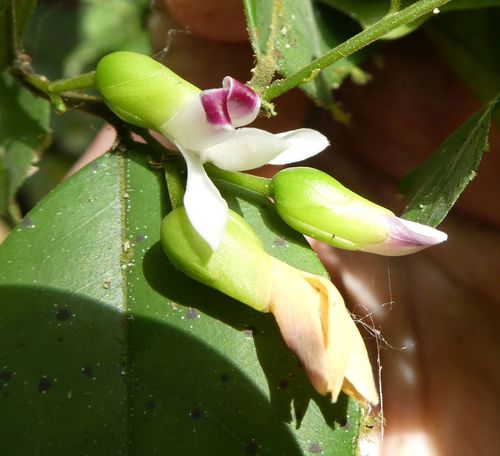
Polygala theezans
L.
What to Eat
Tea. The leaves are used as a tea substitute.
Known Hazards
Where to Find It
E. Asia.
Coming Soon
How to Identify
Polygala theezans is a PERENNIAL. The species is hermaphrodite (has both male and female organs). Suitable for: light (sandy), medium (loamy) and heavy (clay) soils and prefers well-drained soil. Suitable pH: mildly acid, neutral and basic (mildly alkaline) soils. It can grow in semi-shade (light woodland) or no shade. It prefers moist soil.
How to Grow
We have very little information on this species and do not know if it will be hardy in Britain. The following notes are based on the general needs of the genus. Prefers a moderately fertile moisture-retentive well-drained soil, succeeding in full sun if the soil remains moist throughout the growing season, otherwise it is best in semi-shade. Dislikes shade according to another report.
Propagation: Seed - sow spring or autumn in a cold frame. When they are large enough to handle, prick the seedlings out into individual pots and grow them on in the greenhouse for their first winter. Plant them out into their permanent positions in late spring or early summer, after the last expected frosts. Division. Cuttings of young shoots in a frame in late spring.