Euryale ferox
Salisbury
Fox Nut, Gorgon Nut, Prickly Water-Lily

(c) wundoroo, some rights reserved (CC BY-NC-SA)

(c) ashitaka, some rights reserved (CC BY-NC-SA)

(c) Original uploader was ミュール at ja.wikipedia, some rights reserved (CC BY-SA)
What to Eat
Edible parts: Seeds, Roots, Rhizomes, Leaves, Flower buds, Vegetable
The fruit is soft and pulpy, roughly the size of a small orange, and is highly esteemed in China as a cooling tonic food. The seed, about the size of a pea — with 8 to 15 seeds per fruit — is eaten fresh or dried, usually after roasting, and is also used as a source of starch. Per 100 g dry weight, the seed provides 400 calories and contains: water 0%, protein 10.3 g, fat 0.2 g, carbohydrate 89 g, fibre 0.2 g, ash 0.6 g, calcium 34 mg, phosphorus 100 mg, iron 1.5 mg, and potassium 66 mg; magnesium, sodium, zinc, and vitamins A, B1, B2, niacin, B6, and C are absent or not detected. Very young stalks and rhizomes are also edible and are rich in starch.
Where to Find It
It is a subtropical and tropical plant. It grows in lakes and ponds in many provinces of China. It grows in still water. It grows in wetlands. It needs a water temperature of 25°C or higher. It suits hardiness zones 8-11. In Sichuan and Yunnan.
Africa, Asia, Australia, Bangladesh, China, Europe, Himalayas, India, Indochina, Japan, Kashmir, Korea, Myanmar, Northeastern India, Pakistan, Russia, SE Asia, Siberia, Taiwan, Vietnam,
How to Identify
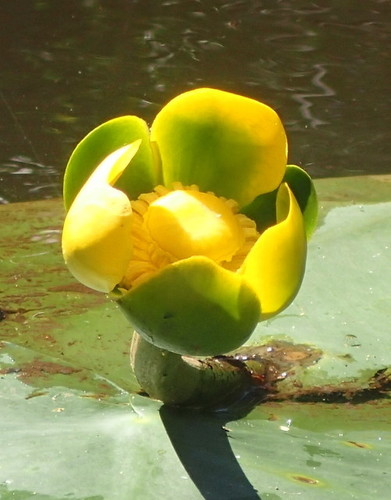
A herb. It is a large waterlily. It re-grows each year or can last for a few years. It grows in water. The rhizomes or underground stems are erect and unbranched. The leaves which are under the water are not prickly. The leaf blade is spear head shaped and 4-10 cm long. The base is deeply heat shaped. The leaves which float on the water are prickly. The leaf blade is dark purple underneath but green on top. They are 1.3-2.7 m across. The are somewhat leathery. The flowers are 5 cm across. The flower stalk is stout and densely prickly. The sepals are triangle shaped or oval and 1-1.5 cm long. They are prickly underneath. The petals fade from purple at the outside to white in the centre. The fruit is dark purple and round. It is 5-10 cm across. It is spongy and densely prickly. The seeds are black and there are 8 to many. They are round and 6-10 mm across. The coat is thick and rigid.
Nutrition Score: 54/100
| Part | Moisture | kJ | kcal | Protein | Vit A | Vit C | Iron | Zinc |
|---|---|---|---|---|---|---|---|---|
| Seed dry | 13.6 | 1446 | 346 | 8.3 | — | — | 1.2 | — |
How to Grow
It can be grown in still or slowly flowing water. In cultivation in temperate greenhouses, the plant is often grown as an annual. It requires about 0.75 cubic metres of root run. This species is not very cold hardy. One report says that it succeeds in zone 8 which would mean that it tolerates temperatures down to between -5 and -10°c but this must be viewed with some doubt. It is unlikely to succeed outdoors in Britain, at least when grown as a perennial. Frequently cultivated as an edible plant in China and India, the seeds are normally available in Chinatown markets in the West.
Propagation: Seed is best sown as soon as it is ripe, as viability is short and the seed must not be allowed to dry out. Sow in pots in a greenhouse at approximately 21°C with the pots immersed in water. Once seedlings are large enough to handle, prick them out into individual pots and grow on in the greenhouse for at least their first winter. Plant out into permanent positions in late spring or early summer, after the last expected frosts.
Medicinal Uses
All parts of the plant are considered astringent, deobstruent, and tonic. The leaf is used in cases of difficult labour. The seed is a sweet and sour astringent herb that acts as a tonic for the kidneys and spleen; it is also analgesic and aphrodisiac. Internally, the seed is taken for chronic diarrhoea, vaginal discharge, kidney weakness associated with frequent urination, impotence, premature and involuntary ejaculation, and nocturnal emissions.
Other Uses
No other uses are known.
Wikipedia
Source ↗Euryale ferox, commonly known as prickly waterlily, makhānā, or Gorgon plant, is a species of water lily found in southern and eastern Asia, and the only extant member of the genus Euryale. The edible seeds, called fox nuts or gorgon nuts, are dried and eaten predominantly in Asia. The plant is cultivated for its seeds in lowland ponds in India, China, and Japan. The Indian state of Bihar produces 90% of the world's fox nuts. The Chinese have cultivated the plant for centuries. In India, more than 96,000 hectares of Bihar were set aside for cultivation of Euryale in 1990–1991. In the northern and western parts of India, the seeds are often roasted or fried like popcorn.
Production
The fruit are available from July to October in Manipur in India.
Other Information
It is a commercially cultivated vegetable. It is cultivated for its starchy seeds. It is sold in markets. It has been cultivated as a food in China for 3,000 years.
Notes
There is one Euryale species. Chemical composition (dried seeds): Protein = 9.9%. Fat = 0.3%. Carbohydrate = 75.7%. Ash = 0.6%. They are available dried in Chinese stores in Australia.
Names & Synonyms
Chicken-head rice, Chicken-Head, Gorgon plant, Jewar, Jitoumi, Kanta padma, Khee sat, Kuntapadmu, Makana, Makhana, Makhna, Mellunipadmamu, Nikhori, Nikori, Phukhol, Phul-makhana, Qianshi, Shriew-u-pubon, Sin-kya, Spiny waterlily, Thanging, Thangjing, Utpal
References (54)
- Ambasta, S.P. (Ed.), 2000, The Useful Plants of India. CSIR India. p 215
- Ann. Bot. (London) 2:74. 1806
- Arora, R. K., 2014, Diversity in Underutilized Plant Species - An Asia-Pacific Perspective. Bioversity International. p 103
- BARC, 2016, State of Biodiversity for Food and Agriculture in Bangladesh. Bangladesh Agricultural Research Council.
- Brickell, C. (Ed.), 1999, The Royal Horticultural Society A-Z Encyclopedia of Garden Plants. Convent Garden Books. p 431
- Brown, D., 2002, The Royal Horticultural Society encyclopedia of Herbs and their uses. DK Books. p 210
- Burkill, I.H., 1966, A Dictionary of the Economic Products of the Malay Peninsula. Ministry of Agriculture and Cooperatives, Kuala Lumpur, Malaysia. Vol 1 (A-H) p 999
- Chowdhury, A. & Das, A. P., 2014, Conservation through sustainable utilization of wetland leafy vegetables of Terai and Duars, West Bengal, India. International Journal of Advanced Life Sciences (IJALS), 7(4) p 654
- Cundall, P., (ed.), 2004, Gardening Australia: flora: the gardener's bible. ABC Books. p 591
- Deb, D., et al, 2013, Wild Edible Plants and Their Utilization in Traditional Recipes of Tripura, Northeast India. Advances in Biological Research 7(5):203-211
- Deka, N. & Devi, N., 2015, Wild edible aquatic and marshland angiosperms of Baka district, BTC area, Assam, India. Asian J. Plant Sci. Res. 5(1):32-48
- Devi, O.S., P. Komor & D. Das, 2010, A checklist of traditional edible bio-resources from Ima markets of Imphal Valley, Manipur, India. Journal of Threatened Taxa 2(11): 1291-1296
- Devi, O. S., et al, 2021, Wild edible plants associated with the people of Thoubal Khunou village and its migrated villagers. Int. J. Adv. Res. Biol. Sci. 8(9): 72-90
- Dobriyal, M. J. R. & Dobriyal, R., 2014, Non Wood Forest Produce an Option for Ethnic Food and Nutritional Security in India. Int. J. of Usuf. Mngt. 15(1):17-37
- Facciola, S., 1998, Cornucopia 2: a Source Book of Edible Plants. Kampong Publications, p 101
- Flora of China.
- Flora of Pakistan. www.eFloras.org
- Food Composition Tables for use in East Asia FAO http://www.fao.org/infoods/directory No. 307
- Fu Dezhi, Wiersma, J.H., Nymphaceae in Flora of China.
- Hedrick, U.P., 1919, (Ed.), Sturtevant's edible plants of the world. p 303
- Heywood, V.H., Brummitt, R.K., Culham, A., and Seberg, O. 2007, Flowering Plant Families of the World. Royal Botanical Gardens, Kew. p 231
- Hossain, U. & Rahman, A., 2018, Study and quantitative analysis of wild vegetable floral diversity available in Barisal district, Bangladesh. Asian J. Med. Biol. Res. 2018, 4 (4), 362-371
- Hu, Shiu-ying, 2005, Food Plants of China. The Chinese University Press. p 387
- Jain et al, 2011, Dietary Use and Conservation Concern of Edible Wetland Plants at Indo-Burma Hotspot: A Case Study from Northeast India. Journal of Ethnobiology and Ethnomedicine 7:29 p 6
- Kays, S. J., and Dias, J. C. S., 1995, Common Names of Commercially Cultivated Vegetables of the World in 15 languages. Economic Botany, Vol. 49, No. 2, pp. 115-152
- Konsam, S., et al, 2016, Assessment of wild leafy vegetables traditionally consumed by the ethnic communities of Manipur, northeast India. Journal of Ethnobiology and Ethnomedicine, 12:9
- Lim, T. K., 2015, Edible Medicinal and Non Medicinal Plants. Volume 9, Modified Stems, Roots, Bulbs. Springer p 42
- Majumdar, K and Datta, N., 2009, Traditional wild edible fruits for the forest dwellers of Tripura, India. Pleione 3(2) 167-178
- Menninger, E.A., 1977, Edible Nuts of the World. Horticultural Books. Florida p 109
- Mishra, N., et al, 2016, Indigenous knowledge in utilization of wetland plants in Bhadrak district, Odisha, India. Indian Journal of Natural Products and Resources. Vol. 7(1) pp. 82-89
- Morley, B. & Everard, B., 1970, Wild Flowers of the World. Ebury press. Plate 91
- Partha, P., 2014, Ethnobotany of the Laleng (Patra) Community in Bangladesh. Journal of Pharmacognosy and Phytochemistry. 2(6):173-184
- Pasha, M. K. & Uddin, S. B., 2019, Minor Edible Fruits of Bangladesh. Bangladesh J. Plant Taxon. 26(2): 299–313
- Patiri, B. & Borah, A., 2007, Wild Edible Plants of Assam. Geethaki Publishers. p 4
- Pham-Hoang Ho, 1999, An Illustrated Flora of Vietnam. Nha Xuat Ban Tre. p 313
- Plants for a Future database, The Field, Penpol, Lostwithiel, Cornwall, PL22 0NG, UK. http://www.scs.leeds.ac.uk/pfaf/
- Polunin, O., & Stainton, A., 2006, Flowers of the Himalaya, Oxford India Paperbacks. p 24
- Pradheep, K., et al, 2016, Wild edible plants used by Konyak tribe in Mon district of Nagaland: Survey and inventorisation. Indian Journal of Natural Products and Resources. Vol 7(1) pp 74-81
- READ,
- Romanowski, N., 2007, Edible Water Gardens. Hyland House. p 27
- Sawian, J. T., et al, 2007, Wild edible plants of Meghalaya, North-east India. Natural Product Radiance Vol. 6(5): p 417
- Singh, H.B., Arora R.K.,1978, Wild edible Plants of India. Indian Council of Agricultural Research, New Delhi. p 81
- Singh, S.R. and Singh, N.I., 1985, A Preliminary Ethnobotanical studies on wild edible plants in the markets of Manipur - 1. J. Econ. Tax. Bot. Vol. 6 No. 3 pp 699-703
- Slocum, P.D. & Robinson, P., 1999, Water Gardening. Water Lilies and Lotuses. Timber Press. p 79, 166,
- USDA, ARS, National Genetic Resources Program. Germplasm Resources Information Network - (GRIN). [Online Database] National Germplasm Resources Laboratory, Beltsville, Maryland. Available: www.ars-grin.gov/cgi-bin/npgs/html/econ.pl (10 April 2000)
- Valder, P., 1999, The Garden Plants of China. Florilegium. p 229
- Wang, J. et al, 2013, A Study on the Utilization of Wild Plants for Food in Liangshan Yi Autonomous Prefecture. Plant Diversity and Resources. 35(4): 416-471
- Wickens, G.E., 1995, Edible Nuts. FAO Non-wood forest products. FAO, Rome. p161
- Wiersema, J. H. & Leon, B., 2013, World Economic Plants. A Standard Reference CRC Press. 2nd Ed. p 297
- Wild edible plants of Himachal Pradesh
- World Checklist of Useful Plant Species 2020. Royal Botanic Gardens, Kew
- www.efloras.org Flora of China Volume 6
- Zeven, A. C. & de West, J. M. J., 1982, Dictionary of cultivated plants and their regions of diversity. Wageningen. p 36
- Zhang, Y., et al, 2014, Diversity of wetland plants used traditionally in China: a literature review. Journal of Ethnobiology and Ethnomedicine. 10:72