Ferocactus wislizeni
(Engelm). Britt. & Rose.
Fishhook barrel cactus

(c) CK2AZ, some rights reserved (CC BY), uploaded by CK2AZ

(c) CK2AZ, some rights reserved (CC BY), uploaded by CK2AZ
(c) 116916927065934112165, some rights reserved (CC BY), uploaded by 116916927065934112165
What to Eat
Edible parts: Stem, Fruit, Seeds, Sap
The stem pulp is eaten fresh or soaked in syrup and dried; it is also made into candies. Seeds are parched, crushed, and made into porridge or bread. The sour fruit is edible. Flower buds are pickled and used as an appetizer.
Where to Find It
It can tolerate temperatures to -7°C. It suits hardiness zones 9-11. Mt Cootha Botanical Gardens.
Australia, Central America, Mexico, North America, USA,
How to Identify
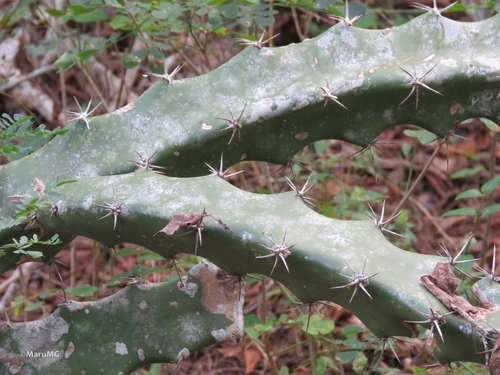
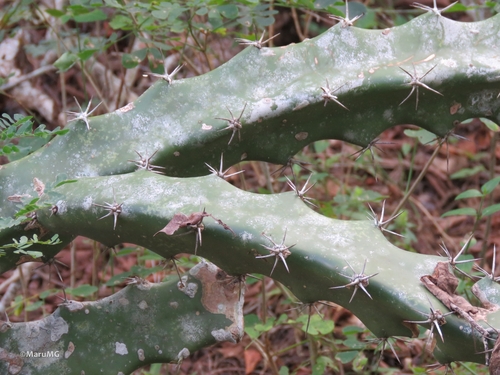
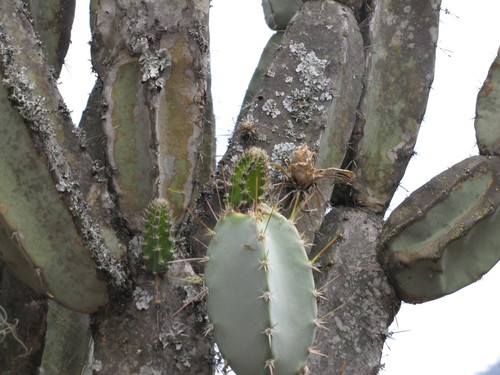
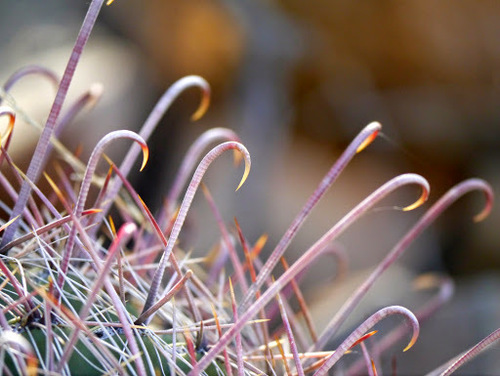
A barrel cactus. They are round when young and grow taller with age. It can be 50 cm wide and 2 m tall. It has 20-30 ribs. The spines can be red or white or grey. There are 4 central spines and 12 or more smaller spines in a ring. The flowers are produced at the crown. The flowers can be yellow or orange. They are funnel shaped. The fruit are oval and green but turn yellow. They are 5 cm long.
How to Grow
Plants are grown from seed.
Medicinal Uses
The sap has traditional uses, though specifics are not detailed in the available data.
Wikipedia
Source ↗Ferocactus wislizeni, the fishhook barrel cactus, also called Arizona barrel cactus, candy barrel cactus, and Southwestern barrel cactus, is a species of flowering plant in the cactus family Cactaceae, native to northern Mexico and the southern United States. It is a ball-shaped cactus eventually growing to a cylindrical shape, with spiny ribs and red or yellow flowers in summer. Some sources mistakenly spell the epithet "wislizenii." The correct spelling is with one "i," per ICN article 60C.2.
Notes
There are about 30 Ferrocactus species.
Names & Synonyms
Arizona barrel cactus, Barrel cactus, Biznacha, Biznaga de agua, Candy barrel cactus, Fish-hook cactus, Southwestern barrel cactus, Visnada, Visnaga hembra, Visnaga
References (16)
- Anderson, E.F., 2001, The Cactus Family, Timber Press. p 56, 336
- Anderson, M., 2002, The World Encyclopedia of Cacti and Succulents. Hermes House, New York. p 79
- Beckstrom-Sternberg, Stephen M., and James A. Duke. "The Foodplant Database." http://probe.nalusda.gov:8300/cgi-bin/browse/foodplantdb.(ACEDB version 4.0 - data version July 1994)
- Brickell, C. (Ed.), 1999, The Royal Horticultural Society A-Z Encyclopedia of Garden Plants. Convent Garden Books. p 437
- Cact. 3:127. 1922
- Cundall, P., (ed.), 2004, Gardening Australia: flora: the gardener's bible. ABC Books. p 600
- Facciola, S., 1998, Cornucopia 2: a Source Book of Edible Plants. Kampong Publications, p 64
- FELGER & MOSER,
- Hedrick, U.P., 1919, (Ed.), Sturtevant's edible plants of the world. p 284 (As Echinocactus wislizeni)
- Hibbert, M., 2002, The Aussie Plant Finder 2002, Florilegium. p 101
- https://www.fireflyforest.com/flowers/category/edible-plants/ Edible Plants – Southeastern Arizona Wildflowers and Plants
- Kiple, K.F. & Ornelas, K.C., (eds), 2000, The Cambridge World History of Food. CUP p 1727
- Loughmiller, C & L., 1985, Texas Wildflowers. A Field Guide. University of Texas, Austin. p 29
- MINNIS,
- Moerman, D. F., 2010, Native American Ethnobotany. Timber Press. p 232
- Subik, R., & Kunte, L., 2003, The Complete Encyclopedia of Cacti. Rebo publishers. p 58 (var. herrerae)