Fragaria glauca
(S. Watson) Rydb.
Yukon strawberry
RosaceaeFruit
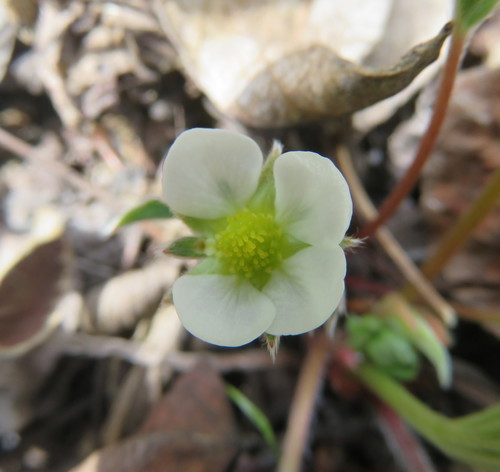
iNaturalist · cc-by-nc
(c) Cristina, some rights reserved (CC BY-NC)
(c) Cristina, some rights reserved (CC BY-NC)
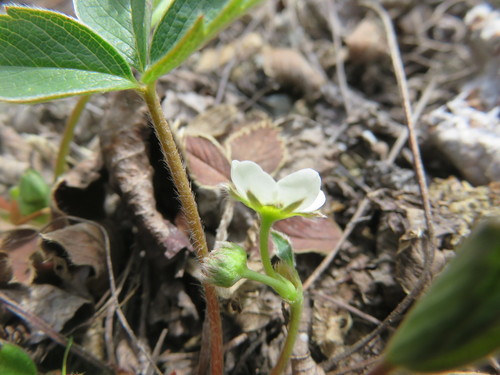
iNaturalist · cc-by-nc
(c) Cristina, some rights reserved (CC BY-NC)
(c) Cristina, some rights reserved (CC BY-NC)
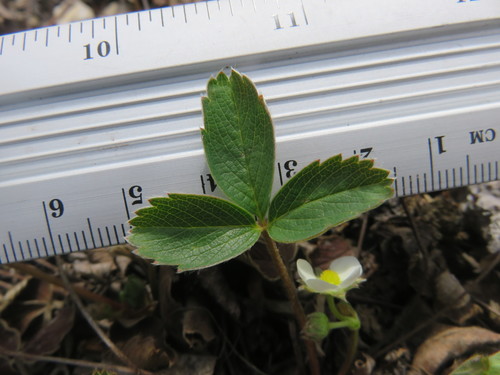
iNaturalist · cc-by-nc
(c) Cristina, some rights reserved (CC BY-NC)
(c) Cristina, some rights reserved (CC BY-NC)
What to Eat
Edible parts: Fruit
Fragaria virginiana has many uses: erosion control in weak soils, ground coverage, medicinal treatments, and culinary purposes.
Where to Find It
It is a temperate plant. It grows in the Rocky Mountains from the lowlands to above the treeline.
Alaska, Asia, Canada, Japan, North America, USA,
Countries: United Arab Emirates, Afghanistan, Antigua & Barbuda, Armenia, Azerbaijan, Barbados, Bangladesh, Bahrain, Brunei, Bahamas, Bhutan, Belize, Canada, China, Costa Rica, Cuba, Dominica, Dominican Republic, Grenada, Georgia, Guatemala, Honduras, Haiti, Indonesia, Israel, India, Iraq, Iran, Jamaica, Jordan, Japan, Kyrgyzstan, Cambodia, St Kitts & Nevis, North Korea, South Korea, Kuwait, Kazakhstan, Laos, Lebanon, St Lucia, Sri Lanka, Myanmar, Mongolia, Maldives, Mexico, Malaysia, Nicaragua, Nepal, Oman, Panama, Philippines, Pakistan, Puerto Rico, Qatar, Saudi Arabia, Singapore, El Salvador, Syria, Thailand, Tajikistan, Timor-Leste, Turkmenistan, Turkey, Trinidad & Tobago, Taiwan, United States, Uzbekistan, St Vincent, Vietnam, Yemen
How to Identify
A herb. In appearance it is like cultivated strawberry but the flowers and fruit are much smaller. It is 8-15 cm high. The rootstock is thick and keeps growing from year to year. The leaves are pale and 3 parted. There are long runners which root at the nodes. The flowers are white. The fruit are juicy and sweet. They are red.
References (5)
- Beckstrom-Sternberg, Stephen M., and James A. Duke. "The Foodplant Database." http://probe.nalusda.gov:8300/cgi-bin/browse/foodplantdb.(ACEDB version 4.0 - data version July 1994)
- Bull. Torrey Bot. Club 25:56.; Monogr. N. Amer. Potent. 183. 1898
- Cormack, R. G. H., 1967, Wild Flowers of Alberta. Commercial Printers Edmonton, Canada. p 150
- Heller, C. A., 1962, Wild Edible and Poisonous Plants of Alaska. Univ. of Alaska Extension Service. p 40
- Porsild, A.E., 1974, Rocky Mountain Wild Flowers. Natural History Series No. 2 National Museums of Canada. p 234
More from Rosaceae

Acaena anserinifolia
Bidgee widgee, Buzzy, New Zealand Bur
No photo
Acaenia anserinifolia - (J.R.Forst.&G.Forst.)Druce.
Pirri-Pirri Bur

Adenostoma sparsifolium
Red shanks, Ribbonwood

Agrimonia eupatoria
Agrimony, Salt and Pepper

Agrimonia odorata
Adour agrimony, Liver-wort

Agrimonia pilosa
Indian chestnut, Agrimony