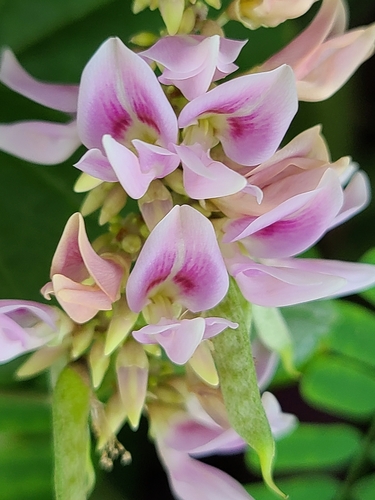
Alhagi graecorum
Boiss.
Camelthorn, Mannatree, Persian manna plant, Alhagi
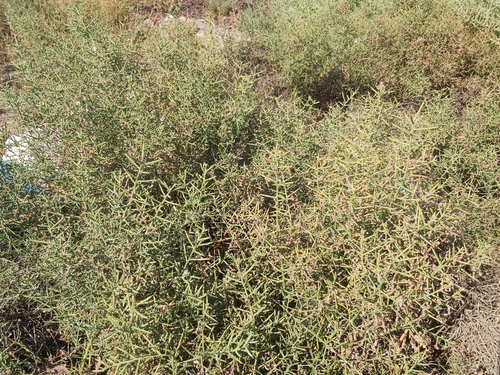
(c) Mohammad Marafi, some rights reserved (CC BY-NC), uploaded by Mohammad Marafi

(c) Uriah Resheff, some rights reserved (CC BY-NC), uploaded by Uriah Resheff
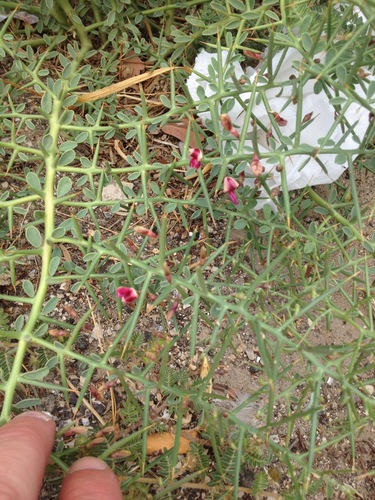
(c) bobasil, some rights reserved (CC BY-NC), uploaded by bobasil
What to Eat
Edible parts: Manna
Manna is harvested from this plant for consumption.
Where to Find It
It grows in Mediterranean climate places. It grows on sand dunes often near the sea. It grows below 1,500 m above sea level. It can grow in the desert. It can grow in arid places.
Africa, Algeria, Bahrain, Central Africa, Chad, Cyprus, Egypt, Europe, Greece, Iran, Iraq, Israel, Jordan, Kuwait, Lebanon, Libya, Mediterranean, Mexico, Middle East, Niger, North Africa*, North America, Sahel, Saudi Arabia, Sinai, Sudan, Syria, Turkey, Türkiye, USA, West Africa, Yemen,
How to Identify
A spiny shrub. It grows 60 cm high. The stems are hairless. It has buds near the ground level that can grow. The leaves are simple and alternate. They are oblong or sword shaped and covered with hairs. The flowers are bright red or purple. They are 7-10 mm long. They occur singly or in pairs. The pods are 20-40 mm long and constricted between the seeds. The pods are pale brown and hairy when young.
Wikipedia
Source ↗Alhagi graecorum is a species of legume commonly known as mannatree or manna tree. Previously it was considered a subspecies of Alhagi maurorum. Drought-tolerant, it is found in the eastern Mediterranean and the Middle East.
Notes
There are 3 Alhagi species.
Names & Synonyms
References (6)
- Blamey, M and Grey-Wilson, C., 2005, Wild flowers of the Mediterranean. A & C Black London. p 109
- Diagn. pl. orient. ser. 1, 9:114. 1849
- ILDIS Legumes of the World http:www;ildis.org/Legume/Web
- Kew Plants of the World Online
- Royal Botanic Gardens, Kew (1999). Survey of Economic Plants for Arid and Semi-Arid Lands (SEPASAL) database. Published on the Internet; http://www.rbgkew.org.uk/ceb/sepasal/internet [Accessed 28th April 2011]
- Wiersema, J. H. & Leon, B., 2013, World Economic Plants. A Standard Reference CRC Press. 2nd Ed. p 32