Geum rivale
L.
Water avens, Purple avens, Indian chocolate, Chocolate root

(c) AnneTanne, some rights reserved (CC BY-NC-SA)

(c) Алексей Афонин, some rights reserved (CC BY-NC)
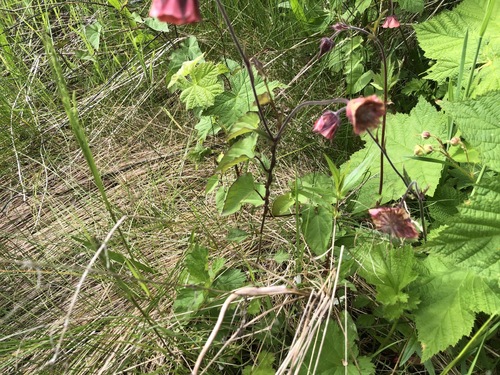
(c) trientalid, some rights reserved (CC BY-NC)
What to Eat
Edible parts: Roots - drink, Roots - spice, Leaves, Flowers, Nectar
The dried or fresh root can be boiled in water to make a delicious chocolate-like drink and also works as a seasoning. It is best harvested in spring or autumn but can be used year-round. Fragrant and aromatic, it was once used to flavour ales.
Where to Find It
It grows in northern temperate regions. It prefers cool moist soils. It grows in wet places. In western China it grows between 1,200-2,300 m above sea level. It suits hardiness zones 3-9.
Arctic, Asia, Australia, Balkans, Bosnia, Canada, Caucasus, Central Asia, China, Estonia, Europe, Iceland, Luxembourg, Mongolia, North America, Norway, Russia, USA, Scandinavia, Siberia, Slovenia, Spain, Turkey, Türkiye,
How to Identify
A small herb. It grows 25-30 cm high. It has robust roots. The leaves at the base are harp shaped and with leaflets. They are 10-35 cm long. The leaves are like strawberry leaves. The flowers are dull purplish-pink. Some garden cultivated varieties have been developed.
How to Grow
Easily grown in any moderately good garden soil that is well-drained. Easily grown in a moist or shady border. Prefers a soil rich in organic matter. Prefers a base rich soil. Hybridizes freely with other members of this genus, especially with G. urbanum. There are some named varieties selected for their ornamental value.
Propagation: Sow seed in spring or autumn in a cold frame. Once large enough to handle, prick seedlings out into individual pots and plant them out in summer. Divide plants in spring or autumn, every 3–4 years, to maintain vigour. Larger clumps can be replanted directly into permanent positions, while smaller clumps are best potted up and grown on in a cold frame until rooting well, then planted out in spring.
Medicinal Uses
The root is anti-inflammatory, antiseptic, aromatic, astringent, diaphoretic, febrifuge, stomachic, styptic, and tonic. An infusion taken internally treats diarrhoea (and is suitable for children), intestinal and stomach complaints, and liver disorders. Applied externally as a wash, it is said to remove spots, freckles, and eruptions from the face. This plant has similar properties to the related G. urbanum but is less active and so is seldom used medicinally. The root is best harvested in spring when it is most fragrant. Much of the fragrance can be lost during drying, so the root should be dried with great care and stored in a cool, dry, airtight container, then sliced and powdered only when needed. The root is rich in tannin and is a powerful astringent.
Other Uses
The dried root repels moths. Plants make suitable ground cover when spaced about 30cm apart each way; the cultivar 'Leonard's Variety' is best for this purpose.
Wikipedia
Source ↗Geum rivale, the water avens, is a flowering plant in the genus Geum within the family Rosaceae. Other names of the plant are nodding avens, drooping avens, cure-all, water flower and Indian chocolate. It is native to the temperate regions of Europe, Central Asia and parts of North America, where it is known as the purple avens. It grows in bogs and damp meadows, and produces nodding red flowers from May to September.
Notes
There are about 40 Geum species.
Names & Synonyms
Arjamurakad, Engjumleblom, Harjapea, Karikellad, Mesikupp, Potocni blazenak, Potočna sretena, Surnu sukapael
References (19)
- Beckstrom-Sternberg, Stephen M., and James A. Duke. "The Foodplant Database." http://probe.nalusda.gov:8300/cgi-bin/browse/foodplantdb.(ACEDB version 4.0 - data version July 1994)
- Brickell, C. (Ed.), 1999, The Royal Horticultural Society A-Z Encyclopedia of Garden Plants. Convent Garden Books. p 469
- Cerne, M., 1992, Wild Plants from Slovenia used as Vegetables. Acta Horticulturae 318
- Cormack, R. G. H., 1967, Wild Flowers of Alberta. Commercial Printers Edmonton, Canada. p 151
- Cundall, P., (ed.), 2004, Gardening Australia: flora: the gardener's bible. ABC Books. p 637
- Facciola, S., 1998, Cornucopia 2: a Source Book of Edible Plants. Kampong Publications, p 199
- Flora of China @ efloras.org Volume 9
- Girard, N. J., 2020, Sustainable Foraging of Wild Edible Plants in Norway. A Biocultural Approach. M. Sc. thesis Norwegian University. p 134
- Hedrick, U.P., 1919, (Ed.), Sturtevant's edible plants of the world. p 328
- Hibbert, M., 2002, The Aussie Plant Finder 2002, Florilegium. p 111
- Jackes, D. A., Edible Forest Gardens
- Kalle, R. & Soukand, R., 2012, Historical ethnobotanical review of wild edible plants of Estonia (1770s-1960s) Acta Societatis Botanicorum Poloniae 81(4):271-281
- MacKinnon, A., et al, 2009, Edible & Medicinal Plants of Canada. Lone Pine. p 325
- Morley, B. & Everard, B., 1970, Wild Flowers of the World. Ebury press. Plate 16
- Redzic, S. J., 2006, Wild Edible Plants and their Traditional Use in the Human Nutrition in Bosnia-Herzegovina. Ecology of Food and Nutrition, 45:189-232
- Saunders, C.F., 1948, Edible and Useful Wild Plants. Dover. New York. p 161
- Seidemann J., 2005, World Spice Plants. Economic Usage, Botany, Taxonomy. Springer. p 166
- Slocum, P.D. & Robinson, P., 1999, Water Gardening. Water Lilies and Lotuses. Timber Press. p 120
- Sp. pl. 1:501. 1753
More from Rosaceae


