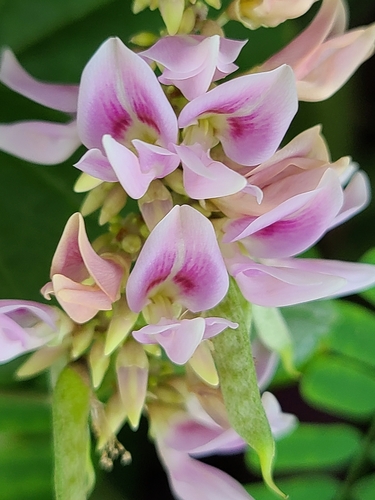
Gleditsia sinensis
Lamarck
Chinese honey locust, Soap bean tree, Soap pod, Chinese soap-pod tree, Chinese locust
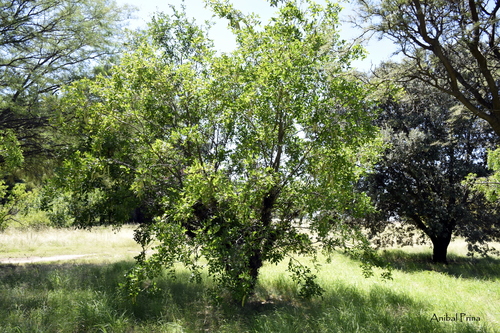
(c) Anibal Prina, some rights reserved (CC BY-NC)
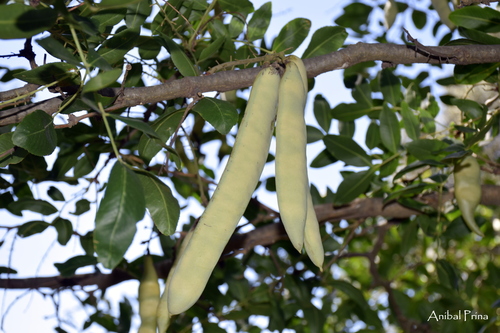
(c) Anibal Prina, some rights reserved (CC BY-NC)
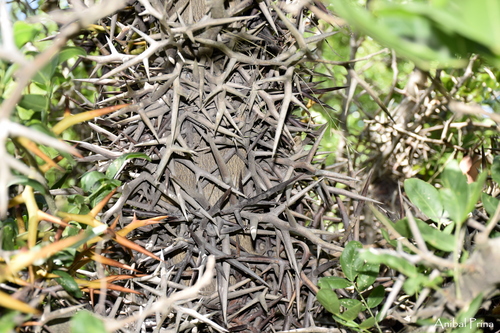
(c) Anibal Prina, some rights reserved (CC BY-NC)
What to Eat
Edible parts: Leaves, Seedspod, Seeds
The seeds are roasted, dehusked, soaked until soft, then boiled and eaten with sugar. Young leaves are cooked but are regarded as a famine food, used only when all else fails.
Known Hazards
Where to Find It
It is a temperate plant. In China it grows in mountain slopes and in forests between 200-2,500 m above sea level. It suits hardiness zones 5-10. In Sichuan and Yunnan.
TEMPERATE ASIA: China (Anhui Sheng (except w. & n.e.), Fujian Sheng, Gansu Sheng, Guangdong Sheng, Guangxi Zhuangzu Zizhiqu, Guizhou Sheng, Hebei Sheng, Henan Sheng, Hubei Sheng, Jiangxi Sheng, Jilin Sheng, Shaanxi Sheng, Sichuan Sheng, Yunnan Sheng, Zhejiang Sheng)
How to Identify
A tree. It loses its leaves. It grows 12-30 m tall. It has large branched thorns. The leaves are yellowish-green. The leaves have leaflets along the stalks. The fruit are pods. They are purplish-brown and thick and woody. They can be 25 cm long. There are many small brown seeds. They are oblong and 11-13 mm long by 8-9 mm wide.
How to Grow
Easily grown in a loamy soil, requiring a sunny position. Succeeds in most soils. Tolerates drought once established and atmospheric pollution. Rather tender when young, it grows best in S. Britain. A tree at Cambridge Botanical Gardens was 13 metres tall in 1985. Trees have a light canopy, they come into leaf late in the spring and drop their leaves in early autumn making them an excellent top storey tree in a woodland garden. Plants in this genus are notably resistant to honey fungus. This species has a symbiotic relationship with certain soil bacteria, these bacteria form nodules on the roots and fix atmospheric nitrogen. Some of this nitrogen is utilized by the growing plant but some can also be used by other plants growing nearby.
Propagation: Pre-soak seed for 24 hours in warm water, then sow in spring in a greenhouse. The seed should have swollen; if not, soak for another 24 hours. If soaking alone fails, carefully file away part of the seed coat without damaging the embryo, then soak again until the seed swells. Once swollen, germination takes 2–4 weeks at 20°C. Prick seedlings into individual deep pots as soon as they are large enough to handle, and plant out into permanent positions in summer. Provide some protection from cold during the first few winters outdoors.
Medicinal Uses
A decoction of the leaves is used for washing sores, including syphilitic skin diseases. The stem bark is anthelmintic and febrifuge. The fruit is antibacterial, antifungal, antitussive, astringent, emetic, expectorant, haemostatic, and stimulant, and is used in treating bronchial asthma with sticky phlegm, epilepsy, and apoplexy with loss of consciousness. Overdosage can cause whole-body poisoning and haemolysis of the blood. The seed is emetic, expectorant, decongestant, and purgative, and has been used in the treatment of rectal cancer. The root bark is anthelmintic and antifebrile. The thorns are antipruritic and are used to treat acute purulent inflammation, dermatopathies, and tonsillitis; they should not be used by pregnant women. The plant has also been used in treating lockjaw, stroke, acute numbness of the throat, and epilepsy, though it is unclear whether the seed or thorns are used for these purposes.
Other Uses
The pod is used as a soap substitute, and the seed is also used in this way. Tannin is obtained from the seedpod. The wood is strong, durable, and coarse-grained, and is used for general construction. This plant also fixes nitrogen.
Wikipedia
Source ↗Gleditsia sinensis, known as zào jiá (皂荚) or Chinese honey locust and black locust in English, is a species of flowering plant native to Asia.
Names & Synonyms
A si ni ma a hong, Pohon kendi sabun, To-Saikati, Zhaojia
References (12)
- Ambasta, S.P. (Ed.), 2000, The Useful Plants of India. CSIR India. p 236
- Bodkin, F., 1991, Encyclopedia Botanica. Cornstalk publishing, p 498
- Encycl. 2:465. 1788
- Etherington, K., & Imwold, D., (Eds), 2001, Botanica's Trees & Shrubs. The illustrated A-Z of over 8500 trees and shrubs. Random House, Australia. p 347
- Hu, Shiu-ying, 2005, Food Plants of China. The Chinese University Press. p 473
- ILDIS Legumes of the World http:www:ildis.org/Legume/Web
- Lord, E.E., & Willis, J.H., 1999, Shrubs and Trees for Australian gardens. Lothian. p 57
- Luo, B., et al, 2019, Wild edible plants collected by Hani from terraced rice paddy agroecosystem in Honghe Prefecture, Yunnan, China. Journal of Ethnobiology and Ethnomedicine 15:56
- Plants for a Future database, The Field, Penpol, Lostwithiel, Cornwall, PL22 0NG, UK. http://www.scs.leeds.ac.uk/pfaf/
- READ,
- Sukarya, D. G., (Ed.) 2013, 3,500 Plant Species of the Botanic Gardens of Indonesia. LIPI p 305
- Valder, P., 1999, The Garden Plants of China. Florilegium. p 290