Gluta velutina
Blume
Rengas, Rengas ayer, Rak nam
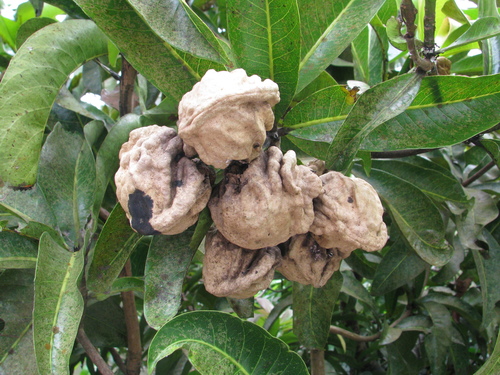
(c) John Howes, some rights reserved (CC BY-NC), uploaded by John Howes
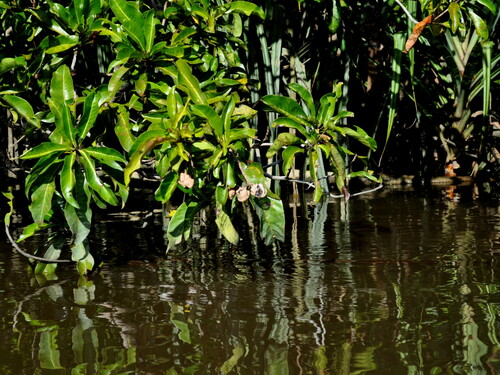
(c) Abu Hamas, some rights reserved (CC BY-SA)
What to Eat
Edible parts: Seeds, Leaves, Nuts, Caution
The seeds are eaten.
Known Hazards
Where to Find It
A tropical plant. It grows on the water's edge along rivers where the water is fresh.
Asia, Indochina, Indonesia, Malaysia, Myanmar, SE Asia, Thailand, Vietnam,
How to Identify
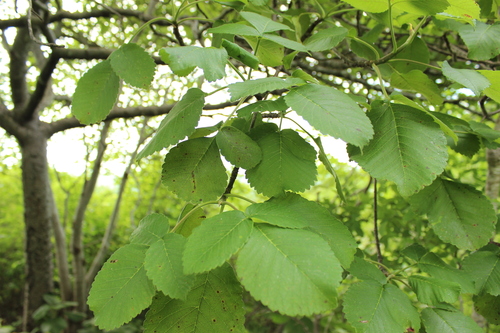
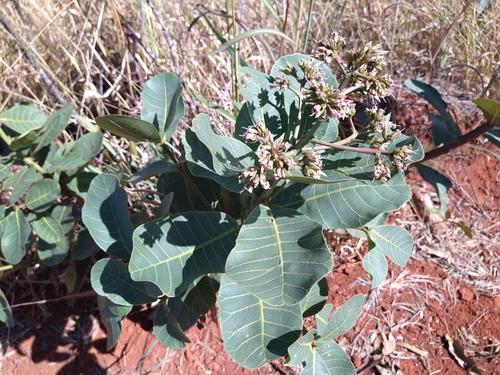
A tree. It grows 7 m tall. It is smaller than Gluta renghas. It has stilt roots. The bark is smooth and brown. The leaves are 19 cm long. The flowers are white. The fruit are round and pale brown. They are 7.5 cm across.
Other Uses
The reddish-brown wood is not very hard, very strong, fairly light, durable and easy to split. It has splendid markings and is used for furniture, building material for houses, canoes, fancy articles and inlay work. A resinous exudate from the wood can cause severe skin irritation. The poisonous constituent of the resinous sap is volatile and will gradually disappear. For this reason, the timber of this tree must be dried and exposed for several years as it is otherwise dangerous to handle. Lacquered articles or furniture made from the dried timber may still be toxic to persons who are especially susceptible.
Wikipedia
Source ↗Gluta velutina is a plant of tropical Asia in the cashew and sumac family Anacardiaceae. The specific epithet velutina is from the Latin meaning 'velvety', referring to the inflorescences.
Names & Synonyms
References (6)
- Burkill, I.H., 1966, A Dictionary of the Economic Products of the Malay Peninsula. Ministry of Agriculture and Cooperatives, Kuala Lumpur, Malaysia. Vol 1 (A-H) p 1097
- Chayamarit, K., 1994, Preliminary Checklist of the Family Anacardiaceae in Thailand. Thai For. Bull. 22:1-25
- Martin, F.W. & Ruberte, R.M., 1979, Edible Leaves of the Tropics. Antillian College Press, Mayaguez, Puerto Rico. p 174
- Menninger, E.A., 1977, Edible Nuts of the World. Horticultural Books. Florida p 51
- Wickens, G.E., 1995, Edible Nuts. FAO Non-wood forest products. FAO, Rome. p 107
- World Checklist of Useful Plant Species 2020. Royal Botanic Gardens, Kew