Gyrostemon ramulosus
Desf
Camel poison, Corkybark
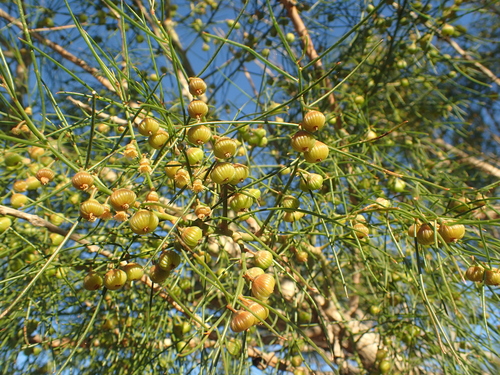
(c) ronavery, some rights reserved (CC BY), uploaded by ronavery
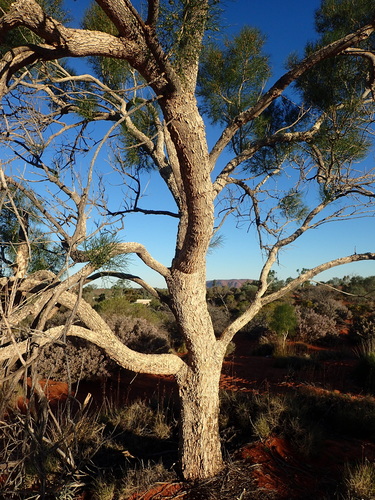
(c) ronavery, some rights reserved (CC BY), uploaded by ronavery
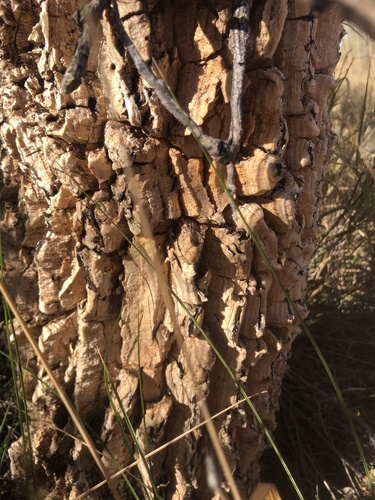
(c) ronandrobynr, some rights reserved (CC BY-NC)
What to Eat
Edible parts: Grub
Grubs associated with the plant are eaten.
Known Hazards
Where to Find It
It grows on sand dunes near the coast and sand ridges inland.
Australia*,
How to Identify
A medium sized shrub. It grows 3-5 m high and spreads 1-3 m wide. The crown is bushy. The bark is thick and corky. The leaves are 2-7 cm long by 0.1 cm wide. They are soft, light green and often wavy. Flowers occur singly in the axils of leaves. The male flowers are 0.6 cm across and have 40-100 stamens in 4-7 rows. The female flowers are 0.5 cm across. They are 17-33 carpels. The fruit are 0.8 cm across.
Wikipedia
Source ↗Gyrostemon ramulosus is a plant in the family Gyrostemonaceae. It was first described by René Louiche Desfontaines in 1820. It is native to dry zones in Western and South of Australia.
Notes
There are 12 Gyrostemon species.
References (9)
- Boomsma, C.D., 1972, Native Tree of South Australia. Woods & Forests Department South Australia, Bulletin No.19. p 196
- Cherikoff V. & Isaacs, J., The Bush Food Handbook. How to gather, grow, process and cook Australian Wild Foods. Ti Tree Press, Australia p 190
- Flora of Australia, Volume 8, Lecythidales to Batales, Australian Government Publishing Service, Canberra (1982) p 367
- Hibbert, M., 2002, The Aussie Plant Finder 2002, Florilegium. p 118
- Lazarides, M. & Hince, B., 1993, Handbook of Economic Plants of Australia, CSIRO. p 126
- Mem. Mus. Paris 6: 17. T. 6. 1820
- Morley, B.D., & Toelken, H.R., (Eds), 1983, Flowering Plants in Australia. Rigby. p 70
- Paczkowska, G. & Chapman, A.R., 2000, The Western Australian Flora. A Descriptive Catalogue. Western Australian Herbarium. p 267
- Wheeler, J.R.(ed.), 1992, Flora of the Kimberley Region. CALM, Western Australian Herbarium, p 266

