Allmania nodiflora
(L.) R. Br. ex Wight
Node flower allmania

(c) J.M.Garg, some rights reserved (CC BY)

(c) J.M.Garg, some rights reserved (CC BY)
(c) V.Arun, some rights reserved (CC BY-NC)
What to Eat
Edible parts: Leaves, Vegetable
Leaves - cooked and eaten as a vegetable. Leaves and young shoots. They are cut into small pieces and cooked with salt and chilli, and garnished with mustard seeds, curry leaves and onions in oil.
Where to Find It
It is a tropical plant. It grows on sandy soil or sandy shores up to 200 m in southern China. It can grow partly in water.
Asia, China, India, Indochina, Laos, Pacific, Philippines, SE Asia, Singapore, Sri Lanka, Vietnam,
How to Identify
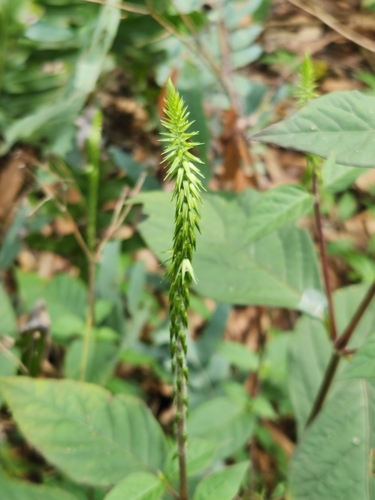
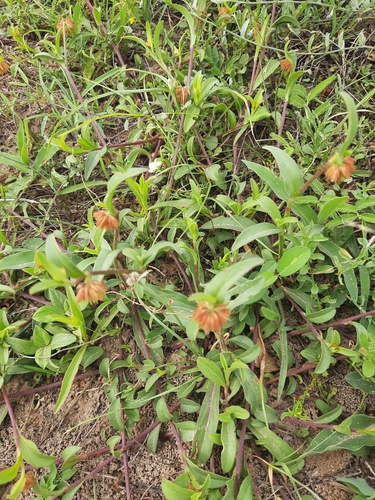
A herb. It can be erect or trailing on the ground. It grows to 80 cm high. The stems are branched near the base. The leaves are finely hairy underneath. The leaves are alternate. The leaves are narrowly oblong and 2-6 cm long by 1-2 cm wide. The flowers are in round heads. There are 3-7 flowers in a group. The flowers are red.
How to Grow
Grows best in a light soil and a sunny position. A very variable species, it has in the past been treated as several distinct species, but all forms grade into one another and are best treated as one.
Medicinal Uses
The ripe fruits are used to treat constipation and dysentery. The leaves are febrifuge.
Other Information
Leaves are sold in local markets.
Notes
There is only one Allmania species.