Alstroemeria ligtu
Linn.
Alstroemeria, Peru untu, St Martin's flower
(c) Guillermo Moreno-Crisóstomo, some rights reserved (CC BY-NC)

(c) felipe_hurtado, some rights reserved (CC BY-NC)

(c) nitsuga74, some rights reserved (CC BY)
What to Eat
Edible parts: Root
The cooked root yields a palatable starch that is highly nutritious and has traditionally been given to children and invalids.
Known Hazards
Where to Find It
It is a warm temperate plant. It grows naturally in dry scrub in rocky sandy soils in Chile. It requires a moist well drained soil and a warm situation. They can grow in seaside gardens. It suits hardiness zones 8-10.
Argentina, Australia, Chile*, Peru, South America,
How to Identify
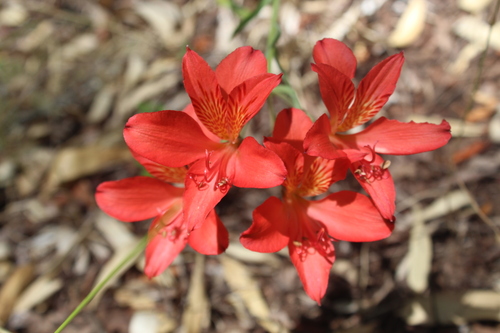
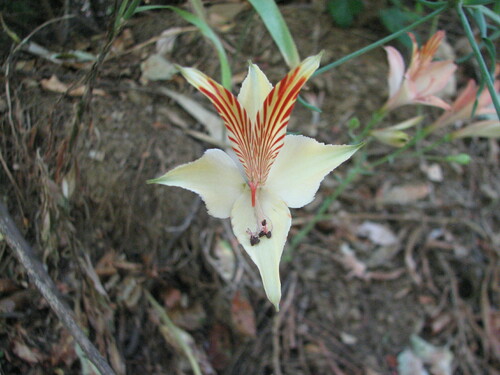
A perennial plant. It grows 60 cm high and spreading to 1 m across. The leaves are 8 cm long. Flowers are purple and pink. They usually have a yellow throat and darker spots. The flowers are 2 or 3 in heads in clusters of up to 8.
How to Grow
Requires a fertile, moisture retentive well-drained soil and a warm situation in sun or semi-shade. Prefers a dry sheltered border and a peaty loam. Established plants are drought tolerant according to one report, whilst another says that the soil should not be allowed to dry out in the growing season. Plants succeed in maritime gardens. A very ornamental plant, it is not hardy in the colder areas of the country, tolerating temperatures down to between -5 to -10°c. Young plants are best given a protective mulch for their first winter or two. The lily-like flowers have a sweet fragrance of mignonette. They are one of the longest-lasting of cut flowers for the home and so are commonly grown for this purpose. The edible roots are sold in local markets in Chile. The roots should be planted 15 - 20cm deep when dormant in late summer to autumn and then be well mulched to protect them from severe winter weather. Plants can be rather invasive, spreading by means of underground fleshy roots to form large patches. Somewhat intolerant of root disturbance, the roots are fleshy and brittle. Bloom Color: Lavender, Pink, Purple, Red, White, Yellow. Form: Rounded.
Propagation: Seed — best sown in individual pots in a cold frame as soon as ripe, though seedlings can be transplanted successfully if moved carefully while small. Pre-soak stored seed for 12 hours in warm water, warm stratify for 4 weeks at 25°C, then reduce temperature to 10°C. Excising a small piece of the seed near the embryo after warm stratification helps speed germination. Plant out approximately 20cm deep into permanent positions in late summer or autumn. Division in April or October, taking care as the plant resents root disturbance — ensure each portion has a growth bud.
Medicinal Uses
None known.
Other Uses
None known.
Wikipedia
Source ↗Alstroemeria ligtu, the Peruvian lily, is a species of flowering plant in the family Alstroemeriaceae, native to Peru, northwest Argentina and central Chile.
Other Information
The edible roots are sold in local markets in Chile.
Notes
There are about 50-80 Alstroemeria species. They occur in South America especially in cool mountain regions.
Names & Synonyms
Chuno de concepcion, Linto, Liuto, Mariposa del campo, Utat
References (10)
- Bircher, A. G. & Bircher, W. H., 2000, Encyclopedia of Fruit Trees and Edible Flowering Plants in Egypt and the Subtropics. AUC Press. p 21
- Bodkin, F., 1991, Encyclopedia Botanica. Cornstalk publishing, p 71
- Cordero, S. E., Abello, L. A., & Galvez, F. L., 2017, Plantas silvestres comestibles y medicinales de Chile y otras partes del mundo. CORMA p 141
- Cundall, P., (ed.), 2004, Gardening Australia: flora: the gardener's bible. ABC Books. p 140
- Hedrick, U.P., 1919, (Ed.), Sturtevant's edible plants of the world. p 46
- Kermath, B. M., et al, 2014, Food Plants in the Americas: A survey of the domesticated, cultivated and wild plants used for Human food in North, Central and South America and the Caribbean. On line draft. p 48
- Lamberton, K (Ed.), 2004, The Australian gardening encyclodepia. Murdoch Books, NSW Australia. p 161
- Leon-Lobos, P., et al, 2022, Patterns of Traditional and Modern Uses of Wild Edible Native Plants of Chile: Challenges and Future Perspectives. Plants (Basel) v 11 (6) Table S1
- Plants for a Future database, The Field, Penpol, Lostwithiel, Cornwall, PL22 0NG, UK. http://www.scs.leeds.ac.uk/pfaf/
- Pl. Alstromeria 10. 1762 (Amoen. acad. 6:254. 1763)