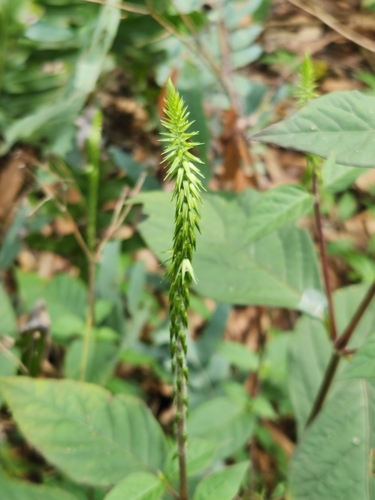
Amaranthus macrocarpus
Benth.
Desert amaranth
AmaranthaceaeSeeds/Nuts
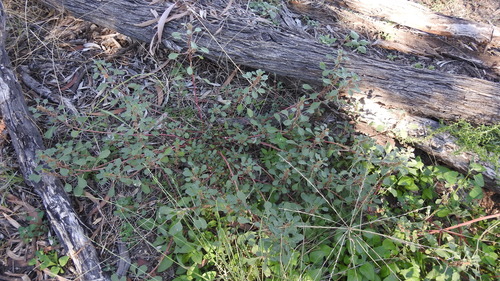
iNaturalist · cc-by-nc
(c) Bruce McLennan, some rights reserved (CC BY-NC), uploaded by Bruce McLennan
(c) Bruce McLennan, some rights reserved (CC BY-NC), uploaded by Bruce McLennan
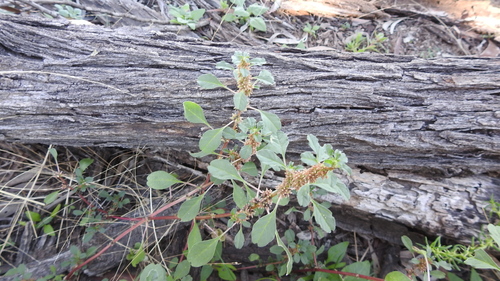
iNaturalist · cc-by-nc
(c) Bruce McLennan, some rights reserved (CC BY-NC)
(c) Bruce McLennan, some rights reserved (CC BY-NC)
What to Eat
Edible parts: Seeds
The seeds are edible and can be harvested and eaten.
Where to Find It
It grows in inland Australia. It needs well-drained soils and an open sunny position. It is resistant to drought and frost.
Australia*,
Countries: Australia
How to Identify
An annual herb. It grows 50 cm high and spreads 30 cm wide. The stem is erect and stout. The leaves are oval and entire and taper to the tip. They occur one after another in an alternate fashion. The flowers are very small. They are in clusters in the axils of the leaves.
How to Grow
Plants can be grown from seed.
Notes
There are about 60 Amaranthus species.
References (6)
- Bodkin, F., 1991, Encyclopedia Botanica. Cornstalk publishing, p 74
- Checklist of NT Vascular Plant Species. January 2003.
- Cherikoff V. & Isaacs, J., The Bush Food Handbook. How to gather, grow, process and cook Australian Wild Foods. Ti Tree Press, Australia p 194
- Fl. austral. 5:216. 1870
- Hunter, J.T., 2017, Is there a relationship between contemporary high Aboriginal plant resource locations and mapped vegetation communities? Cunninghamia 17:27-34. The Royal Botanic Garden Sydney. ISSN 2200 - 405X
- Lazarides, M. & Hince, B., 1993, Handbook of Economic Plants of Australia, CSIRO. p 17