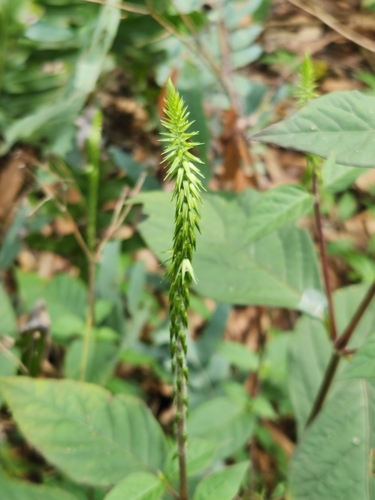
Amaranthus retroflexus
L.
Red-root Amaranth, Pigweed
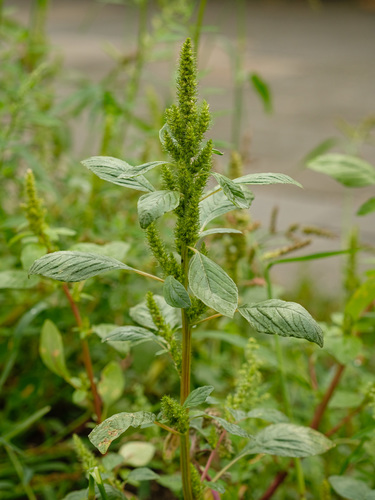
(c) Alexander Rumpel, some rights reserved (CC BY-NC), uploaded by Alexander Rumpel
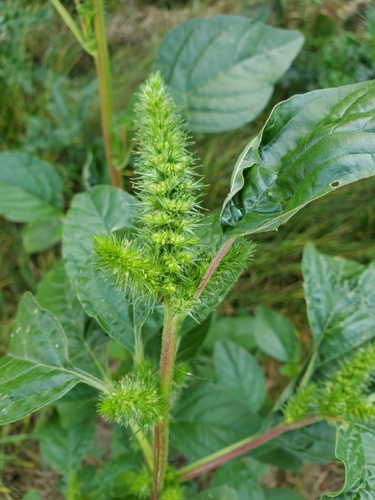
(c) crazybirdy, some rights reserved (CC BY-NC), uploaded by crazybirdy

(c) Марина Горбунова-Ëлкина, some rights reserved (CC BY-NC), uploaded by Марина Горбунова-Ëлкина
What to Eat
Edible parts: Leaves, Seeds
Common amaranth provides edible leaves and seeds. The young leaves are highly nutritious and tender, suitable for eating raw in salads or cooked as a leafy vegetable. Their flavor is mild and spinach-like with nettle-like undertones; cooked, they maintain a soft texture without sliminess, and even the young stalks remain tender. The leaves may contain nitrates and oxalates, but levels are generally too low to pose a problem in a normal diet, and brief boiling can reduce nitrates further. The leaves are very rich in iron and a good source of vitamins A and C. The seeds are small — about 1mm in diameter — rounded, and usually reddish-brown to black. Prolific and easy to harvest, they can be eaten raw or cooked, ground into a powder for use as a cereal substitute, or sprouted and added to salads. Roasting the seed before grinding greatly improves the flavor, and ground seed is often added to maize meal. Cooked whole, the seeds become very gelatinous, though it is difficult to crush all of them in the mouth and some will pass through the digestive system without being assimilated. Seeds store well when dry.
Known Hazards
Where to Find It
A temperate and Mediterranean plant. It grows in waste land and amongst crops in most temperate regions of the world. It will grow in the tropics. It can grow in arid places. It grows in Sichuan.
Afghanistan, Africa, Albania, Algeria, Argentina, Armenia, Asia, Australia, Austria, Balkans, Bolivia, Bosnia, Brazil, Britain, Bulgaria, Canada, Caucasus, Central Asia, China, Croatia Cyprus, Czech Republic, East Africa, Ecuador, Egypt, Europe, France, Georgia, Greece, Hawaii, Indochina, Iran, Iraq, Israel, Italy, Japan, Jordan, Korea, Kyrgyzstan, Lebanon, Libya, Luxembourg, Madagascar, Mediterranean, Mexico*, Middle East, Moldova, Mongolia, Morocco, North Africa, North America, Pacific, Pakistan, Romania, Saudi Arabia, SE Asia, Sicily, Slovenia, South Africa, Southern Africa, South America, Spain, Syria, Tajikistan, Thailand, Tibet, Tunisia, Turkey, Türkiye, USA, Vietnam, Zambia, Zimbabwe,
How to Identify
An annual herb which grows to 60-90 cm high. It has furry stems. The root is usually rosy red. The leaves and stems are often quite red in colour. The leaves are oval or sword shaped. The seed spikes are green and bristly. These can be at the top of the plant or in the axils of leaves.
Nutrition Score: 67/100
| Part | Moisture | kJ | kcal | Protein | Vit A | Vit C | Iron | Zinc |
|---|---|---|---|---|---|---|---|---|
| Seeds | 10.3 | 1944 | 474 | 17.3 | — | — | 101 | 9.7 |
| Leaves | 93.2 | — | — | 1.6 | — | — | — | — |
How to Grow
Prefers a well-drained fertile soil in a sunny position. Requires a hot sheltered position if it is to do well. Plants should not be given inorganic fertilizers, see notes above on toxicity. A good companion for potatoes, onions, corn, tomatoes, peppers and aubergines. A deep rooted plant, bringing up minerals from lower levels of the soil. Formerly cultivated as a food crop by the N. American Indians. Most if not all members of this genus photosynthesize by a more efficient method than most plants. Called the 'C4 carbon-fixation pathway', this process is particularly efficient at high temperatures, in bright sunlight and under dry conditions. In garden design, as well as the above-ground architecture of a plant, root structure considerations help in choosing plants that work together for their optimal soil requirements including nutrients and water. The predictable growth behaviour makes it easier to maintain without having to apply containment methods. Annual, frost-tender. Best suited to zones 5–9, though it will self-seed and reappear wherever summers are warm. Growing Conditions: Sun: Thrives in full sun. Soil: Extremely adaptable, tolerating a wide range of soils including poor or disturbed ground. Moisture: Grows well with summer rainfall but is drought-tolerant once established. Growth Habit: Upright annual, usually 0.5–2 m tall, with coarse, reddish stems and dense, greenish flower spikes that turn brown when seeds mature.
Propagation: Sow seed in late spring in situ. An earlier sowing can be made in a greenhouse, with plants put out after the last expected frosts. Germination is usually rapid and good when the soil is warm, and a drop in temperature overnight aids germination. Cuttings of growing plants root easily.
Medicinal Uses
A tea made from the leaves is astringent and used in the treatment of profuse menstruation, intestinal bleeding, and diarrhoea. An infusion has also been used to treat hoarseness.
Other Uses
Yellow and green dyes can be obtained from the whole plant. When fed to cattle and pigs in large amounts, this plant — like many other amaranth species — may be harmful and even deadly. Supplied in moderation, however, it is regarded as an exceptionally nutritious fodder. This species is also noted as a dynamic accumulator and is suited to food forest plantings.
Wikipedia
Source ↗Amaranthus retroflexus is a species of flowering plant in the family Amaranthaceae with several common names, including red-root amaranth, redroot pigweed, red-rooted pigweed, common amaranth, pigweed amaranth, and common tumbleweed. Outside of its native range, it is considered a weed. Leaves, stems and seeds may be eaten raw and cooked, the leaves have a high nutritional value. When grown on nitrogen-rich soils they are known to concentrate nitrates in the leaves, especially noticeable on land where nitrate fertilizer is used.
Other Information
Formerly cultivated as a food crop by the N. American Indians. It is eaten in Turkey. It is sold in local markets.
Notes
There are about 60 Amaranthus species.
Names & Synonyms
Agghijtone, Anamalitalita, Anatarika, Arbai, Bozoglan, Den tram, Fan zhi xian, Havakatar, Horoz ibigi, Kirmizi koklu tilki kuyrugu, Kizilbacak, Kizilot, Koksor, Krasni koren, Krvavordeči ščir, Laskavec ohnuty, Legendur, Lippia, Llaboda, Obiknoven shtir, Pasa pancan, Phak khom, Reverse branch amaranth, Sa die, Selkok, Sermask, Silqvas, Sipirgeyi sor, Sirken, Stir, Tar, Tar gor, Xian cai
References (89)
- Al-Sodany, Y. M., et al, 2013, Medicinal Plants in Saudi Arabia: I. Sarrwat Mountains at Taif, KSA. Academic Journal of Plant Sciences 6 (4): 134-145
- Ari, S., et al, 2015, Ethnobotanical survey of plants used in Afyonkarahisar-Turkey. Journal of Ethnobiology and Ethnomedicine 11:84
- Bao Bojian; Steve Clemants, Thomas Borsch, Amaranthaceae [Draft], Flora of China
- Beckstrom-Sternberg, Stephen M., and James A. Duke. "The Foodplant Database." http://probe.nalusda.gov:8300/cgi-bin/browse/foodplantdb.(ACEDB version 4.0 - data version July 1994)
- Bensch C. N., Horak M. J. and Peterson D., 2003, Interference of redroot pigweed (Amaranthus retroflexus), Palmer amaranth (A. palmeri), and common waterhemp (A. rudis) in soybean, Weed Science 51: pp.37–43.
- Biscotti, N. & Pieroni, A., 2015, The hidden Mediterranean diet: wild vegetables traditionally gathered and consumed in the Gargano area, Apulia, SE Italy. Acta Societatis Botanicorum Poloniae 84 (3): 327-338
- Biscotti, N. et al, 2018, The traditional food use of wild vegetables in Apulia (Italy) in the light of Italian ethnobotanical literature. Italian Botanist 5:1-24
- Blamey, M and Grey-Wilson, C., 2005, Wild flowers of the Mediterranean. A & C Black London. p 41
- Bussman, R. W., et al, 2016, A comparative ethnobotany of Khevsureti, Samtskhe-Javakheti, Tusheti, Svaneti, and Racha-Lechkhumi, Republic of Georgia (Sakartvelo), Caucasus. Journal of Ethnobiology and Ethnomedicine (2016) 12:43
- Bussman, R. W. et al, 2017, Ethnobotany of Samtskhe-Javakheti, Sakartvelo (Republic of Georgia), Caucasus. Indian Journal of Traditional Knowledge Vol. 16(1) pp 7-24
- Bussman, R. W., et al, 2021, Unity in diversity—food plants and fungi of Sakartvelo (Republic of Georgia), Caucasus. Journal of Ethnobiology and Ethnomedicine (2021) 17:72 p 4
- Cakir, E. A., 2017, Traditional knowledge of wild edible plants of Iğdır Province (East Anatolia, Turkey). Acta Soc Bot Pol. 2017;86(4):3568.
- Cerne, M., 1992, Wild Plants from Slovenia used as Vegetables. Acta Horticulturae 318
- Ciocarlan, N. & Ghendov, V., 2015, Ethnobotanical and Ecological Studies of Wild Edible Plants from Bugeac Steppe, Republic of Moldova. Journal of EcoAgriTourism. Cailta terra Vol. 11(2):
- Cribb, A.B. & J.W., 1976, Wild Food in Australia, Fontana. p 115
- Curtis, W.M., 1993, The Student's Flora of Tasmania. Part 3 St David's Park Publishing, Tasmania, p 566
- Dashorst, G.R.M., and Jessop, J.P., 1998, Plants of the Adelaide Plains & Hills. Botanic Gardens of Adelaide and State Herbarium. p 62
- Demir, E., et al, 2020, Nutrient and bioactive substance contents of edible plants grown naturally in Salıpazarı (Samsun). Acta Sci. Pol. Hortorum Cultus, 19(1), 151–160
- Demir, I. & Ayaz, N., 2022, Wild edible plants contributing to the traditional foods of Mardin (Turkey) Province. Indian Journal of Traditional Knowledge Vol 21(3), July 2022, pp 569-582
- Dogan, Y., et al, 2004, The Use of Wild Edible Plants in Western and Central Anatolia (Turkey). Economic Botany 58(4) pp. 684-690
- Dogan, Y., 2012, Traditionally used wild edible greens in the Aegean Region of Turkey. Acta Societatis Botanicorum Poloniae 81(4): 329-342 (Also as Amaranthus chlorostachys)
- Dogan, A. & Tuzlaci, E., 2015, Wild Edible Plants of Pertek (Tunceli-Turkey). Marmara Pharmaceutical Journal 19: 126-135
- Duke, J.A., 1992, Handbook of Edible Weeds. CRC Press. p 28
- Elias, T.S. & Dykeman P.A., 1990, Edible Wild Plants. A North American Field guide. Sterling, New York p 72
- Ertug, F., 2000, An Ethnobotanical Study in Central Anatolia (Turkey). Economic Botany Vol. 54. No. 2. pp. 155-182
- Ertug, F, Yenen Bitkiler. Resimli Türkiye Florası -I- Flora of Turkey - Ethnobotany supplement
- Ertug, F., 2004, Wild Edible Plants of the Bodrum Area. (Mugla, Turkey). Turk. J. Bot. 28 (2004): 161-174
- Esperanca, M. J., 1988. Surviving in the wild. A glance at the wild plants and their uses. Vol. 2. p 149
- Facciola, S., 1998, Cornucopia 2: a Source Book of Edible Plants. Kampong Publications, p 8
- Flora Zambesiaca. http://apps.kew.org/efloras
- Geraci, A., et al, 2018, The wild taxa utilized as vegetables in Sicily (Italy): a traditional component of the Mediterranean diet. Journal of Ethnobiology and Ethnomedicine (2018) 14:14
- Hadjichambis, A. C., et al, 2007, Wild and semi-domesticated food plant consumption in seven circum-Mediterranean areas. International Journal of Food Sciences and Nutrition. 2007, 1-32.
- Hedrick, U.P., 1919, (Ed.), Sturtevant's edible plants of the world. p 48
- Heywood, V.H., Brummitt, R.K., Culham, A., and Seberg, O. 2007, Flowering Plant Families of the World. Royal Botanical Gardens, Kew. p 29
- Hovsepyan, R., et al, 2016, Food as a marker for economy and part of identity: traditional vegetal food of Yezidis and Kurds in Armenia. Journal of Ethnic Foods. 3:32-41
- https://en.wikipedia.org/wiki/List of wild edible plants in Mongolian cuisine
- Hussey, B.M.J., Keighery, G.J., Cousens, R.D., Dodd, J., Lloyd, S.G., 1997, Western Weeds. A guide to the weeds of Western Australia. Plant Protection Society of Western Australia. p 80
- Hu, Shiu-ying, 2005, Food Plants of China. The Chinese University Press. p 381
- Hwang, H., et al, 2013, A Study on the Flora of 15 Islands in the Western Sea of Jeollanamdo Province, Korea. Journal of Asia-Pacific Biodiversity Vol. 6, No. 2 281-310
- Hwang, HS, et al, 2014, Distribution characteristics of plant in the Ungseokbong Mountain, Gyeongsangnam-do, Korea. Journal of Asia-Pacific Biodiversity. 7(2014) e164-e178
- Hyde-Wyatt, B.H. & Morris D.I., 1975, Tasmanian Weed Handbook. Dept of Ag Tasmania. p 73
- Irving, M., 2009, The Forager Handbook, A Guide to the Edible Plants of Britain. Ebury Press p 45
- Kang, Y., et al, 2012, Wild food plants and wild edible fungi in two valleys on the Qinling Mountains (Shaanxi, central China) Journal of Ethnobiology and Ethnomedicine; 9:26
- Kang, Y. et al, 2014, Wild food plants used by the Tibetans of Gongba Valley (Zouqu country, Gansu, China) Journal of Ethnobiology and Ethnomedicine 10:20
- Kaya, O. M., et al, 2020, An ethnobotanical research in Sanhurfa central district and attached Villages (Turkey). Indian Journal of Traditional Knowledge. Vol. 19(1) pp 7-23
- Khasbagan, Hu-Yin Huai, and Sheng-Ji pei, 2000, Wild Plants in the Diet of Athorchin Mongol Herdsmen in Inner Mongolia. Economic Botany 54(4): 528-536
- Lamp, C & Collet F., 1989, Field Guide to Weeds in Australia. Inkata Press. p 15
- Lazarides, M. & Hince, B., 1993, Handbook of Economic Plants of Australia, CSIRO. p 17
- Low, T., 1991, Wild Herbs of Australia and New Zealand. Angus & Robertson. p 44 (Drawing)
- Luczaj et al, 2013, Wild vegetable mixes sold in the markets of Dalmatia (southern Croatia). Journal of Ethnobiology and Ethnomedicine. 8:2
- Luczaj, L. et al, 2013, Wild food plants used in the villages of the Lake Vrana Nature Park (northern Dalmatia, Croatia). Acta Societatis Botanicorum Poloniae, 82(4): 275-281
- Luczaj, L. et al, 2014, Wild Food Plants of Dalmatia (Croatia). in A. Pieroni, C. L. Quave (eds.), Ethnobotany and Biocultural Diversities in the Balkans, p 138
- Mabey, R., 1973, Food for Free. A Guide to the edible wild plants of Britain, Collins. p 104
- MacKinnon, A., et al, 2009, Edible & Medicinal Plants of Canada. Lone Pine. p 311
- Mahklouf, M. H., 2019, Ethnobotanical Study of Edible Wild Plants in Libya. European Journal of Ecology. 5(2): 30-40
- Mapes, C. & Basurto, F., 2016, Biodiversity and Edible Plants of Mexico. Chapter 5 in R. Lira, et al. (eds.), Ethnobotany of Mexico, Ethnobiology, Springer. p 114
- Nanagulyan, S., et al, 2020, Wild plants and fungi sold in the markets of Yerevan (Armenia). Journal of Ethnobiology and Ethnomedicine 16:26
- Nassif, F., & Tanji, A., 2013, Gathered food plants in Morocco: The long forgotten species in Ethnobotanical Research. Life Science Leaflets 3:17-54
- Nedelcheva A., 2013, An ethnobotanical study of wild edible plants in Bulgaria. EurAsian Journal of BioSciences 7, 77-94
- Ozbucak, T. B., et al, 2007, Nutrition Content of Some Wild Edible Plants in the Central Black Sea Region of Turkey. International Journal of Natural and Engineering Sciences 1:11-13
- Pacifico, S. D'Abrosca, B., Golino, A., Mastellone, C., Piccolella, S. and Fiorentino, A., 2008, Antioxidant evaluation of polyhydroxylated nerolidols from redroot pigweed (Amaranthus retroflexus) leaves, LWT - Food Science and Technology, Volume 41, Issue 9, pp. 1665–1671.
- Paczkowska, G. & Chapman, A.R., 2000, The Western Australian Flora. A Descriptive Catalogue. Western Australian Herbarium. p 137
- Pham-Hoang Ho, 1999, An Illustrated Flora of Vietnam. Nha Xuat Ban Tre. p 729
- Pieroni, A., 2008, Local plant resources in the ethnobotany of Theth, a village in the Northern Albanian Alps. Genet Resour Crop Evol (2008) 55:1197–1214
- Pieroni, A., 2017, Traditional uses of wild food plants, medicinal plants, and domestic remedies in Albanian, Aromanian and Macedonian villages in South-Eastern Albania. Journal of Herbal Medicine 9: 81-90
- Pieroni, A. & Soukand, R., 2017, The disappearing wild food and medicinal plant knowledge in a few mountain villages of North-Eastern Albania. Journal of Applied Botany and Food Quality 90, 58 - 67
- Pieroni, A., et al, 2005, Food for two seasons: Culinary uses of non-cultivated local vegetables and mushrooms in a south Italian village. International Journal of Food Sciences and Nutrition, 56(4): 245-272
- Pieroni, A., et al, 2020, Wild food plants traditionally gathered in central Armenia: archaic ingredients or future sustainable foods? Environment, Development and Sustainability. Springer p 6
- Plants for a Future database, The Field, Penpol, Lostwithiel, Cornwall, PL22 0NG, UK. http://www.scs.leeds.ac.uk/pfaf/
- Polat, R., et al, 2015, Survey of wild food plants for human consumption in Elazig (Turkey). Indian Journal of Traditional Knowledge. Vol. 1(1): 69-75
- Polat, R., et al, 2017, Survey of wild food plants for human consumption in Bingol, (Turkey). Indian Journal of Traditional Knowledge. Vol. 16(3) July 2017, pp. 378-384
- Razanameharizaka, J., et al, 2022, Catalogue Legumes Traditionnels de Madagascar. Université d’Antananarivo, Antananarivo (101), Madagascar. Vol. 1. p 13
- Recher, P, 2001, Fruit Spirit Botanical Gardens Plant Index. www.nrg.com.au/~recher/ seedlist.html p 4
- Redzic, S. J., 2006, Wild Edible Plants and their Traditional Use in the Human Nutrition in Bosnia-Herzegovina. Ecology of Food and Nutrition, 45:189-232
- Redzic, S., 2010, Use of Wild and Semi-Wild Edible Plants in Nutrition and Survival of People in 1430 Days of Siege of Sarajevo during the War in Bosnia and Herzegovina (1992–1995). Coll. Antropol 34 (2010) 2:551-570
- Royal Botanic Gardens, Kew (1999). Survey of Economic Plants for Arid and Semi-Arid Lands (SEPASAL) database. Published on the Internet; http://www.rbgkew.org.uk/ceb/sepasal/internet [Accessed 24th March 2011]
- Sachula, et al, 2020, Wild edible plants collected and consumed by the locals in Daqinggou, Inner Mongolia, China. Journal of Ethnobiology and Ethnomedicine (2020) 16:60
- Simkova, K. et al, 2014, Ethnobotanical review of wild edible plants used in the Czech Republic. Journal of Applied Botany and Food Quality 88, 49-67
- Sp. pl. 2:991. 1753
- Steenbeeke, Greg as part of the Plants Directory project. List of plant species from northern NSW that may be used as food plants p 5
- Stern, G., 1986, Australian Weeds. A Source of Food and Medicine. Harper & Row. p 16
- Ulian, T., et al, 2020, Unlocking plant resources to support food security and promote sustainable agriculture. Plants, People, Planet. 2020;2:421–445.
- Wang, J. et al, 2013, A Study on the Utilization of Wild Plants for Food in Liangshan Yi Autonomous Prefecture. Plant Diversity and Resources. 35(4): 416-471
- Weche-Ebeling, P., et al, 1995, Value of Some Wild Amaranthus Species (Amaranthaceae) of Nuevo Leon, Mexico. Economic Botany 49(4): 423-430
- Wild Edible Plants in Lebanon. Promoting dietary diversity in poor communities in Lebanon. http://www.wildedibleplants.org/
- Wujisguleng, W., & Khasbagen. K., 2010, An integrated assessment of wild vegetable resources in Inner Mongolian Autonomous Region, China. Journal of Ethnobiology and Ethnomedicine 6:34
- www.wildediblefood.com
- Yesil, Y., et al, 2019, Wild edible plants in Yeşilli (Mardin-Turkey), a multicultural area. Journal of Ethnobiology and Ethnomedicine (2019) 15:52
- Yesil, Y., et al, 2019, Traditional knowledge of wild edible plants in Hasankeyf (Batman Province, Turkey). Acta Societatis Botanicorum Poloniae. 88(3):3633