Pachycarpus lineolatus
(Decne) Bullock

(c) Nicholas Wightman, some rights reserved (CC BY-NC), uploaded by Nicholas Wightman
(c) Nicholas Wightman, some rights reserved (CC BY-NC), uploaded by Nicholas Wightman
(c) Samadori S. Honore Biaou, some rights reserved (CC BY-NC), uploaded by Samadori S. Honore Biaou
What to Eat
Edible parts: Roots, Caution
The roots are powdered or dried and then boiled for consumption.
Known Hazards
Where to Find It
A tropical plant. It grows in the savannah.
Africa, Benin, Burkina Faso, Cameroon, Central Africa, Congo, Côte d'Ivoire, East Africa, Ghana, Guinea-Bissau, Ivory Coast, Malawi, Namibia, Nigeria, Senegal, Southern Africa, Sudan, Tanzania, West Africa, Zambia, Zimbabwe,
How to Identify
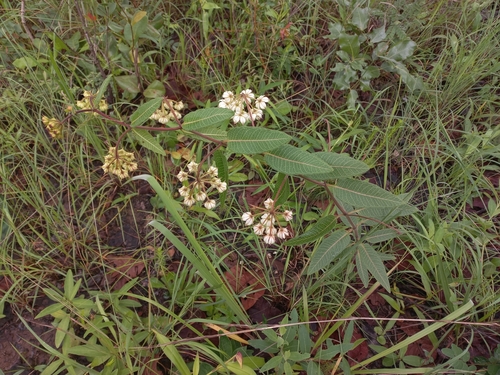
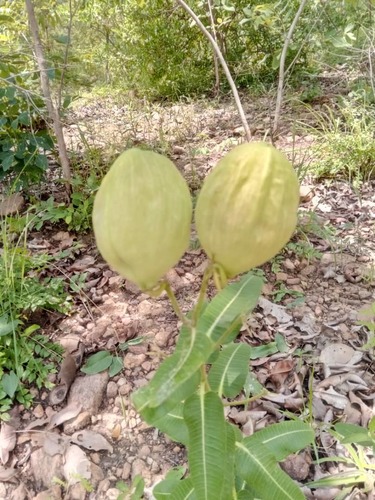
A single stemmed plant. It is erect and keeps growing from year to year. It puts up annual stems. It grows 1.5 m high. The roots are thick and spindle shaped. They have a white flesh and milky sap. The flowers are tinged purple. The fruit are made of 2 follicles. They are spindle shaped and 12 cm long by 7 cm wide.
Medicinal Uses
The plant is traditionally used as a medicine.
Notes
It is used as a medicine. This may be the same as Pachycarpus bisacculatus in Zimbabwe.
Names & Synonyms
Bafurma, Cupunco, Fiye, Mullibe
References (6)
- Abbiw, D.K., 1990, Useful Plants of Ghana. West African uses of wild and cultivated plants. Intermediate Technology Publications and the Royal Botanic Gardens, Kew. p 31
- Burkill, H. M., 1985, The useful plants of west tropical Africa, Vol. 1. Kew.
- Fowler, D. G., 2007, Zambian Plants: Their Vernacular Names and Uses. Kew. p 10
- Grivetti, L. E., 1980, Agricultural development: present and potential role of edible wild plants. Part 2: Sub-Saharan Africa, Report to the Department of State Agency for International Development. p 24 (As Asclepias lineolata)
- Jardin, C., 1970, List of Foods Used In Africa, FAO Nutrition Information Document Series No 2.p 18
- World Checklist of Useful Plant Species 2020. Royal Botanic Gardens, Kew


