Synsepalum msolo
(Engl.) Engl.

MBG

MBG

MBG
What to Eat
Edible parts: Fruit
The ripe fruit pulp is eaten fresh, or the ripe fruit can be soaked in water, squeezed, filtered, and consumed as juice with added sugar.
Where to Find It
A tropical plant. It grows in lowland rainforests in East Africa. It suits humid locations. It grows between 80 m and 1400 m above sea level. It grows in areas with average rainfalls between 650 mm and 1750 mm. It grows in areas with temperatures between 16°C and 31°C.
Africa, Benin, Cameroon, Central Africa, Central African Republic, CAR, Congo, East Africa, Ghana, Kenya, Nigeria, Tanzania, Togo, Uganda, West Africa,
How to Identify
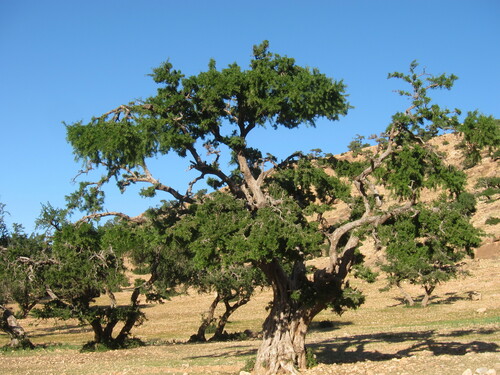
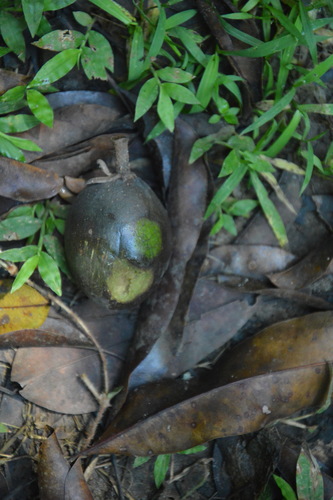
A medium to tall evergreen tree. It grows 20 to 50 m tall. It has a dense crown and deeply fluted trunk. The trunk can be 3 m across. The leaves occur one after another along the stalk. They can be 8 to 35 cm long and 3 to 14 cm wide. They are dark green and leathery. They are shiny and smooth on the upper surface and slightly hairy and silver underneath. Leaf shape varies. They tend to be oval. Flowers are small and greenish white. They have a smell. The flowers are clustered below the leaves on young branches. The fruit are small and green. They are almost round berries about 3 cm long by 2.5 cm wide. The fruit become yellow when ripe and have a milky juice. The fruit pulp is edible.
How to Grow
Plants grow naturally from seed. Seed germination is good. Trees can be topped and this improves fruit quality.
Other Uses
The wood is used for building poles, tool handles, spoons and pestles. The wood is used for fuel and to make charcoal.
Production
Trees are slow growing. Ripe fruit are collected from the tree. Trees flower July, October and December with fruit ripe in February to April. It takes about 6 months from flowering to fruit maturing.
Other Information
The fruit are especially eaten by children.
Names & Synonyms
Mohocho, Msambia, Msavia, Poki
References (16)
- Burkill, H. M., 1985, The useful plants of west tropical Africa, Vol. 5. Kew.
- Dale, I. R. and Greenway, P. J., 1961, Kenya Trees and Shrubs. Nairobi. p 529 (As Pachystela msolo)
- East African Herbarium records, 1981,
- FAO. 1983, Food and fruit-bearing forest species 1: Examples from Eastern Africa. FAO Food and Forestry Paper 44/1 p 79
- http://www.fao.org/forestry/25323-096344a3de335832e8f363c3ac5184a66.pdf (As Pachystela msolo)
- Jardin, C., 1970, List of Foods Used In Africa, FAO Nutrition Information Document Series No 2.p 152
- Keay, R.W.J., 1989, Trees of Nigeria. Clarendon Press, Oxford. p 397
- Lovett, J. C. et al, Field Guide to the Moist Forest Trees of Tanzania. p 168
- Maundu, P. et al, 1999, Traditional Food Plants of Kenya. National Museum of Kenya. 288p
- Msuya, T. S., et al, 2010, Availability, Preference and Consumption of Indigenous Foods in the Eastern Arc Mountains, Tanzania, Ecology of Food and Nutrition, 49:3, 208-227
- Mutie, F. M., et al, 2023, Important Medicinal and Food Taxa (Orders and Families) in Kenya, Based on Three Quantitative Approaches. Plants 2023, 12, 1145
- Ruffo, C. K., Birnie, A. & Tengnas, B., 2002, Edible Wild Plants of Tanzania. RELMA p 646
- Vivien, J. & Faure, J.J., 1985, Abres des forets dense d'Afrique Centrale. Agence de Cooperation Culturelle et Technique. Paris. p 436
- Vivien, J., & Faure, J.J., 1996, Fruitiers Sauvages d'Afrique. Especes du Cameroun. CTA p 322
- World Checklist of Useful Plant Species 2020. Royal Botanic Gardens, Kew
- www.worldagroforestrycentre.org/treedb/ (As Pachystela msolo)