Palaquium galactoxylum
(F. Muell.) Lam.
Cairns Pencil Cedar, Red Silkwood, Daintree Maple
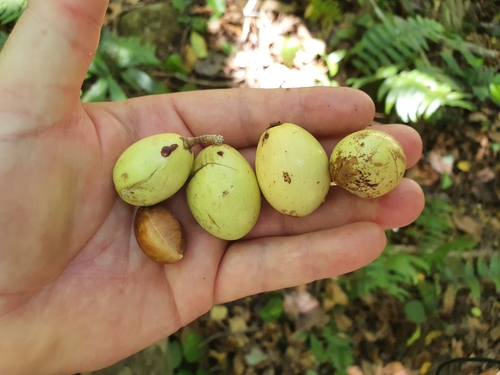
(c) sworboys, some rights reserved (CC BY-NC), uploaded by sworboys
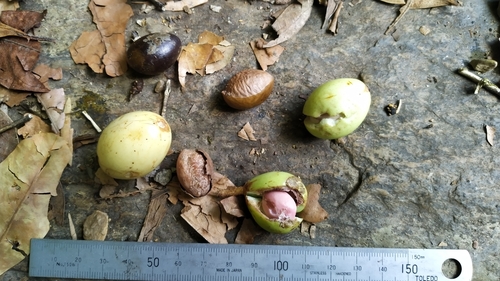
(c) Steve Fitzgerald, some rights reserved (CC BY-SA), uploaded by Steve Fitzgerald
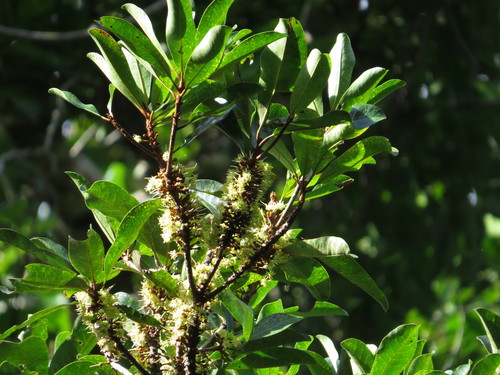
(c) kerrycoleman, some rights reserved (CC BY-NC), uploaded by kerrycoleman
What to Eat
Edible parts: Fruit
The flesh of the fruit is edible.
Where to Find It
It grows in tropical rainforests. It grows in coastal districts and along streams. They need well drained soil. In Townsville palmetum.
Australia*, Pacific, Papua New Guinea, PNG, Solomon Islands,
How to Identify
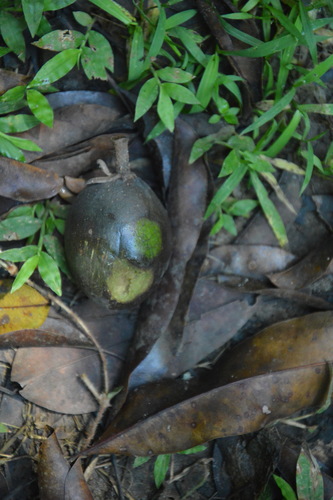
A tree up to 30 m high. It spreads 10-20 m wide. It loses its leaves during the year. The bark is cracked and brown. Young growth has rusty coloured hairs. The leaves are simple and 8-16 cm long by 3-4 cm wide. They occur one after another or in rings. They are dark green and wedge shaped but tapering to the base and with a rounded tip. The broken leaves and twigs have milky latex. The flowers are 0.7 cm logn and greenish-white. The are like tubes at the base and with 5 pointed lobes. The fruit are 30-40 mm long by 20-30 mm wide. These occur singly in the axils of leaves and from mature branches. They have one seed inside. The seed is 25 mm long by 12-20 mm wide. The flesh of the fruit is edible.
How to Grow
Plants are grown from fresh seed.
Other Uses
Produces a useful and decorative cabinet timber.
Wikipedia
Source ↗Palaquium galactoxylum, commonly known as Cairns pencil cedar, Daintree maple or red silkwood, is a species of plants in the star apple family Sapotaceae which is endemic to rainforests of New Guinea and northern Australia. It can produce spectacularly large buttress roots.
Names & Synonyms
References (10)
- Cooper W & Cooper W T, 1994, Fruits of the Rain Forest. RD Press p 210
- Cooper, W. and Cooper, W., 2004, Fruits of the Australian Tropical Rainforest. Nokomis Editions, Victoria, Australia. p 508
- Cribb, A.B. & J.W., 1976, Wild Food in Australia, Fontana. p 47
- Elliot, W.R., & Jones, D.L., 1997, Encyclopedia of Australian Plants suitable for cultivation. Vol 7. Lothian. p 149
- Foreman, D. B., 1971, A checklist of the Vascular Plants of Bougainville with Descriptions of some Common Forest Trees. Botany Bulletin No. 5. Department of Botany. p 150
- French, B.R., 2010, Food Plants of Solomon Islands. A Compendium. Food Plants International Inc. p 356
- Hibbert, M., 2002, The Aussie Plant Finder 2002, Florilegium. p 218
- Jackes, B.R., 2001, Plants of the Tropics. Rainforest to Heath. An Identification Guide. James Cook University. p 81
- Jones D, L, 1986, Ornamental Rainforest Plants in Australia, Reed Books, p 340
- Townsend, K., 1994, Across the Top. Gardening with Australian Plants in the tropics. Society for Growing Australian Plants, Townsville Branch Inc. p 308