Hypogymnia physodes
(Linn.) Nyl.
Lichen, Puffed shield lichen

(c) Liam O'Brien, some rights reserved (CC BY-NC), uploaded by Liam O'Brien
(c) Elena Kudryavtseva, some rights reserved (CC BY-NC), uploaded by Elena Kudryavtseva

(c) Liam O'Brien, some rights reserved (CC BY-NC), uploaded by Liam O'Brien
What to Eat
Edible parts: Lichen
The lichen is cooked into soup and has a pleasant flavour.
Where to Find It
It is a temperate plant. It grows on spruce tree.
Asia, Canada, India, North America, USA,
How to Identify
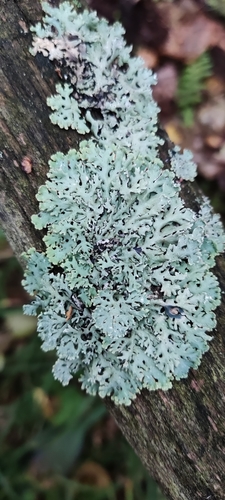
A temperate lichen from the Parmeliaceae family that grows on spruce trees, commonly known as puffed shield lichen.
Wikipedia
Source ↗Hypogymnia physodes, commonly known as the monk's-hood lichen, is a species of foliose lichen in the family Parmeliaceae. It is a common and widespread species in boreal and temperate forests of the Northern Hemisphere. It has a grey to yellowish-green thallus that is loosely attached to its substrate and forms large irregular patches. Hollow lobes are 2–3mm wide. The outer edge turns up and is frequently covered with white powdery soredia underneath. Its lower surface is black, wrinkled and has some browning toward the lobe margins. The pycnidia are black and abundant, and their presence creates a pepper-like effect across the upper surface. Because of its abundance and its moderate sensitivity to sulphur dioxide and heavy metals, Hypogymnia physodes is often used in bioindicator and biomonitoring studies that enable the assessment of air pollution and other environmental conditions.
Names & Synonyms
References (8)
- Ambasta, S.P. (Ed.), 2000, The Useful Plants of India. CSIR India. p 431 (As Parmelia physodes)
- Beckstrom-Sternberg, Stephen M., and James A. Duke. "The Foodplant Database." http://probe.nalusda.gov:8300/cgi-bin/browse/foodplantdb.(ACEDB version 4.0 - data version July 1994) (As Parmelia physodes)
- Etkin, N.L. (Ed.), 1994, Eating on the Wild Side, Univ. of Arizona. p 73 (As Parmelia physodes)
- Kuhnlein, H. V. and Turner, N. J., 1991, Traditional Plant Foods of Canadian Indigenous Peoples. Food and Nutrition in History and Anthropology Volume 8. Gordon and Breach. p 22 (As Parmelia physodes)
- Moerman, D. F., 2010, Native American Ethnobotany. Timber Press. p 378 (As Parmelia physodes)
- www.lichen.com/usetype.html
- www.lichenportal.org
- Yanovsky, E., 1936, Food Plants of the North American Indians. United States Department of Agriculture Miscellaneous Publication No 237. Washington, D.C. p 3 (As Parmelia physodes)


