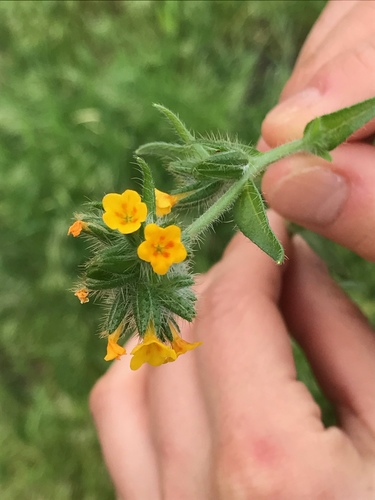
Phacelia ramosissima
Dougl. ex Lehm.
(c) Ron Vanderhoff, some rights reserved (CC BY-NC), uploaded by Ron Vanderhoff

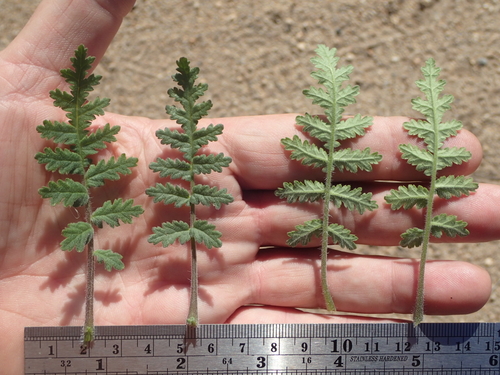
(c) Don Rideout, some rights reserved (CC BY-NC), uploaded by Don Rideout

(c) Eric Koberle, some rights reserved (CC BY-NC), uploaded by Eric Koberle
What to Eat
Edible parts: Leaves
The leaves are edible when cooked and used as greens.
Where to Find It
It is a temperate plant.
North America, USA,
How to Identify
They have thick taproots. The leaves are alternate. The leaves are soft. The flowers are in heads at the ends of the branches.
How to Grow
212155
Medicinal Uses
The roots are emetic. A decoction has been taken to settle a troubled stomach and as a treatment for gonorrhoea.
Other Uses
None known Special Uses
Wikipedia
Source ↗Phacelia ramosissima is a species of flowering plant in the family Hydrophyllaceae. It is known by the common name branching phacelia. It is native to western North America from British Columbia to California and the Southwestern United States, where it can be found in many types of habitat. It is variable in appearance, and there are many intergrading varieties. In general it is a spreading or sprawling prostrate or upright perennial herb which may approach 1.5 meters (4.5 feet) in stem length. It is branched, hairless to densely hairy, and sometimes glandular. The leaves are 4 to 20 centimeters long and most are divided into several toothed or lobed leaflets. The inflorescence is a one-sided curving or coiling cyme of funnel- or bell-shaped flowers. Each flower is under a centimeter long and white to lavender in color with protruding stamens.
Notes
There are about 200 Phacelia species. They grow in North and South America. Also put in the family Hydrophyllaceae.
References (3)
- Beckstrom-Sternberg, Stephen M., and James A. Duke. "The Foodplant Database." http://probe.nalusda.gov:8300/cgi-bin/browse/foodplantdb.(ACEDB version 4.0 - data version July 1994)
- Heywood, V.H., Brummitt, R.K., Culham, A., and Seberg, O. 2007, Flowering Plant Families of the World. Royal Botanical Gardens, Kew. p 171 (Genus)
- Moerman, D. F., 2010, Native American Ethnobotany. Timber Press. p 390