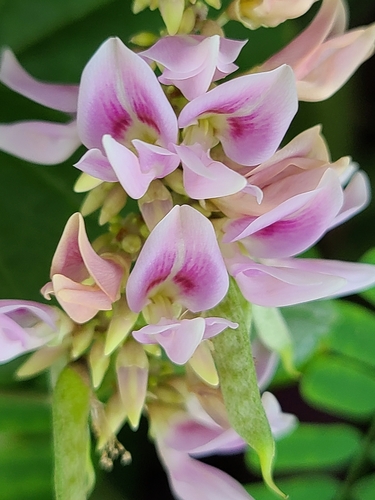
Vigna adenantha
(G. F. W. Meyer) Marechal, Mascherpa & Stainier
Potato bean
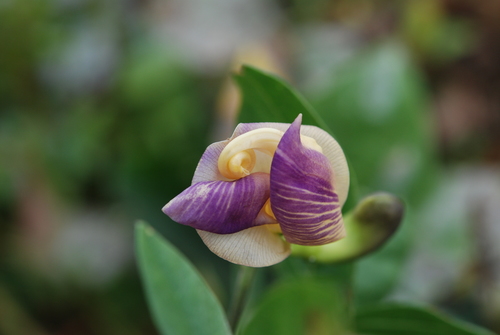
(c) tern911, some rights reserved (CC BY-NC)
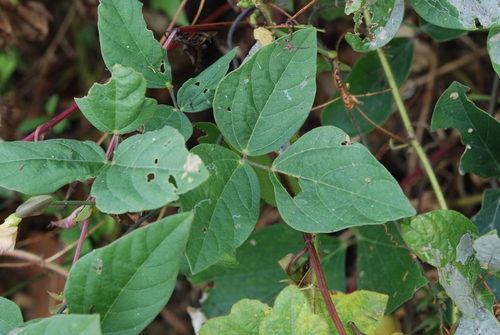
(c) tern911, some rights reserved (CC BY-NC)
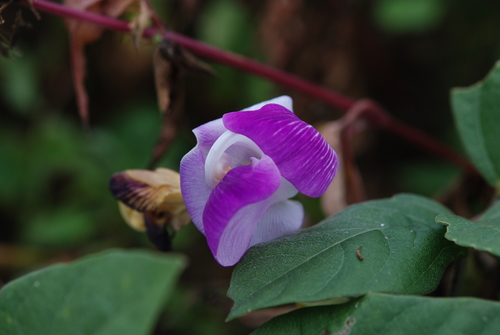
(c) tern911, some rights reserved (CC BY-NC)
What to Eat
Edible parts: Tubers, Seeds, Root, Pods, Vegetable
The tuberous root is boiled and mashed for eating. The seeds and seed pods are consumed as an emergency or famine food.
Where to Find It
A tropical plant. It grows in grassland and savanna. It is normally near the edges of rivers. In Papua New Guinea it occurs between 10-15 m altitude. It grows in the lowlands near the coast and along beaches. It can grow in arid places. In Argentina it grows from sea level to 700 m above sea level.
Africa, American Samoa, Andamans, Angola, Argentina, Asia, Australia, Bahamas, Barbados, Brazil, Burkina Faso, Cameroon, Central Africa, Comoros, Congo, Cuba*, Dominican Republic, East Africa, Guiana, Guianas, Guinea, Guinée, Guinea-Bissau, Guyana, Haiti, India, Indochina, Jamaica*, Laos, Lesser Antilles, Liberia, Madagascar, Mexico*, Myanmar, Nigeria, North America, Pacific, Papua New Guinea, PNG, Paraguay, Puerto Rico, Sao Tome and Principe, SE Asia, Senegal, Seychelles, Sierra Leone, South America*, Sudan, Suriname, Taiwan, Tanzania, Tonga, Pantropical, Uruguay, Venezuela, Vietnam, West Africa, West Indies*,
How to Identify
A climbing herb that keeps growing from year to year. It can be 4 m long. It has a tuberous root. It forms roots at the nodes. The stems can be slightly hairy. The leaflets are oval and the side leaflets are slightly oblique. They are 2.5-14 cm long by 1.6-8 cm across. They can taper towards the tip and be rounded at the base. The veins are often raised. They form a net like pattern. The leaf stalks are 1.5-13.5 cm long. The flowering stalk has 6-12 flowers densely together. The fruit stalk can be 0.5-25 cm long. The standard can be white or red. The keel can be white or blue. The keel curves inwards. The fruit are long narrow pods. They contain 9-15 seeds. The pods are 10-14 cm long and 0.7-1.4 cm wide. The seeds are kidney shaped and reddish brown. They are 5.5-7 mm long by 5 mm wide.
How to Grow
A plant of the tropics and subtropics, it is found from around sea level to elevations of over 1,200 metres in the tropics. Requires a sunny position. Acid light soils favour its not very deep rooting system. The seed has a large cavity between the cotyledons which enables it to float, and the distribution pattern of the species indicates that seeds are sometimes dispersed by sea water. This species has a symbiotic relationship with certain soil bacteria, these bacteria form nodules on the roots and fix atmospheric nitrogen. Some of this nitrogen is utilized by the growing plant but some can also be used by other plants growing nearby.
Propagation: Seed - needs scarification for uniform germination.
Medicinal Uses
A decoction of the whole plant is used as a medicine for gonorrhoea, and mixed with rice water to treat diabetes.
Other Information
It is a famine food.
Names & Synonyms
Banbarbati, Chuo sina, Dau hoa-tuyen, Feijao-do-mato, Karalasana, Karu alachandra, Kattupayaru, Kullounda, Masikanda, Tasad-chandoa, Tirde, Trienfu
References (19)
- Ambasta, S.P. (Ed.), 2000, The Useful Plants of India. CSIR India. p 444
- Brink, M. & Jansen, P.C.M., 2006. Vigna adenantha (G.Mey.) Maréchal, Mascherpa & Stainier. [Internet] Record from Protabase. Brink, M. & Belay, G. (Editors). PROTA (Plant Resources of Tropical Africa), Wageningen, Netherlands. < http://database.prota.org/search.htm>. Accessed 23 October 200
- Burkill, H. M., 1985, The useful plants of west tropical Africa, Vol. 3. Kew.
- Ghosh, A, 2014, Survey of Ethno-medicinal Climbing plants in Andaman and Nicobar Islands, India. Int. J. of Pharm. Life Sci. 5(7): July, 2014:3671-3677
- Grubben, G. J. H. and Denton, O. A. (eds), 2004, Plant Resources of Tropical Africa 2. Vegetables. PROTA, Wageningen, Netherlands. p 565
- Hedrick, U.P., 1919, (Ed.), Sturtevant's edible plants of the world. p 476
- Jardin, C., 1970, List of Foods Used In Africa, FAO Nutrition Information Document Series No 2.p 18, 28
- Kermath, B. M., et al, 2014, Food Plants in the Americas: A survey of the domesticated, cultivated and wild plants used for Human food in North, Central and South America and the Caribbean. On line draft. p 909
- Kinupp, V. F., 2007, Plantas alimenticias nao-convencionais da regiao metropolitana de Porto Alegre, RS, Brazil p 78
- Levitt, D., 1981, Plants and people. Aboriginal uses of plants on Groote Eylandt. Australian Institute of Aboriginal Studies, Canberra. p 114 (As Phaseolus adenanthus)
- Lim, T. K., 2015, Edible Medicinal and Non Medicinal Plants. Volume 9, Modified Stems, Roots, Bulbs. Springer p 65
- Peekel, P.G., 1984, (Translation E.E.Henty), Flora of the Bismarck Archipelago for Naturalists, Division of Botany, Lae, PNG. p 257, 256
- Plants of Haiti Smithsonian Institute http://botany.si.edu/antilles/West Indies
- Prim. fl. esseq. 239. 1818
- Royal Botanic Gardens, Kew (1999). Survey of Economic Plants for Arid and Semi-Arid Lands (SEPASAL) database. Published on the Internet; http://www.rbgkew.org.uk/ceb/sepasal/internet [Accessed 29th April 2011] (As Phaseolus adenanthus)
- SHORTT, (As Phaseolus rostratus)
- Verdcourt, B., 1979, Manual of New Guinea Legumes. Botany Bulletin No 11, Division of Botany, Lae, Papua New Guinea. p 511
- WATT,
- Yuncker, T.G., 1959, Plants of Tonga, Bernice P. Bishop Museum, Hawaii, Bulletin 220. p 149