Phaseolus filiformis
Benth.
Slimjim bean

(c) Jim Morefield, some rights reserved (CC BY), uploaded by Jim Morefield
(c) diego_vera, some rights reserved (CC BY-NC), uploaded by diego_vera

(c) Ginni Callahan, some rights reserved (CC BY-NC), uploaded by Ginni Callahan
What to Eat
Edible parts: Seeds, Pods
The seeds are cooked — boiled and eaten in the same way as lentils. The seedpod is 25–30mm long and 5–6mm wide, containing roughly rounded brownish seeds 2–4mm in diameter. In the Pinacate region of Sonora, both the pods and dry seeds are eaten as food. Like all members of the genus Phaseolus, the mature seeds are only safe to eat after thorough boiling. Raw or undercooked beans contain potent lectins (phytohemagglutinins) along with trypsin inhibitors and phytates, which can cause digestive distress, immune disruption, and potentially fatal effects if consumed in quantity without proper preparation. Boiling neutralises these compounds, but the beans must never be eaten raw. Wild Phaseolus beans, including those closely related to slimjim bean, were important traditional foods for Native Americans of the Southwest, with domestication in Mexico dating back over 2,000 years. Mature seeds can be gathered in early to mid-autumn, when pods turn brown and brittle after starting out dull green. Ripe pods split open suddenly and scatter seeds, so foragers need to check plants frequently and handle them carefully. Although smaller than cultivated beans, slimjim bean seeds have a flavour, texture, and aroma very similar to store-bought beans with no harsh or unpleasant notes, and provide a reliable, nutritious food once boiled.
Known Hazards
Where to Find It
It is a tropical plant. It grows in arid places. It grows between 300-1,300 m above sea level.
Central America, Mexico, North America, USA,
How to Identify
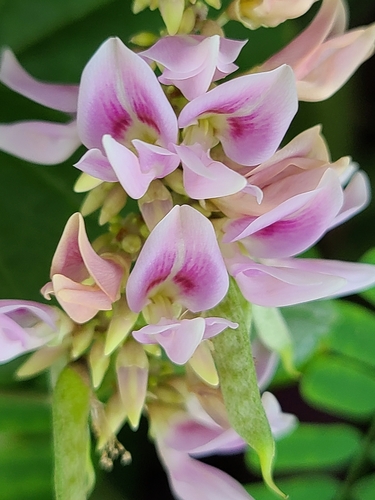
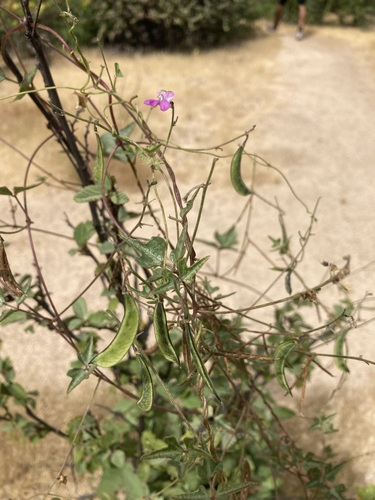
A herb. It can grow each year from seed or keep growing from year to year. It is a climbing vine. It has a taproot. The stems are less than 1 m tall The leaves have triangle shaped leaflets that have lobes. The flowers are pea like and pink. The pods are 2.5-3.5 cm long and less than 1 cm wide.
How to Grow
Phaseolus filiformis is a semi-arid plant to arid regions of the subtropical regions of southwestern USA and northern Mexico. Requires a sunny position in well-drained soil. Grows in the wild on clay soils, or silty to sandy, rock, and frequently alluvial loams from basalt, volcanic ash or limestone rocks. Some plant forms are very tolerant of saline soils. Plants are highly drought resistant. This species has a symbiotic relationship with certain soil bacteria, which form nodules on the roots and fix atmospheric nitrogen. Some of this nitrogen is utilised by the growing plant, but some can also be used by other plants growing nearby. The upper elevation limit is 1,200 metres. Lower elevation limit 0 metres. Suitable for Forest and Shrubland - Subtropical/Tropical Dry. Marine Coastal/Supratidal - Coastal Sand Dunes. USDA Hardiness Zones: Approximately Zones 7–10, reflecting its adaptation to the hot, dry conditions of the southwestern United States. Weed/Invasiveness: As a native species, slimjim bean is not generally considered weedy or invasive. However, like many wild beans, it can be vigorous in favorable habitats.
Propagation: Once ripened and dried, seeds may benefit from scarification to improve germination. Pour a small amount of nearly boiling water over the seeds (taking care not to cook them), then soak in warm water for 12–24 hours until swollen. If they have not swollen by then, carefully nick the seedcoat without damaging the embryo and soak for a further 12 hours before sowing.
Medicinal Uses
None known
Other Uses
This plant fixes nitrogen. It is also a distant relative of common beans and tepary beans, and may have value for crop improvement through its genetic material.
Wikipedia
Source ↗Phaseolus filiformis is a species of wild bean native to the southwestern United States and northern Mexico. Its common names include slimjim bean, slender-stem bean, Wright's Limabean and Wright's phaseolus. This plant resembles other beans in appearance, with leaves composed of lobed triangular leaflets and pink pea-like flowers. The small bean pods are 2.5 to 3.5 cm long and less than 1 cm wide.
Names & Synonyms
Frijolillo, Wright's phaseolus
References (3)
- Bot. voy. Sulphur 13. 1844
- Kermath, B. M., et al, 2014, Food Plants in the Americas: A survey of the domesticated, cultivated and wild plants used for Human food in North, Central and South America and the Caribbean. On line draft. p 636
- Nabhan, G.P. & Felger, R.S., Wild desert relatives of crops: their direct uses as food in Wickens, G.E., Goodin, J.R., and Field, D.V.,(Eds.) 1985, Plants for Arid Lands. Unwin Hyman, London, p 30