Phellodendron lavallei
Dode
Miyama-Kihada

Wikimedia Commons - Bruce Marlin

Wikimedia Commons - Agnieszka Kwiecień, Nova
What to Eat
Edible parts: Fruit
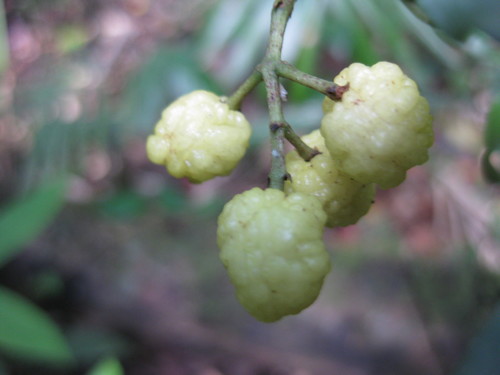
The fruit is edible — this use is based on the closely related P. amurense and almost certainly applies here as well. The fruit is approximately 1cm in diameter with a strong scent of turpentine, and is produced copiously in Britain. An oil is also obtained from the seed.
Where to Find It
It is native to central Japan. It suits hardiness zones 6-9.
Asia, Australia, Japan,
How to Identify
A tree. The bark is corky. They young shoots have a rusty coloured coating. It grows 6-9 m high. It spreads 10 cm wide. The leaves are 38 cm long and have 5-13 pointed leaflets. They have hairs underneath.
How to Grow
Prefers a moisture retentive well-drained deep rich loam in an open position in full sun. Grows best in areas with long hot summers. Plants are gross feeders and require a rich soil if they are to perform well. Dormant plants are hardy to at least -20°c, but the young growth is liable to damage from late spring frosts. This species is occasionally cultivated for timber in S.E. Europe. Dioecious. Male and female plants must be grown if seed is required. The fruit is produced copiously on trees in Britain.
Propagation: Seed is best sown in autumn in a cold frame. Stored seed requires 2 months of cold stratification; sow in late winter in a cold frame. Germination is usually good. Prick seedlings into individual pots when large enough to handle and grow on in the cold frame through their first winter, then plant out in late spring or early summer after the last expected frosts. Cuttings of half-ripe wood, 7–10cm with a heel, can be taken in July or August and rooted in a frame, potted up in autumn, and overwintered in a cold frame — fair to good success rate. For root cuttings, obtain material in December and store in leafmold in a warm place for 3 weeks, then cut into 4cm lengths, plant horizontally in pots, and grow on in a warm greenhouse — good success rate.
Medicinal Uses
None known
Other Uses
The bark is thick and corky and may be a potential source of cork. The following uses are attributed to the closely related P. amurense and are considered likely to apply to this species as well: a yellow dye is obtained from the inner bark; an oil from the seed has insecticidal properties similar to pyrethrum; and the wood is heavy, hard, strong, and close-grained, used for furniture.
Wikipedia
Source ↗Deciduous tree growing to 10m tall. Hardy to UK zone 6 and frost hardy. Flowers June to July. Dioecious species requiring both male and female plants for seed production. Adapts to light sandy, medium loamy, and heavy clay soils with good drainage preference. Tolerates mildly acidic to mildly alkaline soil. Requires full sun and prefers moist soil.
Names & Synonyms
References (4)
- Bull. Soc. Bot. France 55:648. 1908
- Cundall, P., (ed.), 2004, Gardening Australia: flora: the gardener's bible. ABC Books. p 1024
- Etherington, K., & Imwold, D., (Eds), 2001, Botanica's Trees & Shrubs. The illustrated A-Z of over 8500 trees and shrubs. Random House, Australia. p 517
- Plants for a Future database, The Field, Penpol, Lostwithiel, Cornwall, PL22 0NG, UK. http://www.scs.leeds.ac.uk/pfaf/