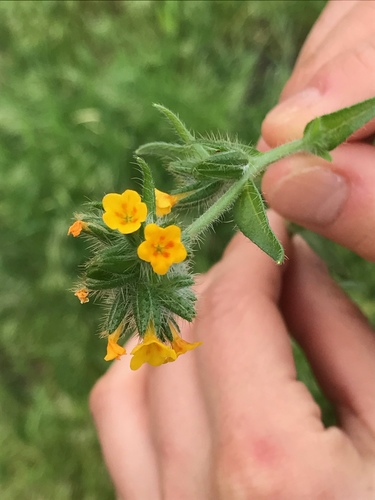
Pholisma arenarium
Nutt. ex Hook.
Desert Christmas tree

(c) Lynn Sweet, some rights reserved (CC BY), uploaded by Lynn Sweet
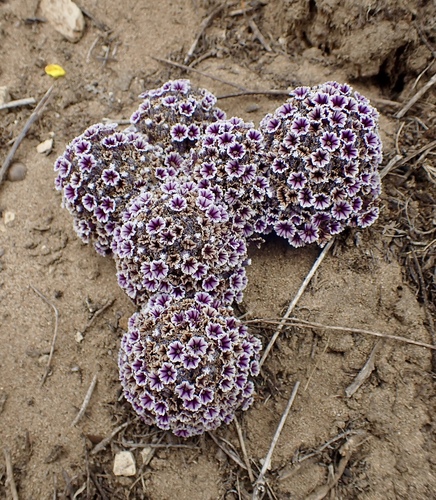
(c) Morgan Stickrod, some rights reserved (CC BY-NC), uploaded by Morgan Stickrod
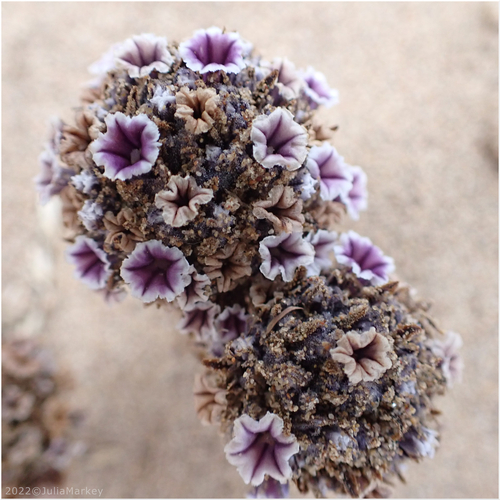
(c) juliamarkey, some rights reserved (CC BY-NC), uploaded by juliamarkey
What to Eat
Edible parts: Roots, Stems
The stems are eaten raw, roasted, or baked. The roots are also edible.
Where to Find It
They grow in tropical and subtropical America. They grow in arid or seasonally dry climates. It grows as a parasite on the roots of shrubby Asteraceae and some Crotons.
Mexico, North America, USA,
How to Identify
A fleshy herb. It grows 20-30 cm tall. It grows attached to shrubs by its roots.
Wikipedia
Source ↗Pholisma arenarium is a species of flowering plant in the family Lennoaceae. It is known by several common names, including desert Christmas tree, scaly-stemmed sand plant, and purple sand food. As the name implies, the loaf-like part of the root is edible. It is native to northwestern Mexico, Arizona and southern California, where it grows in many habitat types, including desert, chaparral, and sandy coastal dunes. It is a fleshy perennial herb taking a compact cylindrical or ovate shape up to 20 or 30 centimeters tall above ground, often with part of the stem below the sandy surface. It is a parasitic plant growing on the roots or of various shrubs such as burrobush, Yerba Santa, California croton, rabbitbrush, and ragweeds. As a heterotroph which derives its nutrients from other plants, it lacks chlorophyll and is brownish-gray or whitish in color. There are hairy, glandular, pointed leaves along the surface of the plant. Flowers emerge between them, each roughly one centimeter wide, the rounded corolla lavender to deep or bright purple with a white margin.
Notes
There are 3 Pholisma species. It has also been put in the family Lennoaceae.
Names & Synonyms
Purple sand food, Scaly-stemmed plant, Tuu-bi, Tuumbi
References (3)
- Heywood, V.H., Brummitt, R.K., Culham, A., and Seberg, O. 2007, Flowering Plant Families of the World. Royal Botanical Gardens, Kew. p 189
- Moerman, D. F., 2010, Native American Ethnobotany. Timber Press. p 393
- Smith, N., Mori, S.A., et al, 2004, Flowering Plants of the Neotropics. Princeton. p 209 (Drawing)