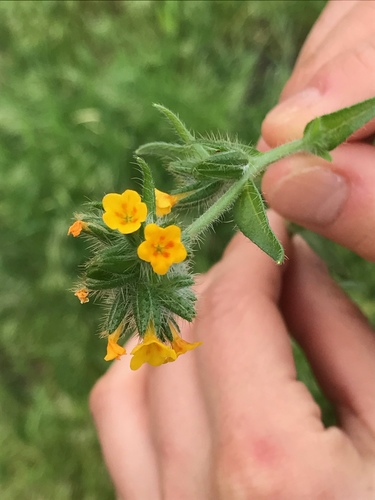
Anchusa hispida
(Forsk.) Pall. ex Ledeb.

(c) John Pereira, some rights reserved (CC BY-NC)

(c) John Pereira, some rights reserved (CC BY-NC)

(c) John Pereira, some rights reserved (CC BY-NC)
What to Eat
Edible parts: Leaves
The young leaves and young shoots of bugloss, when the hairs are still soft, are eaten in southern France and parts of Germany. Like the leaves of spinach they are steamed or boiled before consumption. Young leaves are also sometimes used in salads. However, the pyrrolizidine alkaloid lycopsamine has been found in the seeds and the upper parts of the plant. While there are no records of toxic effects in humans or animals similar unsaturated pyrrolizidine alkaloids have caused toxic effects and further studies have been urged as the plant flowers are occasionally sold as a food ingredient.
Where to Find It
A Mediterranean climate plant.
Africa, Mediterranean, North Africa, Tunisia,
How to Identify
A Mediterranean herb in the borage family (Boraginaceae) with bristly foliage.
Notes
There are about 25-35 Anchusa species.
References (1)
- BOUQUET