Planchonella euphlebia
(F. Muell.) Francis
Hickory Boxwood, Candlewood

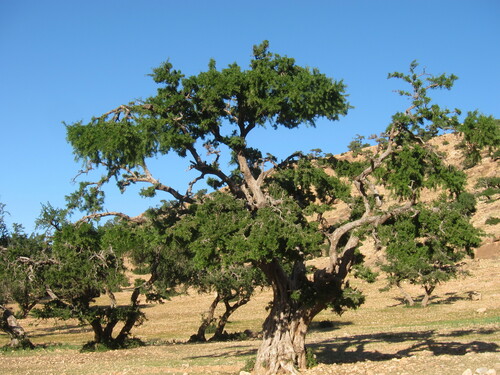
(c) Graham Bell, some rights reserved (CC BY-NC), uploaded by Graham Bell

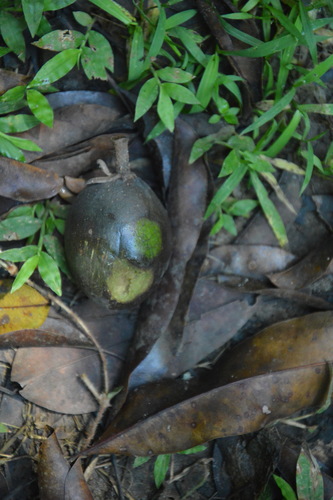
(c) ryanthughes, some rights reserved (CC BY-NC)
What to Eat
Edible parts: Fruit
The fruit are edible.
Where to Find It
A tropical plant. They grow naturally in the foothills of the rainforest in NE Queensland in Australia. It grows between 200-1240 m altitude. It needs well drained soil.
Australia*,
How to Identify
A tall tree. It grows 10-18 m high and spreads 5-12 m wide. The crown is round or spreading. The bark is dark brown and wrinkled. The leaves are simple and 5-14 cm long by 2.5-4.5 cm wide. The upper-side of the leaves has a few hairs while the underside has rusty hairs but becomes smooth with age. The leaves are crowded towards the ends of small branches. The flowers are 0.5 cm long and greenish-cream. The fruit are berries 15-39 mm long by 10-32 mm wide. They occur singly or in bunches in the axils of leaves. As they ripen they change from red to orange. There are 1-5 seeds. These are 15-22 mm long. The fruit are edible.
How to Grow
Plants can be grown from fresh seed.
Notes
There are about 100 Planchonella species. They are mostly in Asia and the Pacific.
Names & Synonyms
References (3)
- Cooper W & Cooper W T, 1994, Fruits of the Rain Forest. RD Press p 226
- Cooper, W. and Cooper, W., 2004, Fruits of the Australian Tropical Rainforest. Nokomis Editions, Victoria, Australia. p 510 (As Pouteria euphlebia)
- Elliot, W.R., & Jones, D.L., 1997, Encyclopedia of Australian Plants suitable for cultivation. Vol 7. Lothian. p 357