Androstephium caeruleum
(Scheele) Green
Fragrant lily, Funnel lily
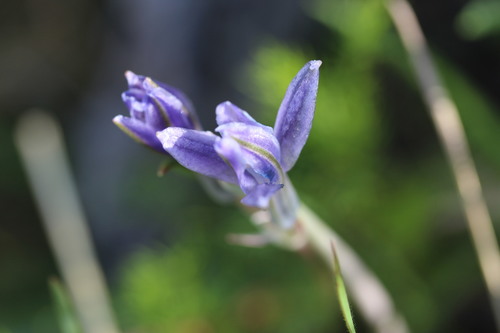
(c) Cindy McInturff, some rights reserved (CC BY-NC)
(c) Cindy McInturff, some rights reserved (CC BY-NC)
(c) Cindy McInturff, some rights reserved (CC BY-NC)
What to Eat
Edible parts: Root, Bulb
The bulb is edible, though no further preparation details are given. The bulb is quite small, usually less than 25 mm in diameter.
Where to Find It
It is a temperate plant.
North America, USA,
How to Identify
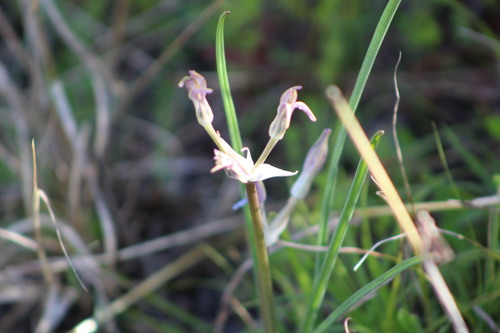
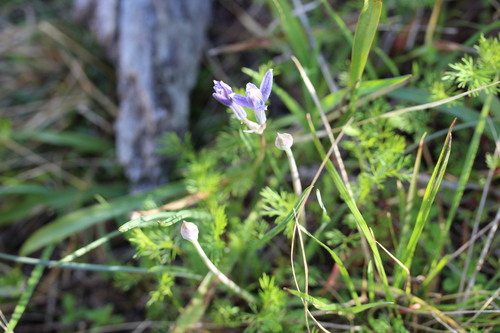
An onion family plant. It is a small plant. It keeps growing from year to year. The plant grows about 25 cm tall. The leaves are smooth and grey-green. They are 25-44 cm long. The flowers are blue or white. They have 6 tepals. These are partly joined to form a tube. The flowers have a pleasant spicy fragrance.
How to Grow
Propagation: Seed is best sown in a cold frame as soon as it is ripe. Once large enough to handle, prick seedlings out into individual pots and grow on in a frame or greenhouse until large enough to plant outdoors. Plant out while dormant in autumn. Offsets can be divided when the plant is dormant in late summer.
Medicinal Uses
None known
Other Uses
None known
Wikipedia
Source ↗Androstephium caeruleum is a bulbous plant growing 0.2 m tall. It flowers April to May. The hermaphroditic plant is insect-pollinated. It grows in light sandy and medium loamy well-drained soils in mildly acid to mildly alkaline pH. It requires full sun and prefers moist soil. Hardy to UK zone 8.
Names & Synonyms
Blue funnel lily
References (4)
- Beckstrom-Sternberg, Stephen M., and James A. Duke. "The Foodplant Database." http://probe.nalusda.gov:8300/cgi-bin/browse/foodplantdb.(ACEDB version 4.0 - data version July 1994)
- Loughmiller, C & L., 1985, Texas Wildflowers. A Field Guide. University of Texas, Austin. p 143
- Pittonia 2: 57. May. 1890
- Plants for a Future database, The Field, Penpol, Lostwithiel, Cornwall, PL22 0NG, UK. http://www.scs.leeds.ac.uk/pfaf/