Pollia secundiflora
Bakh.f.
Pollia
CommelinaceaeFruit

iNaturalist · cc-by-nc-sa
(c) Johannes Lundberg, some rights reserved (CC BY-NC-SA)
(c) Johannes Lundberg, some rights reserved (CC BY-NC-SA)
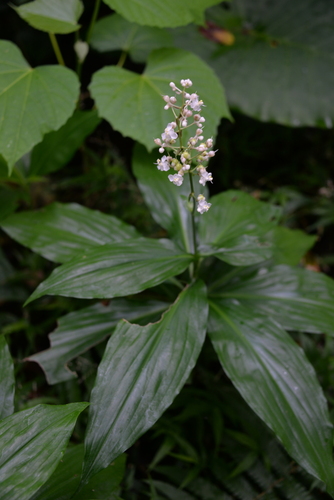
iNaturalist · cc-by-nc
(c) narido, some rights reserved (CC BY-NC), uploaded by narido
(c) narido, some rights reserved (CC BY-NC), uploaded by narido
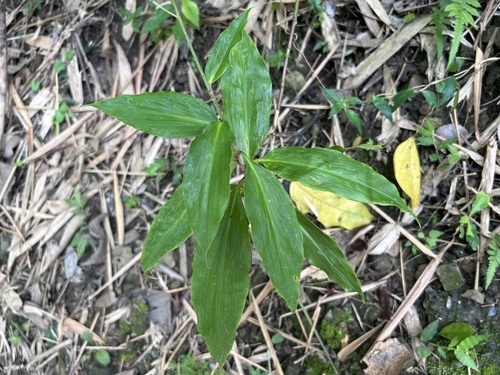
iNaturalist · cc-by-nc
(c) 洪阿愷, some rights reserved (CC BY-NC), uploaded by 洪阿愷
(c) 洪阿愷, some rights reserved (CC BY-NC), uploaded by 洪阿愷
What to Eat
Edible parts: Fruit
The round fruits are edible.
Where to Find It
A tropical plant. It grows in the tropics in Asia. It occurs on the floor of the forest. In Yunnan.
Asia, China, India, Indochina, Indonesia, Laos, Malaysia, Myanmar, SE Asia, Thailand, Vietnam,
Countries: United Arab Emirates, Afghanistan, Armenia, Azerbaijan, Bangladesh, Bahrain, Brunei, Bhutan, China, Georgia, Indonesia, Israel, India, Iraq, Iran, Jordan, Japan, Kyrgyzstan, Cambodia, North Korea, South Korea, Kuwait, Kazakhstan, Laos, Lebanon, Sri Lanka, Myanmar, Mongolia, Maldives, Malaysia, Nepal, Oman, Philippines, Pakistan, Qatar, Saudi Arabia, Singapore, Syria, Thailand, Tajikistan, Timor-Leste, Turkmenistan, Turkey, Taiwan, Uzbekistan, Vietnam, Yemen
How to Identify
A herb with soft leaves. It keeps growing from year to year. The stems are erect ad 20 cm tall by 7 mm thick. It has some white hairs. The leaves do not have stalks. The leaves are 20 cm long by 5 cm wide. They are hairy underneath. The fruit are round and 6 mm across.
Notes
They are about 26 Pollia species. They grow throughout the tropics.
Names & Synonyms
Pokok seburas, Pokok tebok keluweh
Commelina secundifora BlumePollia sorzogonensis Endl.
References (4)
- Ambasta, S.P. (Ed.), 2000, The Useful Plants of India. CSIR India. p 475
- Burkill, I.H., 1966, A Dictionary of the Economic Products of the Malay Peninsula. Ministry of Agriculture and Cooperatives, Kuala Lumpur, Malaysia. Vol 2 (I-Z) p 1816
- Foxworthy, 1922, Mal. For Rec. 2 p 207
- World Checklist of Useful Plant Species 2020. Royal Botanic Gardens, Kew


