Polygala persicariifolia
DC.

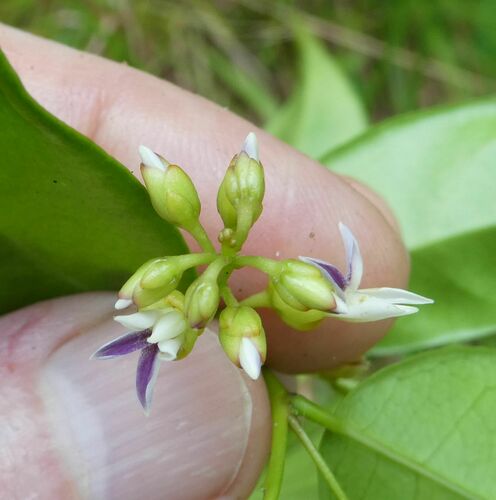
(c) Mayuresh Kulkarni, some rights reserved (CC BY-NC), uploaded by Mayuresh Kulkarni

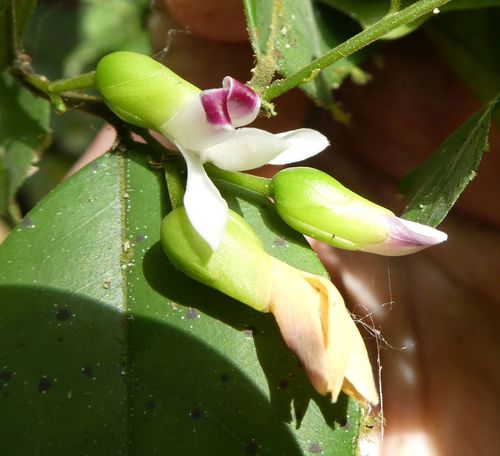
(c) Mayuresh Kulkarni, some rights reserved (CC BY-NC), uploaded by Mayuresh Kulkarni
What to Eat
Edible parts: Leaves, Vegetable
The leaves are eaten as a vegetable and are traditionally used in Nepal for making fermenting cake from which liquor is distilled.
Where to Find It
A tropical plant. In Nepal it grows between 700-1900 m altitude. It grows in shady places. In West Africa it grows in savannah areas. In Sichuan and Yunnan.
Africa, Asia, Australia, Bhutan, Cambodia, China, East Africa, Guinea, Guinée, Himalayas, Indochina, Indonesia, Laos, Malaysia, Mozambique, Myanmar, Nepal, New Guinea, Nigeria, Pacific, Philippines, SE Asia, Sierra Leone, Tanzania, Thailand, West Africa, Zambia,
How to Identify
A hairy annual herb. It grows about 45 cm high. The leaves have short stalks. They are oblong. The flowers are yellow. They are in open flower clusters in the axils of leaves and at the ends of branches. The fruit is a capsule. It is oblong.
How to Grow
Plants are grown from seed.
Wikipedia
Source ↗Polygala persicariifolia is a species of flowering plant in the milkwort family (Polygalaceae). It is native to east Africa and Asia.
Notes
There are about 600 Polygala species.
Names & Synonyms
Bijakanne
References (7)
- Burkill, H. M., 1985, The useful plants of west tropical Africa, Vol. 4. Kew.
- Fowler, D. G., 2007, Zambian Plants: Their Vernacular Names and Uses. Kew. p 83
- Grubben, G. J. H. and Denton, O. A. (eds), 2004, Plant Resources of Tropical Africa 2. Vegetables. PROTA, Wageningen, Netherlands. p 564
- Jardin, C., 1970, List of Foods Used In Africa, FAO Nutrition Information Document Series No 2.p 95
- Manandhar, N.P., 2002, Plants and People of Nepal. Timber Press. Portland, Oregon. p 374
- Martin, F.W. & Ruberte, R.M., 1979, Edible Leaves of the Tropics. Antillian College Press, Mayaguez, Puerto Rico. p 213
- World Checklist of Useful Plant Species 2020. Royal Botanic Gardens, Kew