Polygonatum biflorum
(Walter) Elliott
Small Solomon's seal
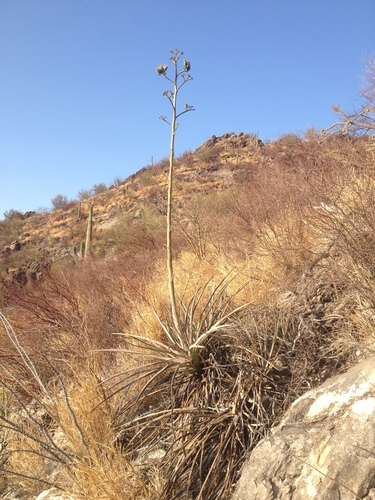
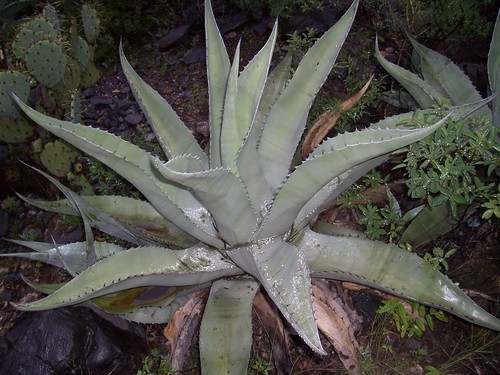
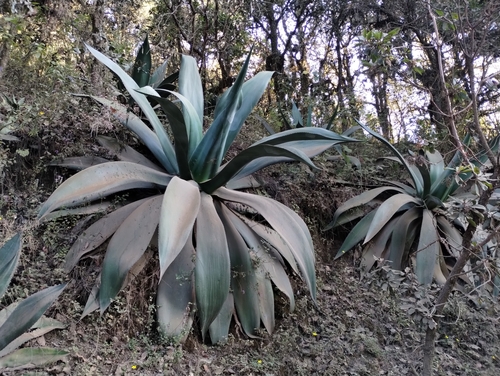
(c) nancyellivc, some rights reserved (CC BY)

(c) dogbowlbookpile, some rights reserved (CC BY-NC), uploaded by dogbowlbookpile
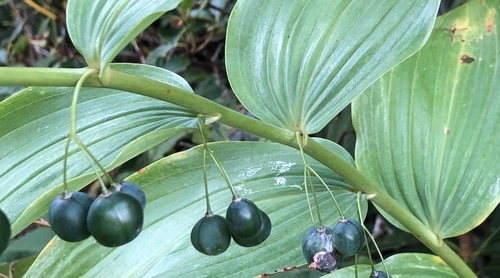
(c) Randy Puckett, some rights reserved (CC BY-NC), uploaded by Randy Puckett
What to Eat
Edible parts: Leaves, Root
Young shoots can be eaten raw or cooked and make an excellent vegetable when boiled, serving as a substitute for asparagus. The root is eaten cooked — its flavour is somewhat bitter, which is reduced by slicing it crosswise, cooking in alkaline water, and changing the water during cooking. When steamed and sun-dried nine times, the root becomes delicious. The roots are rich in starch, which can be extracted by beating or grinding the dried root and then used to make bread or added to soups and other foods.
Where to Find It
It is a temperate plant. It grows in open forests and forest clearings. It is a temperate plant. It does best in light well-drained soil. It suits a protected, shaded position. It is resistant to frost but sensitive to drought. It suits hardiness zones 3-7.
Australia, Canada, Central America, China, Mexico, Myanmar, North America, SE Asia, Tasmania, USA,
How to Identify
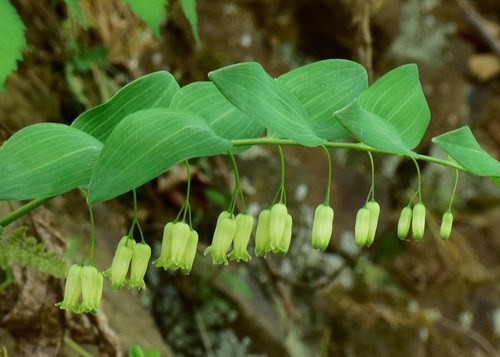
A small plant that keeps growing from year to year. It grows 1 m high and spreads 50 cm wide. The stem is erect, stout and flowering. The leaves are large and oval and do not have a leaf stalk. They are bright green. The flowers are green and white and tube shaped. They hang down. They are in clusters in the axils of the leaves.
How to Grow
Plants can be grown by division.
Propagation: Seed is best sown as soon as it is ripe in early autumn in a shady part of a cold greenhouse. Stored seed should be sown as early in the year as possible. Germination can be slow, seedlings may not come true to type, and plants take several years to reach a good size. Prick seedlings out into individual pots once large enough to handle and grow on in a shady position in the greenhouse for at least their first winter before planting out in late spring or early summer. Division can be done in March or October — larger divisions can go directly into permanent positions, while smaller ones are better potted up and grown on in light shade in a cold frame until well established, then planted out in late spring or early summer.
Medicinal Uses
A tea made from the roots is laxative and has been used for indigestion, profuse menstruation, lung ailments, and general debility. It is also a folk remedy for piles, rheumatism, and skin irritations. A poultice or decoction of the fresh roots is applied externally to cuts, bruises, and sores.
Other Uses
The root has been burnt as incense. It is said that burning the root in the bedroom just before sleep causes the person to sleep soundly and wake feeling refreshed, rested, and rejuvenated.
Wikipedia
Source ↗Polygonatum biflorum (smooth Solomon's-seal, great Solomon's-seal, Solomon's seal) is an herbaceous flowering plant native to eastern and central North America. The plant is said to possess scars on the rhizome that resemble the ancient Hebrew seal of King Solomon. It is often confused with Solomon's plume, which has upright flowers.
Notes
There are about 50-60 Polygonatum species. Also put in the family Convallariaceae.
Names & Synonyms
References (12)
- Beckstrom-Sternberg, Stephen M., and James A. Duke. "The Foodplant Database." http://probe.nalusda.gov:8300/cgi-bin/browse/foodplantdb.(ACEDB version 4.0 - data version July 1994) (Also as Polygonatum commutatum)
- Bodkin, F., 1991, Encyclopedia Botanica. Cornstalk publishing, p 818
- Brickell, C. (Ed.), 1999, The Royal Horticultural Society A-Z Encyclopedia of Garden Plants. Convent Garden Books. p 816
- Facciola, S., 1998, Cornucopia 2: a Source Book of Edible Plants. Kampong Publications, p 144
- Hibbert, M., 2002, The Aussie Plant Finder 2002, Florilegium. p 238
- Jackes, D. A., Edible Forest Gardens
- Kermath, B. M., et al, 2014, Food Plants in the Americas: A survey of the domesticated, cultivated and wild plants used for Human food in North, Central and South America and the Caribbean. On line draft. p 675
- Lim, T. K., 2015, Edible Medicinal and Non Medicinal Plants. Volume 9, Modified Stems, Roots, Bulbs. Springer p 66
- Moerman, D. F., 2010, Native American Ethnobotany. Timber Press. p 422
- Plants for a Future database, The Field, Penpol, Lostwithiel, Cornwall, PL22 0NG, UK. http://www.scs.leeds.ac.uk/pfaf/ (Also as Polygonatum commutatum)
- Sketch bot. S. Carolina 1:393. 1817
- Toupal, R. S. & Hollenback, K., 2009, An Ethnobotany of Indiana Dunes National Lakeshore: Plant Uses of the Ojibwa People. Bureau of Applied Research in Anthropology. University of Arizona (As Polygonatum canaliculatum)