Polygonatum multiflorum
(L.) Allen
Solomon's seal
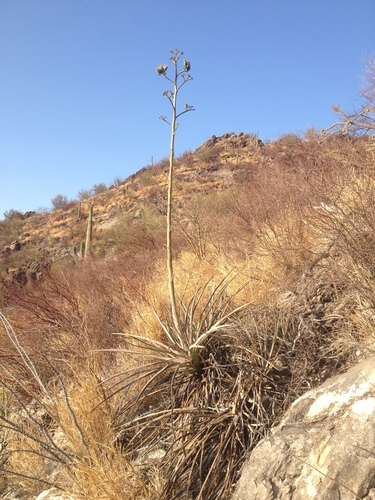
(c) Rolf Theodor Borlinghaus, some rights reserved (CC BY-NC), uploaded by Rolf Theodor Borlinghaus
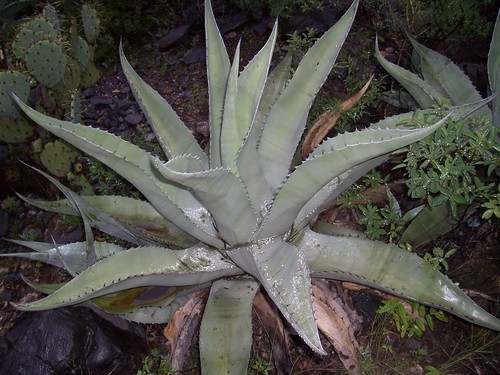
(c) moon05, some rights reserved (CC BY-NC)

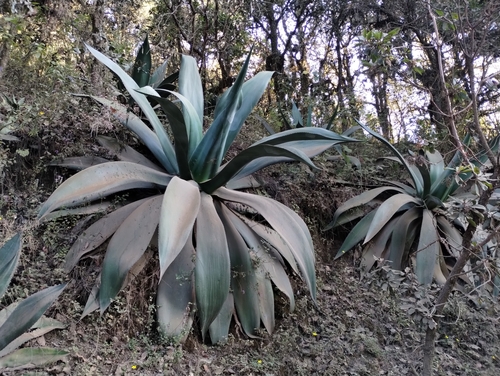
(c) Leonard Rüdenberg, some rights reserved (CC BY-NC), uploaded by Leonard Rüdenberg
What to Eat
Edible parts: Leaves, Root, Rhizome
Young shoots are boiled and used as an asparagus substitute, making an excellent vegetable widely eaten in Turkey. The starchy root must be macerated in water for some time to remove bitter substances before use. Historically, North American Indians dried and powdered the root to make it into bread, typically only during times of famine.
Where to Find It
It is a temperate plant. It does best in light to medium well-drained soil. It needs a protected, shady position. It is resistant to frost but sensitive to drought. In the Indian Himalayas it grows between 1,200-1,400 m above sea level.
Armenia, Asia, Australia, Britain, Canada, Caucasus, China, Europe, Himalayas, India, Italy, Luxembourg, Mediterranean, North America, Pakistan, Sicily, Slovenia, Tasmania,
How to Identify
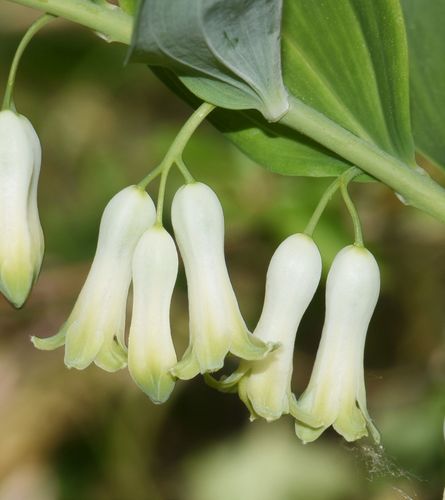
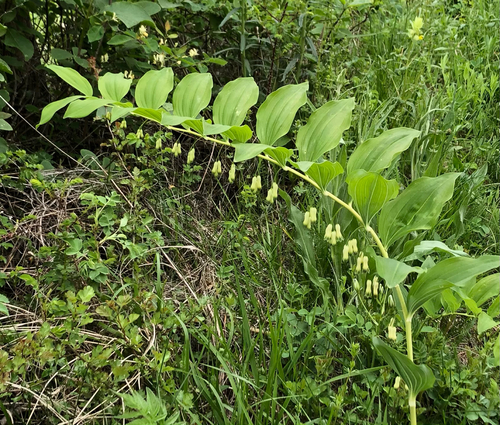
A small plant that keeps growing from year to year. The leaves are large and smooth and broadly oval. They are alternate and do not have a leaf stalk. The flowers are greenish-white and bell shaped. They hang down. They are in small bundles in the axils of the leaves. The fruit are small bluish-black berries.
How to Grow
Plants can be grown from seed or by division.
Propagation: Seed is best sown as soon as it is ripe in early autumn in a shady part of a cold greenhouse. Stored seed should be sown as early in the year as possible. Germination can be slow, seedlings may not come true to type, and it takes several years to reach a good size. When large enough to handle, prick seedlings into individual pots and grow on in a shady position in the greenhouse for at least their first winter, then plant out in late spring or early summer after the last expected frosts. Divide in March or October. Larger divisions can go directly into permanent positions, while smaller ones are better potted up and grown on in light shade in a cold frame until well established before planting out in late spring or early summer.
Medicinal Uses
Solomon's seal has a long history of herbal use, employed primarily as a poultice to reduce bruising and promote tissue repair. The root is astringent, demulcent, emetic, and tonic. An infusion is healing and restorative, useful for stomach inflammations and chronic dysentery. It is also combined with other herbs to treat pulmonary conditions including tuberculosis, and various women's complaints. Powdered roots make an effective poultice for bruises, piles, and inflammation. Roots are harvested in autumn and dried for later use. The plant should not be used internally except under professional supervision. A distilled water made from the whole plant serves as a skin tonic and features in expensive cosmetics. The dried powdered roots and flowers have been used as a snuff to stimulate sneezing and clear the bronchial passages.
Other Uses
Plants spaced about 30cm apart each way can be used as ground cover. A distilled water prepared from the whole plant is used as a cosmetic to improve the complexion.
Wikipedia
Source ↗Polygonatum multiflorum, the Solomon's seal, David's harp, ladder-to-heaven or Eurasian Solomon's seal, is a species of flowering plant in the family Asparagaceae, native to Europe and temperate Asia. In Britain it is one of three native species of the genus, the others being P. odoratum and P. verticillatum.
Other Information
It is sold in local markets.
Notes
There are about 50 Polygonatum species. Also put in the family Convallariaceae.
Names & Synonyms
David's harp, Eurasian Solomon's seal, Ladder to heaven, Mnogocvetni salomonov pečat, Sin, drik
References (15)
- Ambasta, S.P. (Ed.), 2000, The Useful Plants of India. CSIR India. p 478
- Bodkin, F., 1991, Encyclopedia Botanica. Cornstalk publishing, p 818
- Bremness, L., 1994, Herbs. Collins Eyewitness Handbooks. Harper Collins. p 205
- Brickell, C. (Ed.), 1999, The Royal Horticultural Society A-Z Encyclopedia of Garden Plants. Convent Garden Books. p 817
- Fl. pedem. 1:131. 1785
- Flora of Pakistan. www.eFloras.org
- Hedrick, U.P., 1919, (Ed.), Sturtevant's edible plants of the world. p 510
- Hibbert, M., 2002, The Aussie Plant Finder 2002, Florilegium. p 238
- http://www.botanic-gardens-ljubljana.com/en/plants
- Lim, T. K., 2015, Edible Medicinal and Non Medicinal Plants. Volume 9, Modified Stems, Roots, Bulbs. Springer p 67
- Nanagulyan, S., et al, 2020, Wild plants and fungi sold in the markets of Yerevan (Armenia). Journal of Ethnobiology and Ethnomedicine 16:26
- Plants for a Future database, The Field, Penpol, Lostwithiel, Cornwall, PL22 0NG, UK. http://www.scs.leeds.ac.uk/pfaf/
- Radha, B., et al, 2013, Wild Edible Plant Resources of the Lohba Range of Kedarnath Forest Division (KFD), Garhwal Himalaya, India. Int. Res J. Biological Sci. Vol. 2 (11), 65-73
- READ,
- Singh, H.B., Arora R.K.,1978, Wild edible Plants of India. Indian Council of Agricultural Research, New Delhi. p14