Pometia pinnata
J. R. & G. Forster
Ton, Fijian longan, Pacific lychee

No machine-readable author provided. Noles1984~commonswiki assumed (based on copyright claims). (via Wikimedia Commons)

Tauʻolunga (via Wikimedia Commons)

Tauʻolunga (via Wikimedia Commons)
(c) Aditya Gadkari, some rights reserved (CC BY-NC), uploaded by Aditya Gadkari

(c) JODY HSIEH, some rights reserved (CC BY-NC), uploaded by JODY HSIEH

(c) jakeyjakes, some rights reserved (CC BY-NC), uploaded by jakeyjakes
What to Eat
Edible parts: Fruit, Seeds, Vegetable
The fleshy aril (translucent layer) around the seed is eaten raw and peels off easily when ripe. Roasted seeds are also eaten in parts of the Solomon Islands, tasting like sour cheese, and can be dried and stored. Leaves are chewed with lime in some regions.
Known Hazards
Where to Find It
A tropical plant. It suits the hot humid tropical lowlands. It is native from Malaysia to Polynesia. It occurs in lowland and lower montane forest. They occur from sea level to 800 m altitude. They grow along riverbanks and near swamps. (The inedible kind occurs on the ridges and is the more useful timber tree.) In Samoa it grows from sea level to 500 m altitude. It usually grows in areas with an annual rainfall of 1500-5000 mm. It can grow in soils with a pH from 5 to 8. In XTBG Yunnan.
Africa, American Samoa, Andamans, Asia, Australia, Bougainville, Brunei, Cambodia, China, Cook Islands, East Africa, East Timor, Fiji, Hawaii, India, Indochina, Indonesia, Laos, Malaysia, Marquesas, Micronesia, Mozambique, Myanmar, New Caledonia, Niue, Pacific*, Papua New Guinea, PNG, Philippines, Rotuma, Samoa, SE Asia, Singapore, Solomon Islands, Sri Lanka, Taiwan, Thailand, Timor-Leste, Tonga, Vanuatu, Vietnam, Wallis & Futuna, Yap,
How to Identify
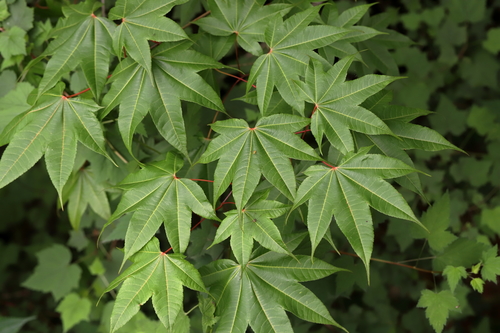
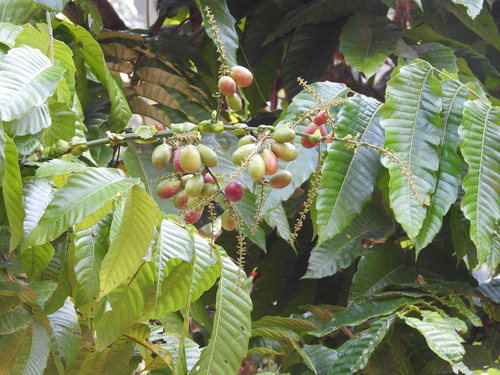
An evergreen tree. It can grow into quite a large tree up to 40-50 metres high. At the base of the tree there are often large buttresses and the bark is a bright orange brown colour and rough and scaly. The hard timber is widely used. The young leaves and twigs of the tree are bright red. The lowest pair of leaflets are small and clasp the stem like stipules. There are often 5-11 pairs of leaflets along a stalk and the leaflets at the centre are often the largest. The leaflets droop from long stalks. The flowers are produced in clusters on stalks that are up to 50 cm long and grow near the ends of the branches. The flowers are small and yellowish green and do not have any scent. The skin of the ripe fruit peels off like a mandarin. The edible part is a clear layer around the seed, like in a rambutan. An inedible kind also occurs. The fruit is about 6 cm across and the seed about 3 cm across.
Nutrition Score: 26/100
| Part | Moisture | kJ | kcal | Protein | Vit A | Vit C | Iron | Zinc |
|---|---|---|---|---|---|---|---|---|
| Fruit | 87 | 211 | 50 | 1.1 | 3 | 5 | 0.5 | 0.3 |
How to Grow
Plants can be grown from seed. Dispersal of self sown trees is probably by bats or fresh water. Trees are produced from seeds. Seedlings are transplanted from a nursery site. The aril around the seed is eaten raw. Roasted seeds are recorded as eaten in other countries. Ton are planted from seed. Also self sown seedling are transplanted and some trees occur wild in the bush. The seeds are probably spread around by fruit eating bats. It probably takes about 5 years from planting until the trees bear fruit.
Medicinal Uses
The Fijian longan is often used in traditional medicine in the Pacific Islands. It is used to treat deep pains in the bones, migraine headache, to aid expulsion of placenta after childbirth, to relieve rheumatic aching of muscles and joints, to relieve fever, as a remedy for flu and cold, to cure diarrhoea, stomach trouble, cough, fever, constipation, and diaper rash. The leaves are antimicrobial. A decoction of the leaves or bark is used medicinally against fever and sores. An infusion of the leaves is rubbed onto the heads of infants or is given internally to treat unclosed fontanelles. An abundant, thin, red gum obtained from the inner bark is considered to have many medicinal properties. An infusion of the bark is used as an emetic for mouth infections, colds and mucous congestion, and to treat abdominal pains. A decoction of the bark is used to treat mouth cancers.
Other Uses
The gum obtained from the inner bark is used to waterproof canoes. A hair shampoo is made from the bark. The heartwood is a pink or light red, becoming red-brown upon exposure to light; it is not clearly demarcated from the 3 - 5cm wide band of lighter-coloured sapwood. The texture is medium; the grain straight or interlocked, sometimes wavy; the surface is lustrous; a brownish resin is present. The wood is moderately heavy; moderately hard; moderately strong; not very durable, having some resistance to fungi and termites but susceptible to dry wood borers. It is somewhat slow to season, with a high risk of checking and distortion, but once dry it is stable in service. It can be worked with ordinary tools, though there can be some difficulties due to the interlocked or wavy grain; planed surfaces are sometimes rough and may require filling; nailing and screwing are good; gluing is correct. A good general-purpose timber for interior construction, it is also suitable for domestic flooring, mouldings, joinery, ship and boat building, spars, tool handles, agricultural and sporting implements, interior trimming, block board, and tight cooperage. It is well accepted for making boxes and crates. In outdoor constructions, contact with the ground must be prevented as the wood is then not durable. The timber can be used for furniture and cabinet work but must be dried to a sufficiently low moisture content. It is suitable for hardboard and particle board and as pulpwood. The wood makes a good-quality veneer which has potential to be used as decorative veneer and is very suitable for core and outer layers of plywood. The wood is a high quality fuel.
Wikipedia
Source ↗The Pometia pinnata is a tropical hardwood tree species that is widespread in the Pacific and Southeast Asian regions. The tree species has many common names, including matoa, tava (in Samoa and Tonga), taun tree, Island lychee and Pacific lychee. The species comes from the Sapindaceae family and comes from the clades of Tracheophytes, Angiosperms, and the order Sapindales.
Production
Plants grow quickly. Fruiting is distinctly seasonal with a short and clearly defined season, early in the year. There also appears to be a significant fluctuation between years on the amount of fruit set. This does not follow a clearly biennial pattern. In Santa Cruz it has been observed that fruit set does not always follow flowering. The cause is not known. The season is very short and is between November and March.
Other Information
A very popular fruit in season. It occurs in several coastal areas in Papua New Guinea. It is cultivated.
Notes
There are 2 Pometia species. TON Pometia pinnata Names The tree that is called Ton ( or Taun) in Tok Pisin was first described in 1776 by the botanists J.R. & G Forster. They gave it the scientific name Pometia pinnata. The name Pometia comes from a Latin word “pomum” which means fruit or apple. The other part of the name, pinnata, describes the way the leaflets grow opposite each other along a stalk. In many people’s minds, these two things are typical of the tree - leaflets drooping from long stalks and a very enjoyable fruit. Ton trees can vary a lot, and different forms or types of the tree have been described, Some types do not have edible fruit. Two main types are called:- Pometia pinnata JR & G Forster forma pinnata and Pometia pinnata JR & G Forster forma tomentosa. In some books these were described as two different species. They are in the plant family called Sapindaceae. The tree. A ton tree can grow into quite a large tree up to 40metres high. At the base of the tree there are often large buttresses and the bark is a bright orange brown colour and rough and scaly. The young leaves and twigs of the tree are bright red. The lowest pair of leaflets are small and clasp the stem like stipules. There are often 5-11 pairs of leaflets along a stalk and the leaflets at the centre are often the largest. The flowers are produced in clusters on stalks that are up to 50cm long and grow near the ends of the branches. The flowers are small and yellowish green and do not have any scent. Several varieties of ton occur, but the main part that varies is the colour of the fruit. Young fruit are green, but as they get ripe the colour can change to green, yellow, red or purple depending on the variety. They all taste much the same. The fruit In Papua New Guinea in coastal areas and on the islands this is one of the most popular fruits. The fruit is a bit like a rambutan, or a litchi, two fruits that are better known from Malaysia and China. The edible part is a white shiny layer around the seed. Scientists call this layer the aril. When a ton fruit is ripe, the skin peels off very easily, just like peeling a mandarin. Where do the trees grow? Ton trees only grow in SE Asia. The trees occur in Sri Lanka, Malaysia, Indonesia, Philippines, Papua New Guinea and some Pacific Islands. The tomentosa type does not have fruit which can be eaten or if it is eaten it is much less attractive. It tends to grow on hill slopes and ridges between an altitude of 900 and 1200 metres. It is normally in well drained positions. The type that has edible fruit is more commonly in the lowland rainforest, on river banks and in poorly drained places. It is this second type that is an important food plant. Fruit production Ton fruit are produced seasonally. The season is near Christmas, (December/January) and it tends to be short and a very distinct season with few trees bearing early or late. Sometimes there is a minor season in mid year about June and July. These fruit are not as sweet. The season does not exactly coincide in different provinces of the country, and it can be a month or two later in New Ireland. As well, trees do not fruit equally well each year. On Manus Island, ton trees only produce a lot of fruit every few years. These good seasons then become times of great excitement and happiness. (Yen, in his study of this tree in the Solomon Islands said that flowers formed later in the year often did not set fruit. It appears that some fruit setting problem occurs, which needs study.) Growing ton. Ton are planted from seed. Also self sown seedling are transplanted and some trees occur wild in the bush. The seeds are probably spread around by fruit eating bats. It probably takes about 5 years from planting until the trees bear fruit. In the Solomon Islands, and in Malaysia, ton seeds are eaten after they are roasted. Also in the Solomons, ton leaves are chewed with lime. It is not known if either of these practices occur in Papua New Guinea. The actual seeds have been reported as poisonous without treatment.
Names & Synonyms
Ai-maras, Ako, Asam kuang, Awa, Datanut, Dawa, Dawa noli, Dawa sere, Dipangah, Enselan, Fao, Fava, Gema, Guli, Hamwo, Igi, Island lychee, Kasai, Kayu sapi, Langsek anggang, Lantupak, Leungsir, Lislis, Malahu, Matoa, Matoa hutan, Mede, Merabong, Merbau perempuan, Nandao, Ndau, Ndawa, Ndawandawa, Nodae, Nyatava, Nyia tava, Oceanic lychee, Paga-nyet-su, Pangak, Piraka taba, Pitanah, Pohon leci laut, Pohon matoa, Rapanah, Selan, Silak, Tao, Taoa, Taun, Tauna, Tava, Tawa
References (126)
- Ton references Pometia pinnata references
- Adelb, ,1948, in Backer Bekn. Fl. Java (em ed.) 7A:fam 149 p18
- Adema, Leenhouts, P. W., 1994, Sapindaceae, Flora Malesiana Ser 1 Vol 11 (3) p 702
- Altschul, S.V.R., 1973, Drugs and Foods from Little-known Plants. Notes in Harvard University Herbaria. Harvard Univ. Press. Massachusetts. no. 2598
- Altschul, S.V.R., 1973, Drugs and Foods from Little-known Plants. Notes in Harvard University Herbaria. Harvard Univ. Press. Massachusetts. no. 2597 (As Pometia acuminata)
- Ambasta, S.P. (Ed.), 2000, The Useful Plants of India. CSIR India. p 483
- Argent, G et al, nd, Manual of the Larger and More important non Dipterocarp Trees of Central Kalimantan Indonesia. Volume 2 Forest Research Institute, Samarinda, Indonesia. p 571
- Arora, K., Indigenous Forest Management in the Andaman and Nicobar Islands, India.
- Arora, R. K., 2014, Diversity in Underutilized Plant Species - An Asia-Pacific Perspective. Bioversity International. p 81
- Backer, C.A., 1911, Schoolflora voor Java p 267.
- Barwick, M., 2004, Tropical and Subtropical Trees. A Worldwide Encyclopedic Guide. Thames and Hudson p 341
- Beversluis, 1954, in Klein, Niew Guinea 2:293
- Blench, R., 2004, Fruits and Arboriculture in the Indo-Pacific Region. Indo-Pacific Prehistory Association Bulletin 24. (Taipei Papers Volume 2) p 40
- Blume, 1847, Rumphia 3:114
- Bourke, R. M., Altitudinal limits of 230 economic crop species in Papua New Guinea. Terra australis 32.
- Borrell, O.W., 1989, An Annotated Checklist of the Flora of Kairiru Island, New Guinea. Marcellin College, Victoria Australia. p 133
- Bos, L., 1957, Meded. Landbouwhog. Wagen. 57(1):1-79
- Braun, A., 1861, Abnrome Blattbildung von Irinoglabra im Vergleichmit analogen Vorkommnissen bei andern Pflanzen. Amtl. Ber. deut. Naturf. u Aertzte. Kinigsb 35:310-314
- Bradacs, G., 2008, Ethnobotanical Survey and Biological Screening of Medicinal Plants from Vanuatu. PhD thesis Frankurt University. p 101
- Browne, 1955, Forest Trees of Sarawak and Brunei 319
- Burgerstein, 1908, Rechinger, Bot u Zool. Ergebn. Samoa -u. Salom. 2:112.
- Burkill, I.H., 1935, A Dictionary of Economic Products of the Malay Peninsula p 1828
- Cabalion, P. and Morat, P., 1983, Introduction le vegetation, la flore et aux noms vernaculaires de l'ile de Pentcoste (Vanuatu), In: Journal d'agriculture traditionnelle et de botanique appliquee JATBA Vol. 30, 3-4
- Chai, P. P. K. (Ed), et al, 2000, A checklist of Flora, Fauna, Food and Medicinal Plants. Lanjak Entimau Wildlife Sanctuary, Sarawak. Forestry Malaysia & ITTO. p 170
- Char. gen. pl. 110, t. 55. 1776
- Chand, V.S. and Crift, K., 1980, Bark constituents of Pometia pinnata. Fiji Agric. J. 42:51-52.
- Christopherson, E., 1935, Flowering Plants of Samoa. Bishop Museum Bulletin No. 128 p130.
- Clarke, W.C. & Thaman, R.R., 1993, Agroforestry in the Pacific Islands: Systems for sustainability. United Nations University Press. New York. p 80, 255
- Corner, E.J.H., Wayside Trees of Malaya p594.
- Cowie, I, 2006, A Survey of Flora and vegetation of the proposed Jaco-Tutuala-Lore National Park. Timor-Lests (East Timor) www.territorystories.nt/gov.au p 52
- Davenport, W., 1968, Social Organisation Notes on the Southern Santa Cruz Islands: Utupua and Vanikoro. Baessler-Archiv XVI (2):207-276.
- Elevitch, C.R.(ed.), 2006, Traditional Trees of the Pacific Islands: Their Culture, Environment and Use. Permanent Agriculture Resources, Holualoa, Hawaii. p 591
- Facciola, S., 1998, Cornucopia 2: a Source Book of Edible Plants. Kampong Publications, p 226
- Foreman, D. B., 1971, A checklist of the Vascular Plants of Bougainville with Descriptions of some Common Forest Trees. Botany Bulletin No. 5. Department of Botany. p 158
- Forster, G., 1786, Prod. Fl. Ins. Austr. 74.
- Forster, J.R. & G. 1776, Char Gen. Pl. 109, t 85
- Franklin, J., Keppel, G., & Whistler, W., 2008, The vegetation and flora of Lakeba, Nayau and Aiwa Islands, Central Lau Group, Fiji. Micronesica 40(1/2): 169–225, 2008
- French, B.R., 1986, Food Plants of Papua New Guinea, A Compendium. Asia Pacific Science Foundation p 215
- French, B.R., 2010, Food Plants of Solomon Islands. A Compendium. Food Plants International Inc. p 215
- Friday, J. B., 2005, Forestry and Agroforestry Trees of East Timor. http://www.ctahr.hawaii.edu/forestry/data/Timor/Timor trees.html
- Fundter, 1977, Sapindaceae Meded. Landbouwhogeschool Wageningen 77-9. p157-162
- Gardner, S., et al, 2000, A Field Guide to Forest Trees of Northern Thailand, Kobfai Publishing Project. p 132
- Gilliland, H.B., 1962, Common Malayan Plants. Univ. of Malaya p176
- GTZ 1996, A Guide to some Indigenous Fijian Trees. GTZ Suva. p 77
- Havel, J.J., 1975, Forest Botany, Volume 3 Part 2 Botanical taxonomy. Papua New Guinea Department of Forests, p 163
- Hedrick, U.P. (Ed.), 1919, Sturtevant's edible plants of the world. Dover. p 512
- Henderson, C.P. and I.R.Hancock, 1988, A Guide to the Useful Plants of the Solomon Islands. Res. Dept. Min of Ag. & Lands. Honiara, Solomon Islands. p 49
- Henning, B. M., 2014, The Diversity of Conservation: Exploring Narratives, Relationships and Ecosystem Services in Melanesian Market-based Biodiversity Conservation. Ph D dissertation, Uni of Minnesota. p 210
- Heyne, K., 1927, Nutt. Plant. Ned. Ind. p999.
- Huang, T.C., 1972, Pollen flora of Taiwan.
- Inoue, Y., 1970, Encyclopedia of Horticulture.
- Jacobs, M., 1962, Pometia (Sapindaceae) a study in variability. Reinwardtia 6:109-144.
- Jacobs, M., 1966, Blumea - Supplement V
- Kanehira, R., 1936, Formosan Trees ed 2
- Kanehira, R., 1940, Tropical Economic Botany.
- King, , 1896, J. As. Soc. Beng. 65 ii:41
- Koning-Vrolijk, , 1962, Properties of New Guinea Woods. Nova Guinea.
- Kuo, W. H. J., (Ed.) Taiwan's Ethnobotanical Database (1900-2000), http://tk.agron.ntu.edu.tw/ethnobot/DB1.htm
- Lane-Poole, 1925, For. Res. Papua and New Guinea 109.
- Lebot, V. & Sam, C., Green desert or ‘all you can eat’? How diverse and edible was the flora of Vanuatu before human introductions?. Terra australis 52 p 409
- Leeuwen, van, D., 1926, Zoocecidia 337, 338.
- Lepofsky, D., 1992, Arboriculture in the Mussau Islands, Bismarck Archipelago. Economic Botany, Vol 46, No. 2, pp. 192-211
- Liu, T., 1952, List of Economic Plants in Taiwan. Chen Chung Printing Co., Taipei.
- Magnus, W., 1910, Ann. Jard. Bot. Buit. Suppl. 3:807-814, t32.
- Martin, F. W., et al, 1987, Perennial Edible Fruits of the Tropics. USDA Handbook 642 p 57
- Massal, E. and Barrau, J., 1973, Food Plants of the South Sea Islands. SPC Technical Paper No 94. Noumea, New Caledonia. p 43
- McClatchey, W. C., 2012, Wild food plants of Remote Oceania. Acta Societatis Botanicorum Poloniae 81(4) 371-380
- Menninger, E.A., 1977, Edible Nuts of the World. Horticultural Books. Florida p 71
- Merrill, 1917, Int. Rumphius 339.
- Merrill, 1923, En. Philip. 2:506
- Monsalud, M.R., Tongacan, A.L., Lopez, F.R., & Lagrimas, M.Q., 1966, Edible Wild Plants in Philippine Forests. Philippine Journal of Science. p 542 (As Pometia pinnata fo. glabra)
- Mueller, F von, 1895 ed. Select Extra-tropic Plants.
- Muller, J., and Leenhouts, P.W., 1976, A general survey of pollen types in Sapindaceae in relation to taxonomy. in Ferguson, I.K. & Muller, J., (eds.), The evolutionary significance of the exine. Linnean Soc. Symp. Ser. 1:407-445.
- Naess, A., 2017, A short dictionary of Aiwoo. Asia Pacific Linguistics, ANU.
- Nakamura, M., 1943, Trop. Fruits of Southern Area. Taiwan Engei Kyakai, Taipei.
- Neal, C.M., 1965, In Gardens of Hawaii. Bishop Museum Press. p 536.
- Noronha, De , 1970, Irina. Verh Batav. Gen. 5:2
- Parham, Plants of the Fiji Is.,
- Parham, BH.B.R., 1943, Fiji Native Plants with their medicinal and other uses. J. Polynesia Soc. Memoirs No 16:1-160.
- Parham, B. E. V., 1972, Plants of Samoa. New Zealand Department of Scientific and Industrial Research. Information Series. No. 85 p 125
- Peekel, P.G., 1984, (Translation E.E.Henty), Flora of the Bismarck Archipelago for Naturalists, Division of Botany, Lae, PNG. p 335, 336
- Poiret, 1823, Euphoria pometia Dict. Sci. Nat. 27:59
- Radlkofer, 1877, Sapind. Holl. - Ind. 30
- Radlkofer, 1912, Nova Guinea 8(4):617.
- Radlkofer, 1920, Bot. Jahrb. 56:271
- Radlkofer, 1933, Pflanzenreich Heft. 98:924.
- Rappord, 1961, Niew Guinea Studien 5:1-9
- Ridley, 1922, Flora Mal. Penins. 1, p504.
- Rumphius, 1743, Dabanus Hern Amboin. 3:31, t16,17.
- Saw, L.G., LaFrankie, J. V. Kochummen, K. M., Yap S. K., 1991, Fruit Trees in a Malaysian Rain Forest. Economic Botany, Vol. 45, No. 1, pp. 120-136
- Schneider, 1916, Bull 14, Bur. For. Philipp. p148.
- Seem ,1865, Fl. Vitiensis 48, t.10
- Smith, A.C., 1985, Flora Vitiensis Nova, Lawaii, Kuai, Hawaii, Volume 3 p 592
- Slik, F., www.asianplant.net
- Soepadmo, E. and Wong, K. M. and Saw, L. G., 1996, Tree Flora of Sabah and Sarawak. Forestry Malaysia. Volume Two. p 357
- Soerianegara, I. & Lemmens, R. H. M. L., (Eds.) 1993, Timber trees: Major commercial timbers. Plant Resources of South-East Asia. Wageningen. No. 5(1). p 357
- Sukarya, D. G., (Ed.) 2013, 3,500 Plant Species of the Botanic Gardens of Indonesia. LIPI p 467
- Suwardi, A. B., et al, 2020, Wild edible fruits generate substantial income for local people of the Gunung Leuser National Park, Aceh Tamiang Region. Ethnobotany Research & Applications 20:11
- Suzuki, S., 1959, Manual of Taiwan Trees
- van Royen, P., 1964, Sapindaceae. Manual of Forest Trees, Part 2:158-161. Dept. of Forests, PNG.
- Tanaka, T., 1976, Tanaka's Cyclopedia of Edible plants of the world. p576.
- Tankard, G., 1990, Tropical fruit. An Australian Guide to Growing and using exotic fruit. Viking p 115
- The Pacific Islands Food Composition Tables http://www.fao.org/docrep No E132
- Thaman, R.R., 1976, The Tongan Agricultural System, University of the South Pacific, Suva, Fiji. p 419
- Thwaites, 1855, Eccremanthus in Hooker, J., Bot. and Kew Gard. Misc. 7572, t9
- Uphof, J.S.T., 1968, ed 2, Dictionary of Economic Plants. Stechert-Hafner Service Agency, New York
- Valeton, 1902, Bull, Inst. Bot. Buit. No. 15:8
- Ven den Berg, R.G., 1978, Pollen Morphology of the Genera Pometia, Cubilia Otonephelium and Litchi (Sapindaceae-Nephelieae). Blumea 24:269-294.
- Versteegh, C., 1971, Key to the most important native trees of Irian Barat (Indonesia) Based on Field Characters. Meded. Land. Wageng, 71-19.
- Walker, F.S., 1948, For. Br. Solomon Is. 167
- Walter, A. & Sam C., 2002, Fruits of Oceania. ACIAR Monograph No. 85. Canberra. p 222
- Wang, F.H. and Chien, N.F., 1956, A contribution to the pollen morphology of Sapindaceae. Acta Bot. Sinica 5:327-338.
- Watanabe, Z., 1936, World Tree Manual ed 2 Miura Shoten, Tokyo.
- Wealth of India, 1950-1969. Council of Scientific & Industrial Research. New Delhi.
- Wester, R.J.S., 1924, Food Plants of the Philippines. Manila Bur. of Agr. Bull. 39 Food Plants
- Whistler, W.A., 2004, Rainforest Trees of Samoa. Isle Botanica Honolulu, Hawaii. p 152
- Wickens, G.E., 1995, Edible Nuts. FAO Non-wood forest products. FAO, Rome. p151
- Wiersema, J. H. & Leon, B., 2013, World Economic Plants. A Standard Reference CRC Press. 2nd Ed. p 550
- Womersley and McAdam 1957, For. Terr. Pap and New Guinea. 55.
- World Checklist of Useful Plant Species 2020. Royal Botanic Gardens, Kew
- www.worldagroforestrycentre.org/treedb/
- Yen, D.E., 1974, Arboriculture in the Subsistence of Santa Cruz, Solomon Islands. Econ. Bot. 28:252 & 266.
- Yuncker, T. G., 1943, The Flora of Niue Island. Bernice P. Bishop Museum Bulletin 178 p 78
- Yuncker, T.G., 1959, Plants of Tonga, Bernice P. Bishop Museum, Hawaii, Bulletin 220. p 173
- Zawiah, N. & Othaman, H., 2012, 99 Spesies Buah di FRIM. Institut Penyelidikan Perhutanan Malaysia. p 198
- Zeven, A. C. & de West, J. M. J., 1982, Dictionary of cultivated plants and their regions of diversity. Wageningen. p 63