Pouteria caimito
(Ruiz & Pav.) Radlk.
Abiu, Caimito
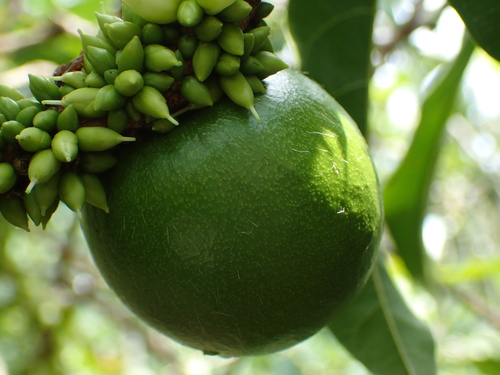
no rights reserved, uploaded by 葉子
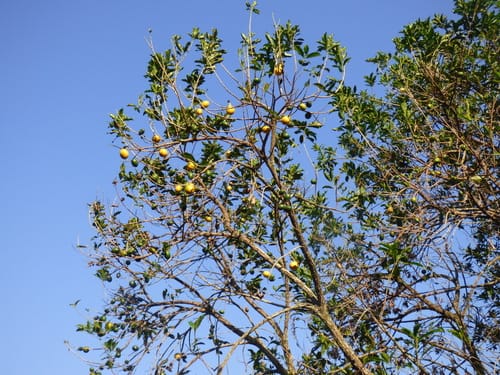
(c) Victor Hugo Rebecchi Siqueira, some rights reserved (CC BY-NC)

(c) Hafiz Issadeen, some rights reserved (CC BY)
What to Eat
Edible parts: Fruit, Kernel, Nuts
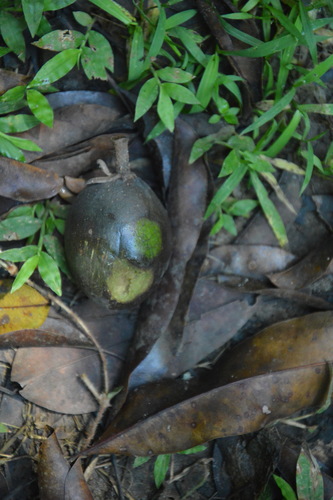
The fully ripe fruit has a delicious flavour and is eaten raw or used in sherbets and ice cream. It works particularly well in fruit salads, especially alongside orange slices to add acidity. The fruit is a lovely bright yellow with whitish, translucent, jelly-like flesh and a sweetish flavour somewhat like rambutan. It reaches up to 10cm in diameter. Fruit that is not fully ripe may contain a milky latex that sticks to the lips. The skin is thin and bruises easily, meaning the fruit keeps for only a few days.
Where to Find It
A tropical plant. It suits the hot, wet tropical lowlands. It needs a warm climate and year round moisture. It is a tropical plant, but will grow in subtropical places. It enjoys wet soil. It grows naturally in the Amazon and Andes. It grows to 1200 m in the Andes. It cannot tolerate frost. It suits hardiness zones 10-11.
Amazon, Andes, Asia, Australia, Bolivia*, Brazil*, Central America, Colombia, Costa Rica, Ecuador*, French Guiana, Guianas, Guyana, Hawaii, Malaysia, Mexico, Nicaragua, Pacific, Panama, Peru*, SE Asia, South America, Suriname, Trinidad, USA, Venezuela,
How to Identify
A medium sized tree. It grows 10-15 m high but can be 40 m high. The trunk is 30 cm across. The tree branches at about 1 m high. The leaves are simple and alternate. The flowers occur singly or in small groups. They are usually on leafless twigs. The fruit is medium to large and is oval with a smooth skin. It is yellow and sweet. It is usually 5-10 cm across. It has a sweet translucent pulp. Unripe fruit contain a gummy latex. There are several named cultivated varieties. There are 1-4 seeds. These are brown and shiny.
Nutrition Score: 47/100
| Part | Moisture | kJ | kcal | Protein | Vit A | Vit C | Iron | Zinc |
|---|---|---|---|---|---|---|---|---|
| Fruit | 74.1 | 397 | 95 | 2.1 | — | 49 | 1.8 | — |
How to Grow
Plants are grown from seed. Seed germinate easily. Seedling trees vary in quality. Grafting and air-layering can also be used. Fresh seed are planted and germinate in 4-6 weeks. Some trees are self fertile and others need cross pollinating.
Propagation: Remove the seed from its husk before sowing. Best sown as soon as it is ripe in a semi-shaded nursery seedbed. Fresh seed typically germinates in 4–6 weeks with a reasonable germination rate. Propagation is also possible by side-grafting and potentially by air-layering.
Medicinal Uses
None known.
Other Uses
The wood is heavy, hard, straight-grained, and medium-textured. It is moderately resistant to insect attack and moderately durable, used for construction and external work.
Wikipedia
Source ↗Pouteria caimito, the abiu (Portuguese pronunciation: [ɐˈbiw]), is a tropical fruit tree in the family Sapotaceae. It grows in the Amazonian region of South America, and this type of fruit can also be found in Cuba, the Philippines and other countries in Southeast Asia. It grows to an average of 10 metres (33 feet) high, with ovoid fruits. The inside of the fruit is translucent and white. It has a creamy and jelly-like texture with a taste resembling caramel custard.†
Production
Trees will produce fruit after 7-10 years from seeds and after 3 years from grafts. Mature trees can produce 100-1000 fruit per year. Fruit mature in about 180 days.
Other Information
It is a cultivated food plant. Fruit are sold in local markets.
Notes
There are about 150-320 Pouteria species. They grow in the tropics.
Names & Synonyms
Aakuna, Abiero, Aguaycillo, Asepokoballi, Aviyu, Caimitillo, Caimito, Caimo, Cauje, Caymito, Coloradillo de la bajura, Ingi-oedoe, Luma, Pasu, Pepeboiti, Putumayu aviyu, Sijica, Tarpu aviyu, Temare, Yaas, Yellow star apple
References (54)
- Arora, R. K., 2014, Diversity in Underutilized Plant Species - An Asia-Pacific Perspective. Bioversity International. p 82
- Asprilla-Perea, J., & Diaz-Puente, J.M., 2018, Traditional use of wild edible food in rural territories within tropical forest zones: A case study from the northwestern Colombia. New Trends and Issues Proceedings on Humanities and Social Sciences [Online]. 5(1), 162–181.
- Baehni, C. & Bernardi, L., 1970, Flora of Peru. Vol. 8 Part V-A No. 3. Field Museum Natural History. Chicago. p 157
- Barfod, A. S. & Kvist, L. P., 1996, Comparative Ethnobotanical Studies of the Amerindian Groups in Coastal Ecuador. The Danish Academy of Sciences and Letters. p 79
- Bendezu, Y. F., 2018, Arboles nativos de lad Region Ucayali. Instituto Nacional de Innovacion Agraria. p 302
- Bennett, B. C., 1990, Useful Plants of Amazonian Ecuador. US Agency for International Development. Fifth Progress Report. New York Botanical Gardens. p 39
- Cundall, P., (ed.), 2004, Gardening Australia: flora: the gardener's bible. ABC Books. p 1078
- Darley, J.J., 1993, Know and Enjoy Tropical Fruit. P & S Publishers. p 104
- Facciola, S., 1998, Cornucopia 2: a Source Book of Edible Plants. Kampong Publications, p 228
- Grandtner, M. M., 2008, World Dictionary of Trees. Wood and Forest Science Department. Laval University, Quebec, Qc Canada. (Internet database http://www.wdt.qc.ca)
- Grandtner, M. M. & Chevrette, J., 2013, Dictionary of Trees, Volume 2: South America: Nomenclature, Taxonomy and Ecology. Academic Press p 523
- Hedrick, U.P., 1919, (Ed.), Sturtevant's edible plants of the world. p 387
- Hermandez Bermejo, J.E., and Leon, J. (Eds.), 1994, Neglected Crops. 1492 from a different perspective. FAO Plant Production and Protection Series No 26. FAO, Rome. p17
- Hibbert, M., 2002, The Aussie Plant Finder 2002, Florilegium. p 239
- Hunter, D., et al, 2019, The potential of neglected and underutilized species for improving diets and nutrition. Planta (2019) 250:709-729
- Kermath, B. M., et al, 2014, Food Plants in the Americas: A survey of the domesticated, cultivated and wild plants used for Human food in North, Central and South America and the Caribbean. On line draft. p 685
- Kiple, K.F. & Ornelas, K.C., (eds), 2000, The Cambridge World History of Food. CUP p 1713
- John, L., & Stevenson, V., 1979, The Complete Book of Fruit. Angus & Robertson p 93, 284
- Leal, M. L. et al, 2018, Knowledge, use, and disuse of unconventional food plants. Journal of Ethnobiology and Ethnomedicine (2018) 14:6
- Lorenzi, H., 2002, Brazilian Trees. A Guide to the Identification and Cultivation of Brazilian Native Trees. Vol. 02 Nova Odessa, SP, Instituto Plantarum p 333
- Lorenzi, H., Bacher, L., Lacerda, M. & Sartori, S., 2006, Brazilian Fruits & Cultivated Exotics. Sao Paulo, Instituto Plantarum de Estuados da Flora Ltda. p 299
- Macmillan, H.F. (Revised Barlow, H.S., et al) 1991, Tropical Planting and Gardening. Sixth edition. Malayan Nature Society. Kuala Lumpur. p 306
- Martin, F. W., et al, 1987, Perennial Edible Fruits of the Tropics. USDA Handbook 642 p 61
- Menninger, E.A., 1977, Edible Nuts of the World. Horticultural Books. Florida p 33
- Milow, P., et al, 2013, Malaysian species of plants with edible fruits or seeds and their evaluation. International Journal of Fruit Science. 14:1, 1-27
- Morton, Julia F., 1987, Fruits of Warm Climates. Creative Resources Systems, Inc. . p. 406
- Norrington, L., & Campbell, C., 2001, Tropical Food Gardens. Bloomings Books. p 90
- NYBG herbarium "edible"
- Paz, F. S., et al, 2021, Edible Fruit Plant Species in the Amazon Forest Rely Mostly on Bees and Beetles as Pollinators. Journal of Economic Entomology, XX(XX), 2021, 1–13
- Pennington, T.D., 1990, Sapotaceae in Flora Neotropica Monograph 52. New York Botanical Gardens. p 475
- Philips, O., 1992, The potential for harvesting fruits in tropical rainforests: new data from Amazonian Peru. Biodiversity and Conservation 2, 18-38
- Pilz, G. E., 1981, Sapotaceae of Panama. Annals of Missouri Botanical Garden. Vol. 68. No. 1 p 177
- Popenoe,
- Recher, P, 2001, Fruit Spirit Botanical Gardens Plant Index. www.nrg.com.au/~recher/ seedlist.html p 3
- Roa, J. A. G. & Boada, D. S. G., 2018, Fundación para el Fortalecimiento de la Fruticultura y Plantas Alimenticias no Convencionales en Colombia.
- Segura, S., et al, 2018, The edible fruit species in Mexico. Genet Resour Crop Evol (2018) 65:1767–1793
- Sitzungsber. Math.-Phys. Cl. Koenigl. Bayer. Akad. Wiss. Munchen 12:312. 1882
- Smith, N., et al, 2007, Amazon River Fruits. Flavors for Conservation. Missouri Botanical Gardens Press. p 232
- Spichiger, R., et al, 1990, Contribucion a la Flora de la Amazonia Peruana. Boissiera 44. p 374, 392
- Tankard, G., 1990, Tropical fruit. An Australian Guide to Growing and using exotic fruit. Viking p 12
- Tomchinsky, B., et al, 2021, Food Composition Data: Edible Plants from the Amazon. in M. C. M. Jacob, U. P. Albuquerque (eds.), Local Food Plants of Brazil, Ethnobiology, Springer p 276
- Torre, de la, L., et al, 2008, Enciclopedia de las Plantas Útiles del Ecuador. Herbario QCA. Pontificia Universidad Católica del Ecuador. p 571
- USDA, ARS, National Genetic Resources Program. Germplasm Resources Information Network - (GRIN). [Online Database] National Germplasm Resources Laboratory, Beltsville, Maryland. Available: www.ars-grin.gov/cgi-bin/npgs/html/econ.pl (10 April 2000)
- van Andel, T., 2000, Useful plants of Guyana. Non-timber forest products of the North-West District of Guyana. Part 2. A Field Guide. Tropenbos-Guyana Programme. p 305
- Van den Eynden, V., et al, 2003, Wild Foods from South Ecuador. Economic Botany 57(4): 576-603
- van Roosmalen, M.G.M., 1985, Fruits of the Guianan Flora. Utrecht Univ. & Wageningen Univ. p 408
- Van Roosmalen, M.G.M., & Garcia, O. M., 2000, Fruits of the Amazonian Forest. Part 2: Sapotaceae. Acta Amazonica 30(2): 187-290
- Vasquez, R. and Gentry, A. H., 1989, Use and Misuse of Forest-harvested Fruits in the Iquitos Area. Conservation Biology 3(4): 350f
- Villachica, H., (Ed.), 1996, Frutales Y hortalizas promisorios de la Amazonia. FAO, Lima. p 71
- Wickens, G.E., 1995, Edible Nuts. FAO Non-wood forest products. FAO, Rome. p152
- Wiersema, J. H. & Leon, B., 2013, World Economic Plants. A Standard Reference CRC Press. 2nd Ed. p 554
- World Checklist of Useful Plant Species 2020. Royal Botanic Gardens, Kew
- www.colecionandofrutas.org
- Zambrana, P, et al, 2017, Traditional knowledge hiding in plain sight – twenty-first century ethnobotany of the Chácobo in Beni, Bolivia. Journal of Ethnobiology and Ethnomedicine (2017) 13:57