Procris pedunculata
(J. R. Forst. and Forst. G.) Wedd.
Gahe vao
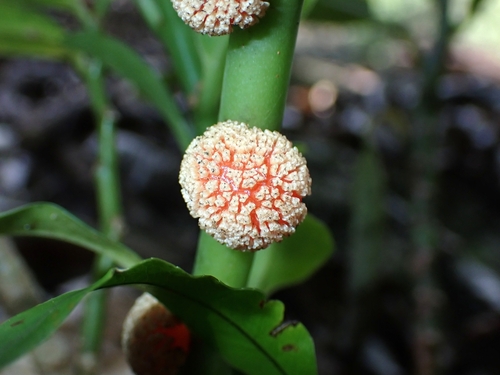
(c) Amaury Durbano, some rights reserved (CC BY-NC), uploaded by Amaury Durbano
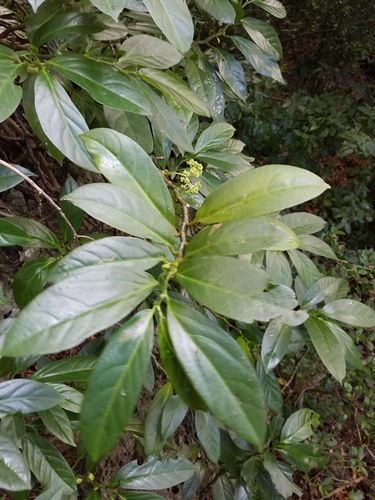
(c) mkargul, some rights reserved (CC BY-NC), uploaded by mkargul
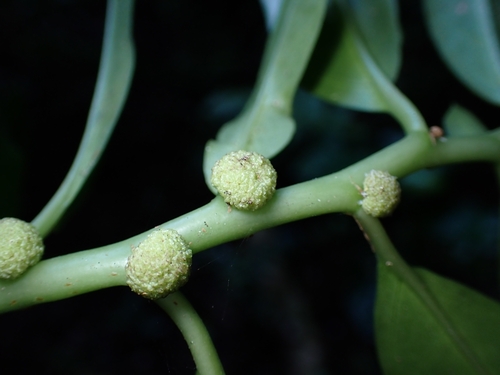
(c) Dominik Maximilián Ramík, some rights reserved (CC BY), uploaded by Dominik Maximilián Ramík
What to Eat
Edible parts: Fruit
The fruit are eaten fresh.
Known Hazards
Where to Find It
A tropical plant. It grows in the forest near the coast. It is often on limestone.
American Samoa, Australia, Chuuk, Cook Islands, Fiji, FSM, Guam, Kosrae, Malesia, Marquesas, Micronesia, Niue, Pacific, Palau, Papua New Guinea, PNG, Philippines, Pohnpei, Polynesia, Rotuma, Samoa, SE Asia, Tokelau, Tonga, Tuvalu, Wallis and Futuna,
How to Identify
A herb. It can partly lie or grow off other plants. It can grow 2 m tall. The stems are succulent. The leaves are opposite but one of the pair is small. The leaf blade is 5-15 cm long by 3-4 cm wide. The flowers are white. The fruit are red and like strawberries. They are 1.5 cm across.
How to Grow
It can be grown from seeds and cuttings.
Wikipedia
Source ↗Procris pedunculata is a plant native to the Indian Ocean, Malesia and Pacific Ocean islands.
Names & Synonyms
Fua lole, Gahevao, Kapaa fua kula, Kapaa taane, Kimm-wit
References (11)
- Flora of Australia, Volume 3, Hamamelidales to Casuarinales, Australian Government Publishing Service, Canberra (1989) p 84, 83
- Franklin, J., Keppel, G., & Whistler, W., 2008, The vegetation and flora of Lakeba, Nayau and Aiwa Islands, Central Lau Group, Fiji. Micronesica 40(1/2): 169–225, 2008
- Parham, B. E. V., 1971, The Vegetation of the Tokelau Islands with special reference to the Plants of Nukunonu Atoll. New Zealand Journal of Botany. 9:4, 576-609
- Parham, B. E. V., 1972, Plants of Samoa. New Zealand Department of Scientific and Industrial Research. Information Series. No. 85 p 36
- Smith, A.C., 1981, Flora Vitiensis Nova, Lawaii, Kuai, Hawaii, Volume 2 p 231
- Stone, B.,
- Thaman, R. R, 2016, The flora of Tuvalu. Atoll Research Bulletin No. 611. Smithsonian Institute p 118
- Whistler, W. A., 1988, Ethnobotany of Tokelau: The Plants, Their Tokelau Names, and Their Uses. Economic Botany 42(2): 155-176
- World Checklist of Useful Plant Species 2020. Royal Botanic Gardens, Kew
- Yuncker, T. G., 1943, The Flora of Niue Island. Bernice P. Bishop Museum Bulletin 178 p 49
- Yuncker, T.G., 1959, Plants of Tonga, Bernice P. Bishop Museum, Hawaii, Bulletin 220. p 102


