Prunus avium
(L.) L
Sweet cherry, Bird cherry, Wild cherry

(c) John D Reynolds, some rights reserved (CC BY-NC), uploaded by John D Reynolds

(c) Ihor Olshanskyi, some rights reserved (CC BY-NC), uploaded by Ihor Olshanskyi
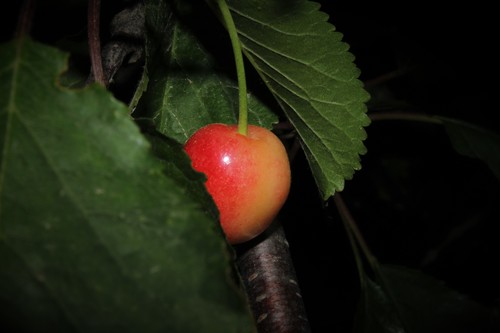
(c) Σάββας Ζαφειρίου (Savvas Zafeiriou), some rights reserved (CC BY-NC), uploaded by Σάββας Ζαφειρίου (Savvas Zafeiriou)
What to Eat
Edible parts: Fruit, Seeds, Leaves - flavouring, Sap
The fruit can be eaten raw or cooked in pies, or used to make preserves. It is sweet or bitter but not acid, and contains about 78% water and 8.5–14% sugars. Each fruit is about 20mm in diameter with one large seed. The seed is also edible raw or cooked, but should be avoided if too bitter. An edible gum is obtained by wounding the bark.
Known Hazards
Where to Find It
It is a temperate plant. It is native to Europe. It can tolerate frosts except at flowering. It needs well drained soils. It needs adequate moisture during fruit development. In India it is grown between 2,000-2,500 m altitude. It needs 1,100-1,600 chilling hours below 7°C during winter. A pH of 6.5-7 is best. It suits hardiness zones 3-9.
Afghanistan, Albania, Andorra, Argentina, Armenia, Asia, Asia Minor, Australia, Austria, Azerbaijan, Balkans, Belarus, Belgium, Bosnia, Britain, Bulgaria, Canada, Caucasus*, Central Asia, China, Colombia, Czech, Dagestan, Denmark, Europe, France, Georgia, Germany, Greece, Himalayas, Hungary, India, Iran, Ireland, Italy, Kazakhstan, Korea, Kyrgyzstan, Latvia, Lithuania, Luxembourg, Macedonia, Mediterranean, Mexico, Middle East, Moldova, Myanmar, Netherlands, North America, Norway, Pakistan, Peru, Poland, Portugal, Romania, Russia, San Marino, Scandinavia, SE Asia, Serbia, Slovakia, Slovenia, South America, Spain, Sweden, Switzerland, Tajikistan, Tasmania, Turkey, Türkiye, Ukraine, USA, Yugoslavia,
How to Identify
A medium sized tree. It grows to 10-20 m high. It is spreading and loses its leaves during the year. The bark is silver grey and peels in circular strips. The leaves are alternate. The leaves are bronze when they open, turn dark green then change to crimson in autumn. The leaves are oval and double toothed. The upper surface is dull dark green. They are hairy underneath where the veins join. The leaf stalk is red and grooved. The flowers are pink and white. They occur in small clusters. The fruit are small and red-black when ripe. They are 25 mm across. They are sweet and juicy. There are at least 1,000 different forms of sweet cherry.
Nutrition Score: 32/100
| Part | Moisture | kJ | kcal | Protein | Vit A | Vit C | Iron | Zinc |
|---|---|---|---|---|---|---|---|---|
| Fruit | 80.8 | 301 | 72 | 1.2 | 21 | 7 | 0.4 | 0.1 |
How to Grow
Requires a well-drained moisture retentive soil. Succeeds in light shade but fruits better in a sunny position. Thrives in a loamy soil, doing well on limestone. Prefers some chalk in the soil but apt to become chlorotic if too much is present. A very ornamental plant, it is fast growing on deep moist soils but is shallow rooting. Trees cast a light shade and are themselves intolerant of heavy shade. They produce quite a lot of suckers and can form thickets, especially if the main trunk is felled. This species is a parent of many cultivated forms of sweet cherries, especially the black fruited forms. Where space is at a premium, or at the limits of their climatic range, sweet cherries can be grown against a wall. Most cultivars will grow well against a sunny south or west facing wall though east or north facing walls are not very suitable. The main problems with growing this species against a wall are firstly that it is usually completely self-sterile and so there needs to be space for at least two different cultivars, secondly it is very vigorous and so is difficult to keep within bounds. Most members of this genus are shallow-rooted and will produce suckers if the roots are damaged. An excellent tree for insects and the fruit is a good food source for birds. A bad companion for potatoes, making them more susceptible to potato blight, it also suppresses the growth of wheat. It also grows badly with plum trees, its roots giving out an antagonistic secretion. Plants in this genus are notably susceptible to honey fungus. A sprouting standard sending up shoots from the base. In garden design, as well as the above-ground architecture of a plant, root structure considerations help in choosing plants that work together for their optimal soil requirements including nutrients and water. Harvesting typically occurs in late summer to early autumn, with specific timing varying by species. For instance, plums and peaches are usually harvested from July to September (Northern Hemisphere), while almonds are harvested in August to September (Northern Hemisphere). Prunus species usually flower in early spring, often between March and April (Northern Hemisphere), depending on the species and local climate. Growth rates vary among species, but generally, Prunus trees can grow moderately fast, often reaching full height in 3 to 5 years. However, they may take several years to bear fruit, depending on the species and growing conditions. Agroforestry uses: Prunus species can be used as windbreaks and in alley cropping systems. They also improve biodiversity by providing habitats for pollinators and other wildlife. Some varieties can fix nitrogen in the soil, contributing to soil health.
Propagation: Seed requires 2–3 months of cold stratification and is best sown in a cold frame as soon as it is ripe. Stored seed should be sown in a cold frame as early in the year as possible, with protection from mice. Germination can be slow, sometimes taking 18 months. Prick seedlings into individual pots when large enough to handle, overwinter in a greenhouse or cold frame, then plant out in late spring or early summer the following year. Half-ripe wood cuttings with a heel can be taken in July/August in a frame. Softwood cuttings from strongly growing plants can be taken in spring to early summer in a frame. Suckers can be divided during the dormant season and planted directly into permanent positions. Layering can be done in spring.
Medicinal Uses
The fruit stalks are astringent, diuretic and tonic; a decoction is used to treat cystitis, oedema, bronchial complaints, looseness of the bowels and anaemia. Small incisions in the trunk yield an aromatic resin that has been used as an inhalant for persistent coughs. All members of the genus contain amygdalin and prunasin, which break down in water to release hydrocyanic acid (prussic acid). In small amounts this exceedingly poisonous compound stimulates respiration, improves digestion and gives a sense of well-being.
Other Uses
Wild cherry is a pioneer species that quickly colonises clearings by seed and suckering to form secondary woodland, though it is often later out-competed by other hardwoods. It is used extensively in Europe for afforestation of agricultural land and is valued for wildlife and amenity plantings. Flowers provide a good source of pollen and nectar for bees. This species is a poor companion for potatoes, increasing their susceptibility to blight, and also suppresses wheat growth; its roots produce an antagonistic secretion that affects nearby plum trees. The leaves yield a green dye and the fruit a dark grey to green dye. The root bark contains the dye phlorizin, and the wood contains xylan. The seed contains around 30% oil. The bark usually contains small amounts of tannin, though this can rise to 16%. The heartwood is pinkish-brown and the sapwood red, with a fine, straight grain and satiny texture. The wood is firm, compact and generally free from defects — a valuable, attractive timber that is easy to work, used for turnery, furniture, cabinet making, panelling and musical instruments. The red sapwood is particularly valued in turnery and woodwork. Flowers attract bees, butterflies and other pollinators. Fruits support birds and mammals, and the trees provide shelter, nesting and roosting sites. Bark and leaf litter offer overwintering habitat for invertebrates.
Wikipedia
Source ↗Prunus avium, commonly called wild cherry, sweet cherry or gean, is a species of cherry, a flowering plant in the rose family, Rosaceae. It is native to Eurasia and naturalized elsewhere. It is an ancestor of P. cerasus (sour cherry). All parts of the plant except for the ripe fruit are slightly toxic, containing cyanogenic glycosides. The species is often cultivated as an ornamental tree.
Production
Trees produce in 3-4 years. Trees last about 45 years. Fruit are hand picked when ripe. A tree can produce 18-20 kg of fruit.
Other Information
It is a cultivated food plant.
Notes
There are about 200 Prunus species.
Names & Synonyms
Bali, Cerejeira, Cereza, Cerezo, Cerezos bordes, Cerise douce, Cheresh-nya, Ciliegia dolce, Ciliegio selvatico, Cirerer bord, Cseresznye, Diva cresha, Gean, Gilas, Griota, Kanka outou, Kersen, Kiraz, Kirsi, Krusbal, Mazzard, Morell, Ou zhou, Qershi, Siryizyi, Tian ying tao, Vadvseresznye, Visni, Vogelkirsche
References (88)
- Abbet, C., et al, 2014, Ethnobotanical survey on wild alpine food plants in Lower and Central Valais (Switzerland). Journal of Ethnopharmacology 151 (2014) 624–634
- Ambasta, S.P. (Ed.), 2000, The Useful Plants of India. CSIR India. p 494
- Bianchini, F., Corbetta, F., and Pistoia, M., 1975, Fruits of the Earth. Cassell. p 146
- Bodkin, F., 1991, Encyclopedia Botanica. Cornstalk publishing, p 840
- Bonet, M. A. & Valles, J., 2002, Use of non-crop food vascular plants in Montseny biosphere reserve (Catalonia, Iberian Peninsula). International Journal of Food Sciences and Nutrition (2002) 53, 225–248 (As var. sylvestris)
- Brickell, C. (Ed.), 1999, The Royal Horticultural Society A-Z Encyclopedia of Garden Plants. Convent Garden Books. p 836
- Bussman, R. W., et al, 2016, A comparative ethnobotany of Khevsureti, Samtskhe-Javakheti, Tusheti, Svaneti, and Racha-Lechkhumi, Republic of Georgia (Sakartvelo), Caucasus. Journal of Ethnobiology and Ethnomedicine.
- Bussman, R. W. et al, 2017, Ethnobotany of Samtskhe-Javakheti, Sakartvelo (Republic of Georgia), Caucasus. Indian Journal of Traditional Knowledge Vol. 16(1) pp 7-24
- Bussman, R. W., et al, 2021, Unity in diversity—food plants and fungi of Sakartvelo (Republic of Georgia), Caucasus. Journal of Ethnobiology and Ethnomedicine (2021) 17:72 p 14
- Cerne, M., 1992, Wild Plants from Slovenia used as Vegetables. Acta Horticulturae 318
- Chamorro, M. F., & Ladio, A., 2020, Native and exotic plants with edible fleshy fruits utilized in Patagonia and their role as sources of local functional foods. BMC Complementary Medicine and Therapies. 20:155
- Chandrashekara, U. M., 2009, Tree species yielding edible fruit in the coffee-based homegardens of Kerala, India: their diversity, uses and management. Food Sec. 1:361-370
- Cheifetz, A., (ed), 1999, 500 popular vegetables, herbs, fruits and nuts for Australian Gardeners. Random House p 222
- Coombes, A.J., 2000, Trees. Dorling Kindersley Handbooks. p 258
- Cundall, P., (ed.), 2004, Gardening Australia: flora: the gardener's bible. ABC Books. p 1092
- Dashorst, G.R.M., and Jessop, J.P., 1998, Plants of the Adelaide Plains & Hills. Botanic Gardens of Adelaide and State Herbarium. p 74
- Denes, A., et al, 2012, Wild plants used for food by Hungarian ethnic groups living in the Carpathian Basin. Acta Societatis Botanicorum Poloniae 81 (4): 381-396 (As Cerasus avium)
- Dogan, Y., et al, 2015, Of the importance of a leaf: the ethnobotany of sarma in Turkey and the Balkans. Journal of Ethnobiology and Ethnomedicine, 11:56
- Dzhangaliev, A. D., et al, 2003, The Wild Fruit and Nut Plants of Kazakhstan, Horticultural Reviews, Vol. 29. pp 305-371
- Ertug, F, Yenen Bitkiler. Resimli Türkiye Florası -I- Flora of Turkey - Ethnobotany supplement (As Cerasus avium)
- Esperanca, M. J., 1988. Surviving in the wild. A glance at the wild plants and their uses. Vol. 2. p 324
- Farrar, J.L., 1995, Trees of the Northern United States and Canada. Iowa State University press/Ames p 375
- Fl. suec. ed. 2, 165. 1755
- Flora of China @ efloras.org Volume 9
- Flowerdew, B., 2000, Complete Fruit Book. Kyle Cathie Ltd., London. p 48
- Girard, N. J., 2020, Sustainable Foraging of Wild Edible Plants in Norway. A Biocultural Approach. M. Sc. thesis Norwegian University. p 134
- Glowinski, L., 1999, The Complete Book of Fruit Growing in Australia. Lothian. p 67
- Gouldstone, S., 1983, Growing your own Food-bearing Plants in Australia. Macmillan p 88
- Harris, E & J., 1983, Field Guide to the Trees and Shrubs of Britain. Reader's Digest. p 100
- Hedrick, U.P., 1919, (Ed.), Sturtevant's edible plants of the world. p 521
- Heywood, V. H. & Zohary, D.,1995, A Catalogue of the Wild Relatives of Cultivated Plants Native to Europe. Flora Mediterranea 5 - 1995, p 394
- Heywood, V.H., Brummitt, R.K., Culham, A., and Seberg, O. 2007, Flowering Plant Families of the World. Royal Botanical Gardens, Kew. p 282
- Hibbert, M., 2002, The Aussie Plant Finder 2002, Florilegium. p 241
- http://nordicfood lab/org/blog/2102/9/wild-edible-plants-an-overview
- Hu, Shiu-ying, 2005, Food Plants of China. The Chinese University Press. p 442
- INFOODS:FAO/INFOODS Databases
- Irving, M., 2009, The Forager Handbook, A Guide to the Edible Plants of Britain. Ebury Press p 270
- Jackes, D. A., 2007, Edible Forest Gardens
- Janaćković, P. et al, 2019, Traditional knowledge on plant use from Negotin Krajina (Eastern Serbia): An ethnobotanical study. Indian Journal of Traditional Knowledge Vol 18 (1), pp 25-33
- John, L., & Stevenson, V., 1979, The Complete Book of Fruit. Angus & Robertson p 104
- Joyce, D., 1998, The Garden Plant Selector. Ryland, Peters and Small. p 117
- Kermath, B. M., et al, 2014, Food Plants in the Americas: A survey of the domesticated, cultivated and wild plants used for Human food in North, Central and South America and the Caribbean. On line draft. p 710
- Khan, D. & Shaukat, S.S., 2006, The Fruits of Pakistan: Diversity, Distribution, Trends of Production and Use. Int. J. Biol. Biotech., 3(3):463-499
- Kiple, K.F. & Ornelas, K.C., (eds), 2000, The Cambridge World History of Food. CUP p 1751
- Kizilarslan, C. & Ozhatay, N., 2012, An ethnobotanical study of the useful and edible plants of İzmit. Marmara Pharmaceutical Journal 16: 134-140, 2012.
- Lazarides, M. & Hince, B., 1993, Handbook of Economic Plants of Australia, CSIRO. p 199
- Little, E.L., 1980, National Audubon Society Field Guide to North American Trees. Alfred A. Knopf. p 495
- Luczaj, L., 2012, Ethnobotanical review of wild edible plants of Slovakia. Acta Societatis Botanicorum Poloniae 81(4):245-255
- Łukasz Łuczaj and Wojciech M Szymański, 2007, Wild vascular plants gathered for consumption in the Polish countryside: a review. J Ethnobiol Ethnomedicine. 3: 17
- Luczaj, L., et al, 2015, Wild food plants and fungi used by Ukrainians in the western part of the Maramureş region in Romania. Acta Soc Bot Pol 84(3):339–346
- Mabey, R., 1973, Food for Free. A Guide to the edible wild plants of Britain, Collins. p 171
- Mattalia, G., et al, 2012, Traditional uses of wild food and medicinal plants among Brigasc, Kye ́, and Provenc ̧al communities on the Western Italian Alps. Genet Resour Crop Evol. Springer
- Menendez-Baceta, G., et al, 2012, Wild edible plants traditionally gathered in Gorbeialdea (Biscay, Basque Country) Genetic Resources and Crop Evolution 59:1329-1347
- Miskoska-Milevska, E. et al, 2020, Traditional uses of wild edible plants in the Republic of North Macedonia. PHYTOLOGIA BALCANICA 26(1): 155–162, Sofia, 2020 p 159
- Pardo-de-Santayana, M., et al, 2005, The gathering and consumption of wild edible plants in the Campoo (Cantabria, Spain). International Journal of Food Sciences and Nutrition. 56(7): 529-542
- Pardo-de-Santayana, M., et al, 2007, Traditional knowledge of wild edible plants used in the northwest of the Iberian Peninsula (Spain and Portugal): a comparative study. Journal of Ethnobiology and Ethnomedicine 2007, 3:27
- Pieroni, A., 1999, Gathered wild food plants in the Upper Valley of the Serchio River (Garfagnana), Central Italy. Economic Botany 53(3) pp 327-341
- Pieroni, A.,& Giusti, M. E., 2009, Alpine Ethnobotany in Italy: Journal of Ethnobiology and Ethnomedicine. 5:32
- Pieroni, A., 2008, Local plant resources in the ethnobotany of Theth, a village in the Northern Albanian Alps. Genet Resour Crop Evol (2008) 55:1197–1214 (As Cerasus avium)
- Pieroni, A. & Soukand, R., 2017, The disappearing wild food and medicinal plant knowledge in a few mountain villages of North-Eastern Albania. Journal of Applied Botany and Food Quality 90, 58 - 67
- Plants for a Future database, The Field, Penpol, Lostwithiel, Cornwall, PL22 0NG, UK. http://www.scs.leeds.ac.uk/pfaf/
- Polunin, O., & Stainton, A., 2006, Flowers of the Himalaya, Oxford India Paperbacks. p 115
- Postman, J. D., et al, 2012, Recent NPGS Coordinated Expeditions in the Trans-Caucasus Region to Collect Wild Relatives of Temperate Fruit and Nut Crops. In Acta Horticulturae Number 948 p 191-198
- Pruse, B., et al, 2021, Active Wild Food Practices among Culturally Diverse Groups in the 21st Century across Latgale, Latvia. Biology 2021, 10, 551.
- Redzic, S. J., 2006, Wild Edible Plants and their Traditional Use in the Human Nutrition in Bosnia-Herzegovina. Ecology of Food and Nutrition, 45:189-232
- Redzic, S., 2010, Use of Wild and Semi-Wild Edible Plants in Nutrition and Survival of People in 1430 Days of Siege of Sarajevo during the War in Bosnia and Herzegovina (1992–1995). Coll. Antropol 34 (2010) 2:551-570
- Rexhepi, B., et al, 2018, Ethnobotanical Study of Wild Edible Plants in Pelagonia Region (Southwestern Macedonia) International Journal of Advances in Science Engineering and Technology, Vol. 6 (1) p 57
- Rivera, C., et al, 2005, The Ethnobotanical Study of Local Mediterranean Food Plants as Medicinal Resources in Southern Spain. Journal of Physiologyand Pharmacology. 56, Suppl. 1, 97-114
- Roa, J. A. G. & Boada, D. S. G., 2018, Fundación para el Fortalecimiento de la Fruticultura y Plantas Alimenticias no Convencionales en Colombia.
- Sansanelli, S., et al, 2014, Wild food plants traditionall consumed in the area of Bologna (Emilia Romagna region, Italy). Journal of Ethnobiology and Ethnomedicine 10:69
- Schunko, C., et al, 2010, Organic farmers use of wild food plants and fungi in a hilly area in Styria (Austria). Journal of Ethnobiology and Ethnomedicine 6:17
- Segura, S., et al, 2018, The edible fruit species in Mexico. Genet Resour Crop Evol (2018) 65:1767–1793
- Sfikas, G., 1984, Trees and shrubs of Greece. Efstathiadis Group. Athens. p 70
- Sharma, B.B., 2005, Growing fruits and vegetables. Publications Division. Ministry of Information and broadcasting. India. p 35
- Small, E., 2009, Top 100 Food Plants. The world's most important culinary crops. NRC Research Press. p 169
- Svanberg, I. et al, 2012, Uses of tree saps in northern and eastern parts of Europe. Acta Societatis Botanicorum Poloniae 81 (4): 343-357
- Tardio, J., et al, Ethnobotanical review of wild edible plants in Spain. Botanical J. Linnean Soc. 152 (2006), 27-71
- Toupal, R. S. & Hollenback, K., 2009, An Ethnobotany of Indiana Dunes National Lakeshore: Plant Uses of the Ojibwa People. Bureau of Applied Research in Anthropology. University of Arizona
- USDA, ARS, National Genetic Resources Program. Germplasm Resources Information Network - (GRIN). [Online Database] National Germplasm Resources Laboratory, Beltsville, Maryland. Available: www.ars-grin.gov/cgi-bin/npgs/html/econ.pl (10 April 2000)
- van Wyk, B., 2005, Food Plants of the World. An illustrated guide. Timber press. p 306
- Vasquez, R. and Gentry, A. H., 1989, Use and Misuse of Forest-harvested Fruits in the Iquitos Area. Conservation Biology 3(4): 350f
- Vlkova, M., et al, 2015, Edible Plants Sold on Marginal Rural Markets in Fergana Valley, Southern Kyrgyzstan. Bulgarian Journal of Agricultural Science, 21 (No 2) 2015, 243–250
- Vorstenbosch, T., et al, 2017, Famine food of vegetal origin consumed in the Netherlands during World War II. Journal of Ethnobiology and Ethnomedicine (2017) 13:63
- Watkins, R., 1979, Cherry, plum, peach, apricot and almond, in Simmonds, N.W., (ed), Crop Plant Evolution. Longmans. London. p 242
- Wiersema, J. H. & Leon, B., 2013, World Economic Plants. A Standard Reference CRC Press. 2nd Ed. p 559
- World Checklist of Useful Plant Species 2020. Royal Botanic Gardens, Kew
- www.efloras.org Flora of China Volume 9 (As Cerasus avium)
- Zeven, A. C. & de West, J. M. J., 1982, Dictionary of cultivated plants and their regions of diversity. Wageningen. p 100
More from Rosaceae


