Prunus incana
(Pall.) Batsch

(с) Теймуров А.А., некоторые права защищены (CC BY-NC), загрузил Теймуров А.А.

(с) Irina Bobyleva, некоторые права защищены (CC BY-NC), загрузил Irina Bobyleva
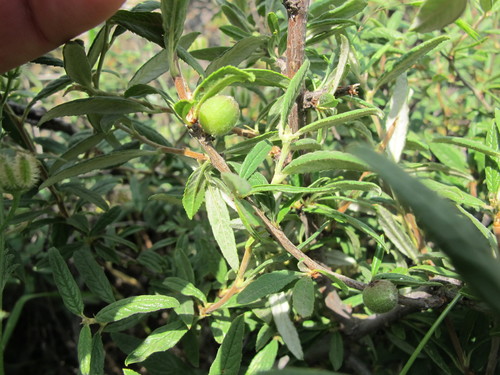
(с) Grzegorz Grzejszczak, некоторые права защищены (CC BY-SA), загрузил Grzegorz Grzejszczak
What to Eat
Edible parts: Fruit, Seeds
The fruit can be eaten raw or cooked. It is rather small, only 7mm in diameter, and contains one large seed. The seed can also be eaten raw or cooked, but should not be consumed if it is too bitter.
Known Hazards
Where to Find It
Temperate.
Armenia, Caucasus, Europe, Georgia, Iran, Mexico, Middle East, North America, Turkey, Türkiye,
How to Identify
A deciduous shrub reaching 2 m tall and wide. Flowers appear from April to June. Hermaphroditic and insect-pollinated. Grows in light, medium, or heavy soils with good drainage; tolerates mildly acidic to mildly alkaline conditions. Requires full sun and adapts to dry or moist soil. Hardy to UK zone 6.
How to Grow
Propagation: Seed requires 2–3 months of cold stratification and is best sown in a cold frame as soon as it is ripe. Stored seed should be sown in a cold frame as early in the year as possible and protected from mice. Germination can be slow, sometimes taking 18 months. Prick out seedlings into individual pots when large enough to handle, overwinter in a greenhouse or cold frame, and plant out in late spring or early summer the following year. Cuttings of half-ripe wood with a heel can be taken in July or August in a frame. Softwood cuttings from strongly growing plants can be taken in spring to early summer in a frame. Layering can be done in spring.
Medicinal Uses
No specific medicinal use has been recorded for this species, but like all members of the genus it contains amygdalin and prunasin, compounds that break down in water to release hydrocyanic acid (cyanide or prussic acid). In small amounts, this highly poisonous substance is said to stimulate respiration, improve digestion, and produce a sense of well-being.
Other Uses
A green dye can be obtained from the leaves, and a dark grey to green dye from the fruit.
Wikipedia
Source ↗Prunus incana, the willow leaf cherry (and hoary cherry, although that name is also used for Prunus canescens), is a species of sour cherry native to the Caucasus region of central Asia, including Russia, Armenia, Georgia, Turkey, Kurdistan region of Iraq and Iran. A scrubby plant, it tends to grow on limestone cliffs at elevations around 360-2400 m.
Notes
There are about 200 Prunus species.
Names & Synonyms
References (3)
- Beitrage Entwurfe zur pragmatischen geschichte der drei Nat-urreiche nach ihren Verwandtschaften 29. 1801
- Plants for a Future, The Field, Penpol, Lostwithiel, Cornwall, PL22 0NG, UK. http://www.scs.leeds.ac.uk/pfaf/
- Postman, J. D., et al, 2012, Recent NPGS Coordinated Expeditions in the Trans-Caucasus Region to Collect Wild Relatives of Temperate Fruit and Nut Crops. In Acta Horticulturae Number 948 p 191-198
More from Rosaceae


