Prunus nipponica
Matsum.
Japanese alpine cherry

(c) Σ64, some rights reserved (CC BY)
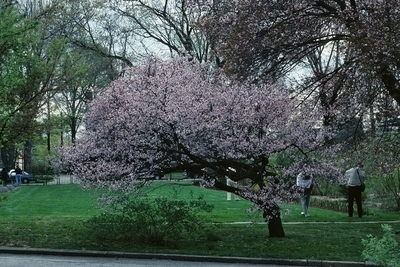
(c) Chicago Botanic Garden 2010, some rights reserved (CC BY-NC-SA)

(c) Nadezhda Liksakova, some rights reserved (CC BY-NC), uploaded by Nadezhda Liksakova
What to Eat
Edible parts: Fruit, Seeds
The fruit can be eaten raw or cooked; it is small, about 8mm in diameter, and contains one large seed. The seed is also edible raw or cooked, but should not be eaten if it tastes too bitter.
Known Hazards
Where to Find It
Temperate.
Asia, Japan,
How to Identify
A small tree that loses its leaves. It grows 5 m tall. The flowers are white to pink.
How to Grow
Thrives in a well-drained moisture-retentive loamy soil, growing well on limestone. Prefers some lime in the soil but is likely to become chlorotic if too much lime is present. Succeeds in sun or partial shade though it fruits better in a sunny position. Some named forms have been developed for their ornamental value. Most members of this genus are shallow-rooted and will produce suckers if the roots are damaged. Plants in this genus are notably susceptible to honey fungus.
Propagation: Seed requires 2–3 months of cold stratification and is best sown in a cold frame as soon as it is ripe. Stored seed should be sown in a cold frame as early in the year as possible, with protection from mice. Germination can be slow, sometimes taking 18 months. Prick seedlings into individual pots when large enough to handle, overwinter in a greenhouse or cold frame, then plant out in late spring or early summer the following year. Half-ripe cuttings with a heel can be taken in July/August in a frame; softwood cuttings from vigorous plants in spring to early summer in a frame. Layering in spring is also an option.
Medicinal Uses
No specific medicinal use has been recorded for this species, but all members of the genus contain amygdalin and prunasin, which break down in water to form hydrocyanic acid (prussic acid). In small amounts this highly poisonous compound stimulates respiration, improves digestion, and produces a sense of well-being.
Other Uses
A green dye can be obtained from the leaves, and a dark grey to green dye from the fruit.
Wikipedia
Source ↗Prunus nipponica, also called Japanese alpine cherry (高嶺桜, Takanezakura) or Kurile cherry, is a shrub which originates from the islands of Hokkaido and Honshu, Japan. It grows to a height of about 5 meters (16 ft) and can grow in sandy, loamy, and clay soils. This species is one of the hardiest of cherry trees, well-suited to cold climates. The flowers are a very light pink or even white in color. Flowers bloom in the first half of spring. They have 5 petals and are 3 centimeters (1.2 in) in diameter. The pistils are usually longer than the stamen. The leaves are serrated and the bark is gray. In autumn the leaves turn yellow and orange-red; these are rare autumnal colors for a cherry tree. P. nipponica wood contains significant amounts of these flavonoids: d-catechin, naringenin, sakuranetin, eriodictyol, taxifolin, genistein, and prunetin. Being a member of the genus Prunus, P. nipponica would contain amygdalin and prunasin which form hydrocyanic acid when combined with water. This acid is poisonous but in very small doses it can improve respiration, digestion, and a sense of well-being. The fruit can be used as food and to make green dye. This species was first reported by Japanese botanist Jinzō Matsumura in the Tokyo Botanical Magazine in 1901. It is in the section Pseudocerasus of the cherry subgenus Cerasus of the genus Prunus, which are ornamental plants. Ma et al classified it in a group with Prunus incisa. P. nipponica is on the "List of Protected Animals and Plants in the Wildlife Protection Zone" of the wilderness Shirakami-Sanchi World Heritage Site.
Notes
There are about 200 Prunus species.
Names & Synonyms
References (3)
- Bot. Mag. (Tokyo) 15:99. 1901
- Plants for a Future, The Field, Penpol, Lostwithiel, Cornwall, PL22 0NG, UK. http://www.scs.leeds.ac.uk/pfaf/
- Wikipedia,
More from Rosaceae


