Pouteria adolfi-friederici
(Engl.) A. Meeuse
Sosi
What to Eat
Edible parts: Seeds for oil, Fruit
The seeds are eaten and contain edible oil; the fruit is also consumed.
Known Hazards
Where to Find It
A tropical plant. It grows in Uganda at altitudes of 1,200-2,100 m above sea level. It is in lower mountain forests.
Africa, Burundi, Central Africa, Congo DR, East Africa, Ethiopia, Kenya, Malawi, Southern Africa, Sudan, Tanzania, Uganda, Zambia, Zimbabwe,
How to Identify
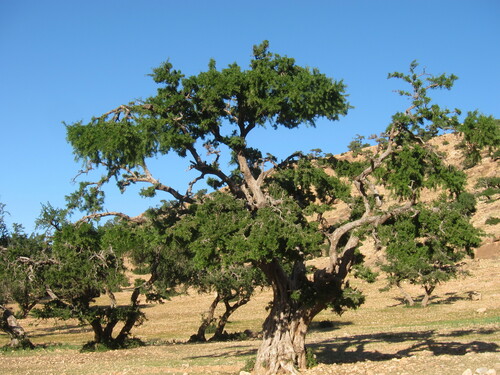
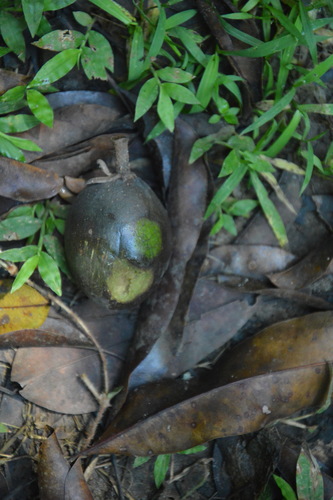
A very tall tree. It grows up to 50 m high. It has a clear straight trunk up to about 16 m then branches. Mature trees have buttresses at the base. The bark is pale grey-brown. If the bark is cut is produces white latex with an unpleasant smell. The flower and leaf stalks have golden-brown hairs. The leaves are stiff and large. They are 22 cm long by 8 cm across. The top leaf surface is dark shiny green. The leaves are hairy and pale orange underneath. There are 10-20 pairs of prominent veins. The tip of the leaf is pointed. Flowers are creamy-white. They are very small and in clusters beside the leaves. The fruit are hard and narrow with a beak. They are 4 cm long and green. Inside there is one shiny brown seed. It is 3 cm long. It has a large white scar. Possibly now Aningeria adolfi-friedericii (Engl.) Robyns & Gilbert; Possibly now
How to Grow
It can be grown from seed. Seed should be sown fresh. Seed will not store well.
Medicinal Uses
Traditional uses include the nut as food and the seed oil as edible oil.
Production
The tree is slow growing. The fruit mature in April in Uganda.
Names & Synonyms
Chepkatet, Kipkoibet, Kipworbet, Luliondet, Lulyo, Muna, Mutunguru, Mwiruni, Nejebbe, Ngechebet, Nychebbe, Seite
References (12)
- Bekele-Tesemma A., Birnie, A., & Tengnas, B., 1993, Useful Trees and Shrubs for Ethiopia. Regional Soil Conservation Unit. Technical Handbook No 5. p 86
- Dale, I. R. and Greenway, P. J., 1961, Kenya Trees and Shrubs. Nairobi. p 509 (As Aningeria adolfi-friederici)
- East African Herbarium records, 1981,
- Katende, A.B., Birnie, A & Tengnas B., 1995, Useful Trees and Shrubs for Uganda. Identification, Propagation and Management for Agricultural and Pastoral Communities. Technical handbook No 10. Regional Soil Conservation Unit, Nairobi, Kenya. p 98
- Lovett, J. C. et al, Field Guide to the Moist Forest Trees of Tanzania. p 166 (subsp. usambarensis)
- Molla, A., Ethiopian Plant Names. http://www.ethiopic.com/aplants.htm
- Nzigidahera, B., 2006, Assessment of Socio-cultural, Economic Characteristics and Livelihood of Riparian Population of the Kibira National Park. (Rukoma-Mutana locality). UNDP p 30 (As Aningeria adolfi-friederici)
- Palgrave, K.C., 1996, Trees of Southern Africa. Struik Publishers. p 724
- Peters, C. R., O'Brien, E. M., and Drummond, R.B., 1992, Edible Wild plants of Sub-saharan Africa. Kew. p 181
- White, F., Dowsett-Lemaire, F. and Chapman, J. D., 2001, Evergreen Forest Flora of Malawi. Kew. p 540 (As Pouteria)
- World Checklist of Useful Plant Species 2020. Royal Botanic Gardens, Kew
- www.zimbabweflora.co.zw 2011