Prunus rivularis
Scheele
Creek plum

(c) Michael Gras, M.Ed., some rights reserved (CC BY), uploaded by Michael Gras, M.Ed.
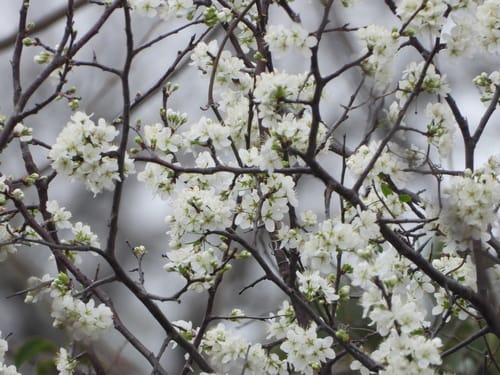
(c) Larry Swift, some rights reserved (CC BY-NC)
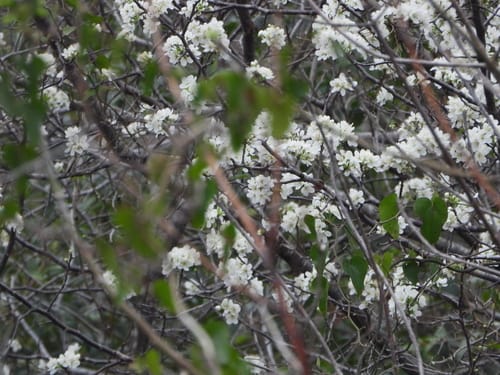
(c) Larry Swift, some rights reserved (CC BY-NC)
What to Eat
Edible parts: Fruit, Seeds
The fruit is a plum about 15mm in diameter with a single large seed. It has an excellent flavour but is usually quite tart and not as well flavoured as Prunus angustifolia. It can be eaten raw or cooked. The seed is also edible raw or cooked, but should be avoided if it tastes too bitter due to potential toxicity.
Known Hazards
Where to Find It
Temperate.
North America*, USA,
How to Identify
Deciduous shrub reaching 2.5 m, hardy to UK zone 8. Flowers bloom April to May. Hermaphrodite flowers are insect-pollinated. Thrives in light sandy, medium loamy, or heavy clay soils with good drainage. Tolerates mildly acidic through basic soils. Requires full sun and prefers moist soil conditions.
How to Grow
Thrives in a well-drained moisture-retentive loamy soil. Prefers some lime in the soil but is likely to become chlorotic if too much lime is present. Succeeds in sun or partial shade though it fruits better in a sunny position. This species is not hardy in the colder areas of Britain, it tolerates temperatures down to between -5 and -10°c. Most members of this genus are shallow-rooted and will produce suckers if the roots are damaged. Plants in this genus are notably susceptible to honey fungus.
Propagation: Seed requires 2–3 months of cold stratification and is best sown in a cold frame as soon as it is ripe. Stored seed should be sown as early in the year as possible. Protect seed from mice. Germination can be slow, sometimes taking 18 months. Prick seedlings into individual pots when large enough to handle, overwinter in a greenhouse or cold frame, then plant out in late spring or early summer the following year. Cuttings of half-ripe wood with a heel can be taken in July/August in a frame. Softwood cuttings from vigorous plants can be taken in spring to early summer in a frame. Layering can be done in spring.
Medicinal Uses
No specific research has been recorded for this species, but like all members of the genus it contains amygdalin and prunasin, compounds that break down in water to release hydrocyanic acid (prussic acid). In small amounts this highly poisonous substance can stimulate respiration, aid digestion, and produce a sense of well-being.
Other Uses
A green dye can be extracted from the leaves, while the fruit yields a dark grey to green dye.
Wikipedia
Source ↗Prunus rivularis, known variously by the common names creek plum, hog plum, or wild-goose plum is a thicket-forming shrub. It prefers calcareous clay soil or limestone-based woodland soils. This deciduous plant belongs to the rose family, Rosaceae, and is found mainly in the central United States. It is a shrub consisting of slender stems with umbel clusters of white blossoms. The fruit is a drupe that resembles a large berry; though it has a bitter taste, it serves as a source of food for birds and other wildlife. "Prunus" is Latin for plum, whereas "rivularis" means being near a stream.
Other Information
It is cultivated.
Notes
There are about 200 Prunus species.
Names & Synonyms
Hog plum, Wild-goose plum
References (6)
- Beckstrom-Sternberg, Stephen M., and James A. Duke. "The Foodplant Database." http://probe.nalusda.gov:8300/cgi-bin/browse/foodplantdb.(ACEDB version 4.0 - data version July 1994)
- Hedrick, U.P., 1919, (Ed.), Sturtevant's edible plants of the world. p 528
- Linnaea 21:594. 1848
- Plants for a Future, The Field, Penpol, Lostwithiel, Cornwall, PL22 0NG, UK. http://www.scs.leeds.ac.uk/pfaf/
- Wiersema, J. H. & Leon, B., 2013, World Economic Plants. A Standard Reference CRC Press. 2nd Ed. p 564
- World Checklist of Useful Plant Species 2020. Royal Botanic Gardens, Kew
More from Rosaceae


