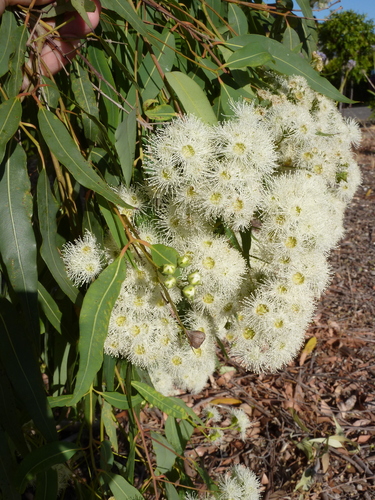
Pseudanamomis umbellulifera
(Kunth) Kausel
Monos plum, Little umbel false anamomis

Wikimedia Commons - Photo by David J. Stang

Wikimedia Commons - Photo by David J. Stang
What to Eat
Edible parts: Fruit
Fruit - raw or cooked. A small, yellow, ellipsoid fruit, about 25 - 30mm in diameter, with a juicy, sweet but insipid pulp.
Where to Find It
A tropical plant. It suits the hot tropical lowlands. It grows in areas with a medium to high rainfall. It can tolerate a range of soils conditions. It can tolerate light frost.
Caribbean, Central America, Columbia, Dominican Republic, Guyana, Haiti, Hispaniola, North America, Puerto Rico, South America, Trinidad, USA, Venezuela, West Indies,
How to Identify
A medium sized shrub. It grows 5 m tall. The fruit are small and yellow with juicy sweet pulp. They are oval and 3 cm across. The flesh is yellow to orange. They have one seed inside.
How to Grow
Plants are grown from seed.
Production
Fruit are produced in 3-5 years. There are often 2 crops of fruit per year.
Other Information
It is cultivated.
Names & Synonyms
Cereza de mono, Ciruelas, Ciruelillo, Paiju de amu, Pauji
References (12)
- Ark. Bot. ser. 2, 3:512. 1956
- Facciola, S., 1998, Cornucopia 2: a Source Book of Edible Plants. Kampong Publications, p 159
- Grandtner, M. M., 2008, World Dictionary of Trees. Wood and Forest Science Department. Laval University, Quebec, Qc Canada. (Internet database http://www.wdt.qc.ca)
- Grandtner, M. M. & Chevrette, J., 2013, Dictionary of Trees, Volume 2: South America: Nomenclature, Taxonomy and Ecology. Academic Press p 541
- Kermath, B. M., et al, 2014, Food Plants in the Americas: A survey of the domesticated, cultivated and wild plants used for Human food in North, Central and South America and the Caribbean. On line draft. p 718
- Kunkel,
- Lopez-Diago, D. & Garcia, N., 2021, Wild edible fruits of Colombia. Biota ColomBiana 22 (2) p 46
- Martin, F. W., et al, 1987, Perennial Edible Fruits of the Tropics. USDA Handbook 642 p 41
- NYBG herbarium "edible"
- Roa, J. A. G. & Boada, D. S. G., 2018, Fundación para el Fortalecimiento de la Fruticultura y Plantas Alimenticias no Convencionales en Colombia.
- Wiersema, J. H. & Leon, B., 2013, World Economic Plants. A Standard Reference CRC Press. 2nd Ed. p 566
- World Checklist of Useful Plant Species 2020. Royal Botanic Gardens, Kew