Mosiera longipes
(O. Berg.) Small
Guayabilla, Caloosa huckleberry, Long stalk guava

(c) Andrés Ramírez-Barrera, some rights reserved (CC BY), uploaded by Andrés Ramírez-Barrera

(c) icalbert, some rights reserved (CC BY-NC)

(c) Bronzit_poet, some rights reserved (CC BY-NC), uploaded by Bronzit_poet
What to Eat
Edible parts: Fruit
The fruit are eaten fresh or made into jellies, jams, sauces, shortcakes, and wines.
Where to Find It
It is a tropical plant. It grows well by the seaside.
Antilles, Bahamas, Barbados, Central America, North America, Puerto Rico, South America, USA, West Indies,
How to Identify
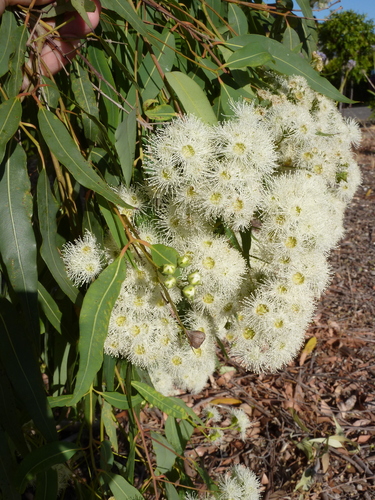
A shrub or small tree. It is erect. The branches are slender. The leaves are oval and greyish-green. The twigs are dark brown and the leaf stalks are yellow. The flowers are white or pink. The fruit is a red berry. It is 10 mm across. The fruit are edible.
Wikipedia
Source ↗Mosiera longipes is a species of plant in the Myrtle family. Its common names include Mangroveberry, Bahama Stopper, and Long-stalked Stopper. It is listed as Near Threatened on the IUCN Red List and shows a declining population trend.
Production
It is slow growing.
Notes
There are about 150 Psidium species.
Names & Synonyms
Bahama stopper, Mangrove berry, Stopper
References (12)
- Barwick, M., 2004, Tropical and Subtropical Trees. A Worldwide Encyclopedic Guide. Thames and Hudson p 348
- Beckstrom-Sternberg, Stephen M., and James A. Duke. "The Foodplant Database." http://probe.nalusda.gov:8300/cgi-bin/browse/foodplantdb.(ACEDB version 4.0 - data version July 1994)
- Facciola, S., 1998, Cornucopia 2: a Source Book of Edible Plants. Kampong Publications, p 159 (As Psidium littorale var. longipes)
- Grandtner, M. M., 2008, World Dictionary of Trees. Wood and Forest Science Department. Laval University, Quebec, Qc Canada. (Internet database http://www.wdt.qc.ca)
- Hedrick, U.P., 1919, (Ed.), Sturtevant's edible plants of the world. p 299 (As Eugenia longipes)
- J. Arnold Arbor. 54:312. 1973
- Kermath, B. M., et al, 2014, Food Plants in the Americas: A survey of the domesticated, cultivated and wild plants used for Human food in North, Central and South America and the Caribbean. On line draft. p 722 (As Psidium longipes)
- Kiple, K.F. & Ornelas, K.C., (eds), 2000, The Cambridge World History of Food. CUP p 1820 (As Myrtus verrucosa)
- Macmillan, H.F. (Revised Barlow, H.S., et al) 1991, Tropical Planting and Gardening. Sixth edition. Malayan Nature Society. Kuala Lumpur. p 317
- Morton,
- Popenoe,
- Uphof,