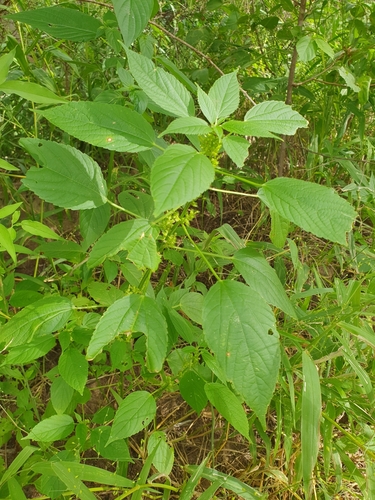
Pycnocoma thonneri
Pax ex De Wild et Th.Dur.

GBIF
What to Eat
Edible parts: Bark
The bark is eaten.
Known Hazards
Where to Find It
A tropical plant. It grows in rainforests between 350-500 m above sea level.
Africa, Central Africa, Congo DR, Congo R,
How to Identify
A shrub or small tree. It grows 1-5 m tall. The stems are 2-10 cm across. The branches are slender. The leaves are clustered at the ends of the small branches. The leaves can vary in shaped and taper at their base. They are 20-30 cm long by 10-15 cm wide. The fruit is 2 cm across and has 3 sections with wings. The seeds are round and brown and 8 mm across.
Medicinal Uses
A root extract is drunk as an abortifacient, purgative and anthelmintic. Root scrapings are eaten to cure stomach-ache and to kill internal parasites. The powdered root is applied as eye drops to stop convulsions in children. Root scrapings are applied as a dressing to counteract inflammation in the knee. The leaf sap is applied as eye drops to stop convulsions in children.
Names & Synonyms
References (2)
- Ferns, Useful tropcial Plants
- Jardin, C., 1970, List of Foods Used In Africa, FAO Nutrition Information Document Series No 2.p 97