Cynanchum junciforme
(Decne.) Liede
ApocynaceaeRoots
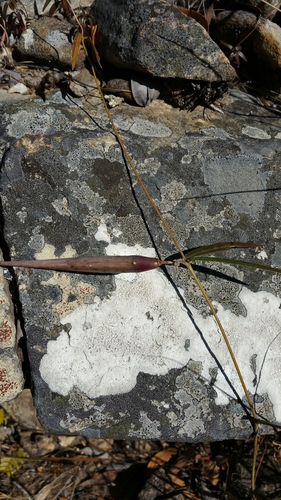
iNaturalist · cc-by-nc
(c) Franck Rakotonasolo, some rights reserved (CC BY-NC), uploaded by Franck Rakotonasolo
(c) Franck Rakotonasolo, some rights reserved (CC BY-NC), uploaded by Franck Rakotonasolo

iNaturalist · cc-by-nc
(c) feno, some rights reserved (CC BY-NC)
(c) feno, some rights reserved (CC BY-NC)
What to Eat
Edible parts: Roots
The roots are eaten.
Where to Find It
A tropical plant.
Africa, East Africa, Madagascar,
Countries: Angola, Burkina Faso, Burundi, Benin, Botswana, Congo (DRC), Central African Republic, Congo (Republic), Cote d'Ivoire, Cameroon, Cape Verde, Djibouti, Algeria, Egypt, Eritrea, Ethiopia, Gabon, Ghana, Gambia, Guinea, Equatorial Guinea, Guinea-Bissau, Kenya, Comoros, Liberia, Lesotho, Libya, Morocco, Madagascar, Mali, Mauritania, Mauritius, Malawi, Mozambique, Namibia, Niger, Nigeria, Rwanda, Seychelles, Sudan, Sierra Leone, Senegal, Somalia, South Sudan, Sao Tome & Principe, Eswatini, Chad, Togo, Tunisia, Tanzania, Uganda, South Africa, Zambia, Zimbabwe
How to Identify
A herb. It grows 40 cm tall. It has tuberous roots. The leaves are narrow. The flowers are red.
Medicinal Uses
The plant is used for medicine.
Notes
Also placed in the Asclepiadaceae.
Names & Synonyms
Kifoko, Kitsangana, Quifacoto
Cynanchum rusilloni Hochr.Pycnoneurum junciforme Decne.
References (2)
- Decary, R., 1946. Plantes et animaux utiles de Madagascar. Annales du Musée Colonial de Marseille, 54e année, 6e série, 4e volume, 1er et dernier fascicule. 234 pp.
- Jardin, C., 1970, List of Foods Used In Africa, FAO Nutrition Information Document Series No 2.p 97


